

As the United States prepares to mark its 250th anniversary, there will be parades, commemorations, and renewed attention to the nation’s founding ideals. But the celebration is already raising a harder question. What, exactly, are we choosing to honor?
The Trump administration recently announced plans to bring several controversial statues to Washington, D.C., including the temporary installation of an equestrian statue of Caesar Rodney in Freedom Plaza. Rodney was a member of the Continental Congress that signed the Declaration of Independence and a noted slaveowner, owning as many as 200 enslaved people. His statue was taken down in 2020 during racial justice protests in Wilmington, Delaware but Trump has lauded Rodney as “an American legend.”
To be sure, this issue is bigger than Rodney. For instance, in 2025, Trump reinstalled a statue of the Confederate General Albert Pike in D.C.’s Judiciary Square, which had been removed following the 2020 Black Lives Matter protests. The Trump White House even went so far as to install a replica of a statue of Christopher Columbus, which had been toppled and thrown into Baltimore’s inner harbor in 2020 by protestors because of Columbus’ role in the killing and enslaving of indigenous people.
But America’s 250th should not become an active celebration of people who enslaved other human beings.
Too often, slavery is treated in public discourse as something distant, sealed off in the nineteenth century. It is spoken about as if it belongs to a world that no longer touches us. That version of history may be convenient. It is also wrong.
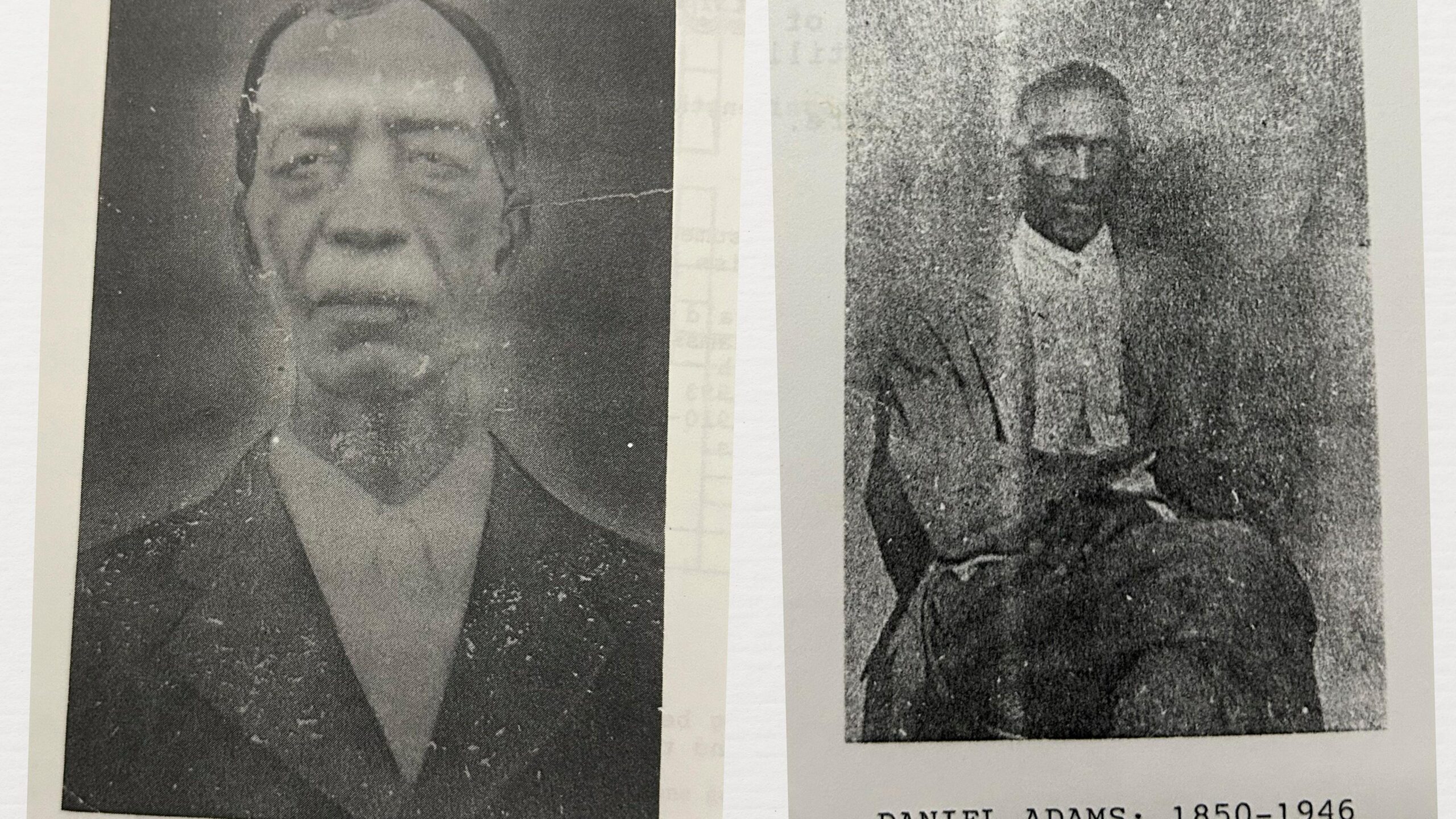
In my family, slavery is not abstract history. It is memory. My great-aunt is 91. Another great-aunt is 90. My great-uncle is 86. All of them remember their grandparents. Those grandparents were born enslaved on plantations in Pittsylvania County, Virginia.
One of my aunts remembers her grandmother vividly. She was half Native American and half Black, with long, silky hair braided down her back. She kept a tin can nearby to spit chewing tobacco, even in church. Her grandfather told stories about driving a buggy for the man who enslaved him. He described cruel devices made of iron placed on enslaved people’s heads so they could not eat, speak, or turn. When he spoke of the whipping post, the room would go quiet.
Another aunt remembers growing up in a family shaped by both sides of that history. One set of grandparents had been enslaved. Another grandfather had fought for the Confederacy. He made the children enter through the back door and go out to the former slave quarters instead of using the main house.
My great-uncle remembers his grandfather as a large and commanding presence, nearly seven feet tall in his casket. He recalls horseback rides into West Virginia, to a place called Keystone, where a thriving Black coal town built political and economic independence, even electing the state’s first Black mayor. Its Cinder Bottom district was a lively entertainment hub, dubbed an early Appalachian equivalent to Las Vegas.
These are not distant stories. These are the people who raised the people who raised me. We often talk about generations as if they follow clean historical lines. They do not. They follow families.
A person born enslaved in the 1850s could have a child in the 1880s. That child could have a child in the 1920s or 1930s. That grandchild could still be alive today. That is exactly the generation now in their late eighties and early nineties. Historians call them the Silent Generation. For many Black families, they were not silent because they lacked stories. They were silent because it was not always safe to tell them.
They came of age under Jim Crow. Segregation was law. Voting rights were fragile or nonexistent. Violence was an ever-present threat. In that world, silence could be a form of protection.
But inside homes, on porches, and around dinner tables, the stories were still told. They remember their grandparents not as historical figures, but as elders. People who sat in living rooms, told stories, and carried memories from another century. When they were children, people born into slavery were still alive in their families.
That reality compresses American history in a way statistics never can.
When people say slavery happened a long time ago, they are imagining something unreachable. The truth is that there are Americans alive right now who grew up listening to first-hand accounts from people who were born into slavery. That is why debates about race and history rarely feel like arguments about the distant past. For many families, the emotional timeline is not very long at all.
A grandparent born enslaved is not an abstraction. It is someone whose photograph still sits in a family album. Someone whose stories shaped how the next generation understood the world. This is also why genealogy has become so powerful for many Black families. When people trace their lineage through plantation records, census documents, and oral history, they discover how short the distance really is.
Read more: What It Means to Bury My Ancestors Twice
In my own research into my family history in Virginia, the pattern repeats itself. The people born into slavery did not disappear into the past. They became grandparents to people who lived well into the twentieth century and, in some cases, into the twenty-first. The national story of slavery is often told in centuries. Family history is told in living memory. That is what makes this moment so significant.
We are living in the final years when Americans who knew people born into slavery are still alive. When they pass, something more than time will be lost. A living bridge to the nineteenth century will disappear. And yet, at this exact moment, as that living bridge fades, the country is preparing to elevate and reinstall monuments that celebrate figures tied to a system that made those lives possible.
That contradiction should give us pause, especially as the United Nations recently adopted a resolution declaring slavery as the “gravest crime against humanity,” yet the United States voted against it.
America’s 250th can and should be a celebration of the country’s ideals. But it should also be an honest reckoning with the people and systems that denied those ideals to millions. We do not need to erase history. But we do need to decide what we honor. There is a difference between remembering and celebrating.
As the anniversary approaches, we should ask a simple question. Who does this story include, and who does it leave out?
In my family, the answer is clear. Slavery is not a distant chapter. It is a memory that still lives in the voices of people I know. The question for America is whether we are ready to listen before that memory is gone.
Read the full article here
