

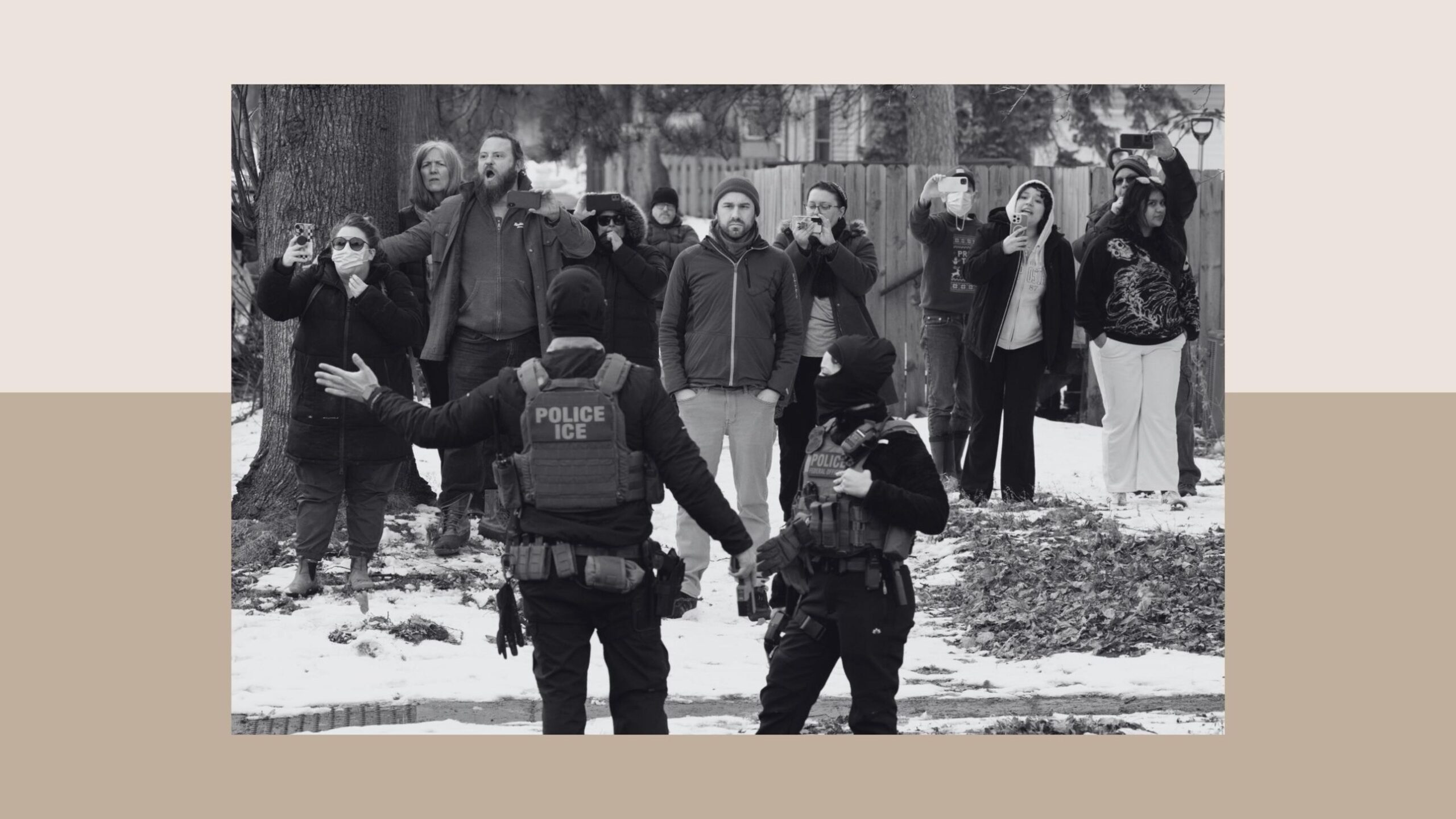
“Just so you know, for a warning, we’re putting you into a watch list,” said a fourth agent not long after, as an ICE officer confirmed they had captured each observer’s picture. What he said next is difficult to make out on Hilton’s video. But you can hear a few words: “we’re going to show up,” followed, after a second of garbled sound, by “at your house later.”
“Don’t be scared now,” taunted the first agent, the one still carrying the pepper spray. “Don’t be scared now.”
I spoke to Hilton about six weeks later, the day after she and Colleen Fagan, an observer at a different Portland-area location, told she was being put in “a nice little database,” appeared in court as plaintiffs in a class-action lawsuit, Hilton v. Noem et al. In pre-trial filings, lawyers from the nonprofit group Protect Democracy and the law firms Dunn Isaacson Rhee and Drummond Woodsum argued that because observing law enforcement is protected by the First Amendment, Hilton’s constitutional rights had been violated up to four times: when agents collected her data, when they retained that data, when they threatened to put her onto a watchlist or database, and, finally, if and when they made good on their threats.
Read the full article here
