

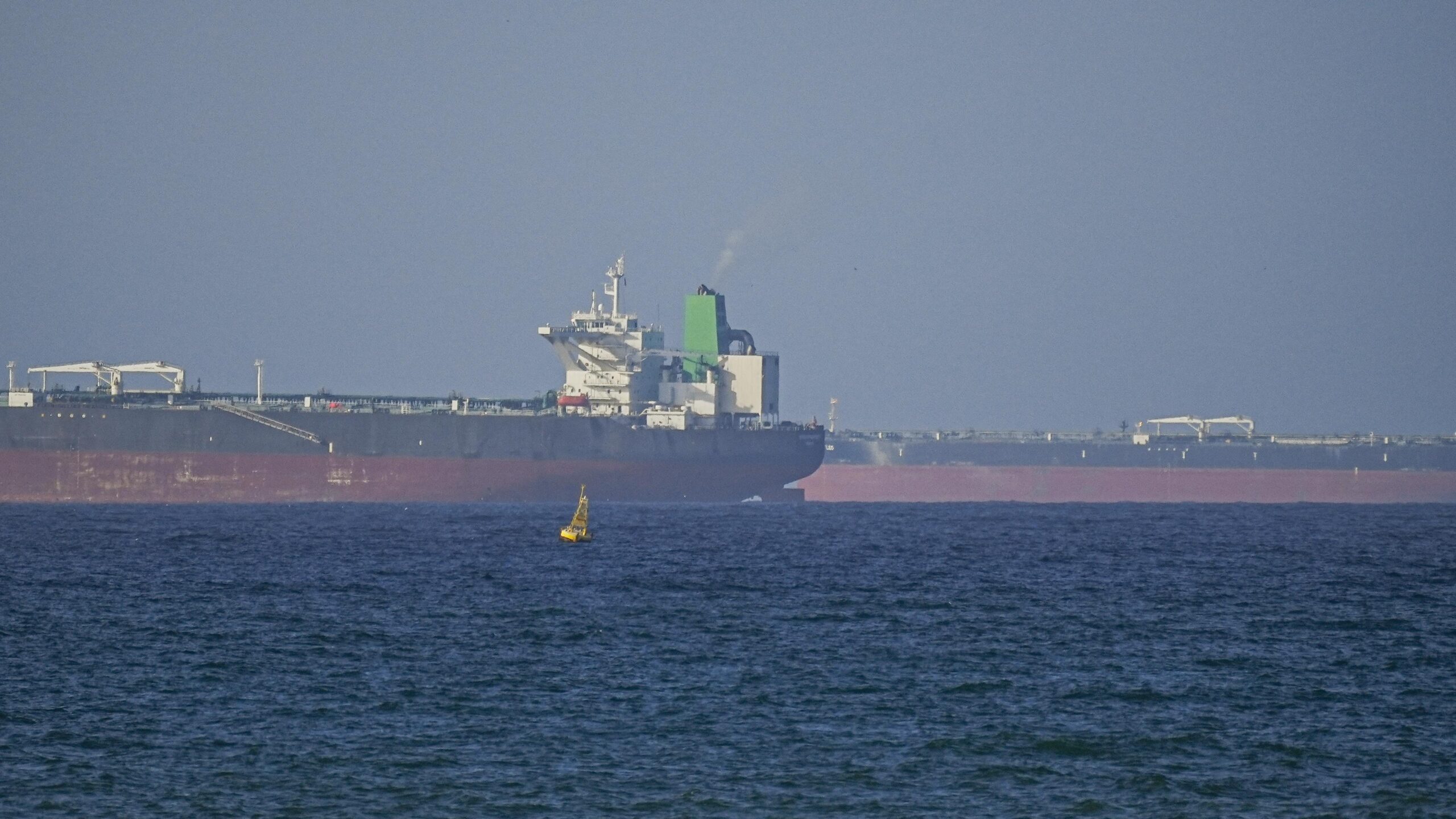
Amid the back-and-forth threats, oil prices surged once more to around $102 per barrel Monday morning.
Here’s what to know about the Strait of Hormuz, Trump’s attempt to blockade it, and the continued impact on the global economy as the passage remains disrupted.
What is the Strait of Hormuz?
With Iran to the north, and Oman and the United Arab Emirates (UAE) to the south, the Strait is just 30 miles wide at its narrowest point.
Top oil and liquified natural gas (LNG) producers, including Saudi Arabia, Kuwait, Iraq, Qatar, and the UAE, export the majority of their cargo through the Strait on tanker vessels.
“It’s a critical node in the global economy for all sorts of commodities, energy and otherwise,” Jim Krane, a fellow for energy studies at Rice University’s Baker Institute for Public Policy, tells TIME.
He adds that the Strait also transits around 45% of global sulfur exports, which is needed in the production of fertilizer, and the refining of metals including copper, cobalt, and nickel.
Read the full article here
