

The new Vera C. Rubin Observatory is beginning the work it was created for: a 10-year time-lapse of the entire southern sky known as the Legacy Survey of Space and Time (LSST). The Chilean observatory’s first images were released in June. Taken with a record-breaking 3,200-megapixel camera, they reveal the complex dance of nearby galaxies, with tens of millions more beckoning in the distance. Rubin’s power lies in its never-before combination: wide, fast, and deep at the same time.
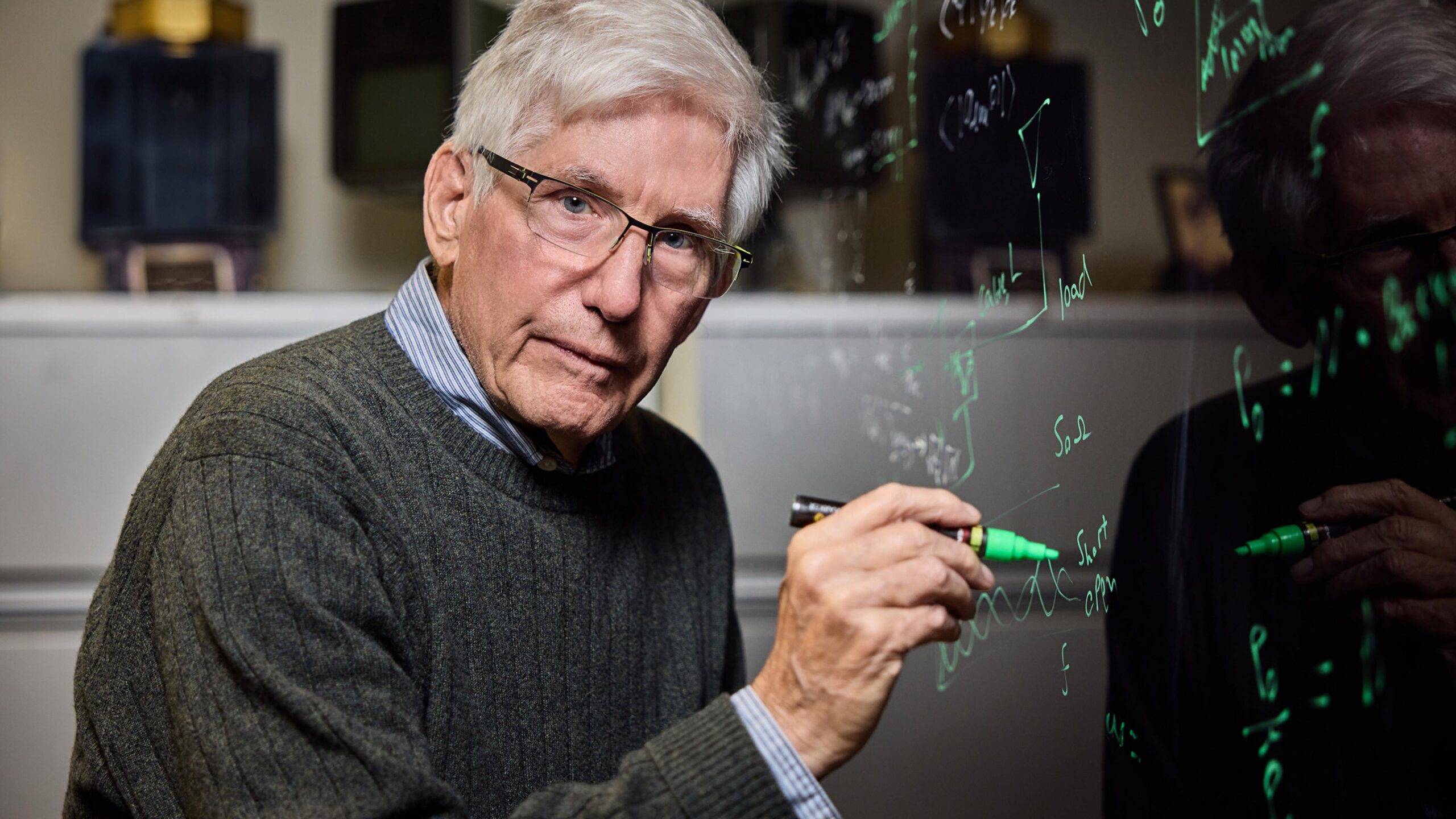
Thirty years ago, astronomer Tony Tyson had the vision to suggest this intriguing path, and the persistence to build something many thought impossible. Throughout the construction, Tony, as chief scientist, played a critical role in tackling some of the thorniest research problems, pushing the boundaries of detector and survey design and transforming a bold idea into a flagship observatory. The LSST will reveal millions of new objects every night—from asteroids to distant supernovae to collisions of neutron stars—and will map 20 billion galaxies and 20 billion stars, opening new discovery windows into the dark and dynamic universe, and yielding a treasure trove of data for scientists to explore.
Read the full article here
