

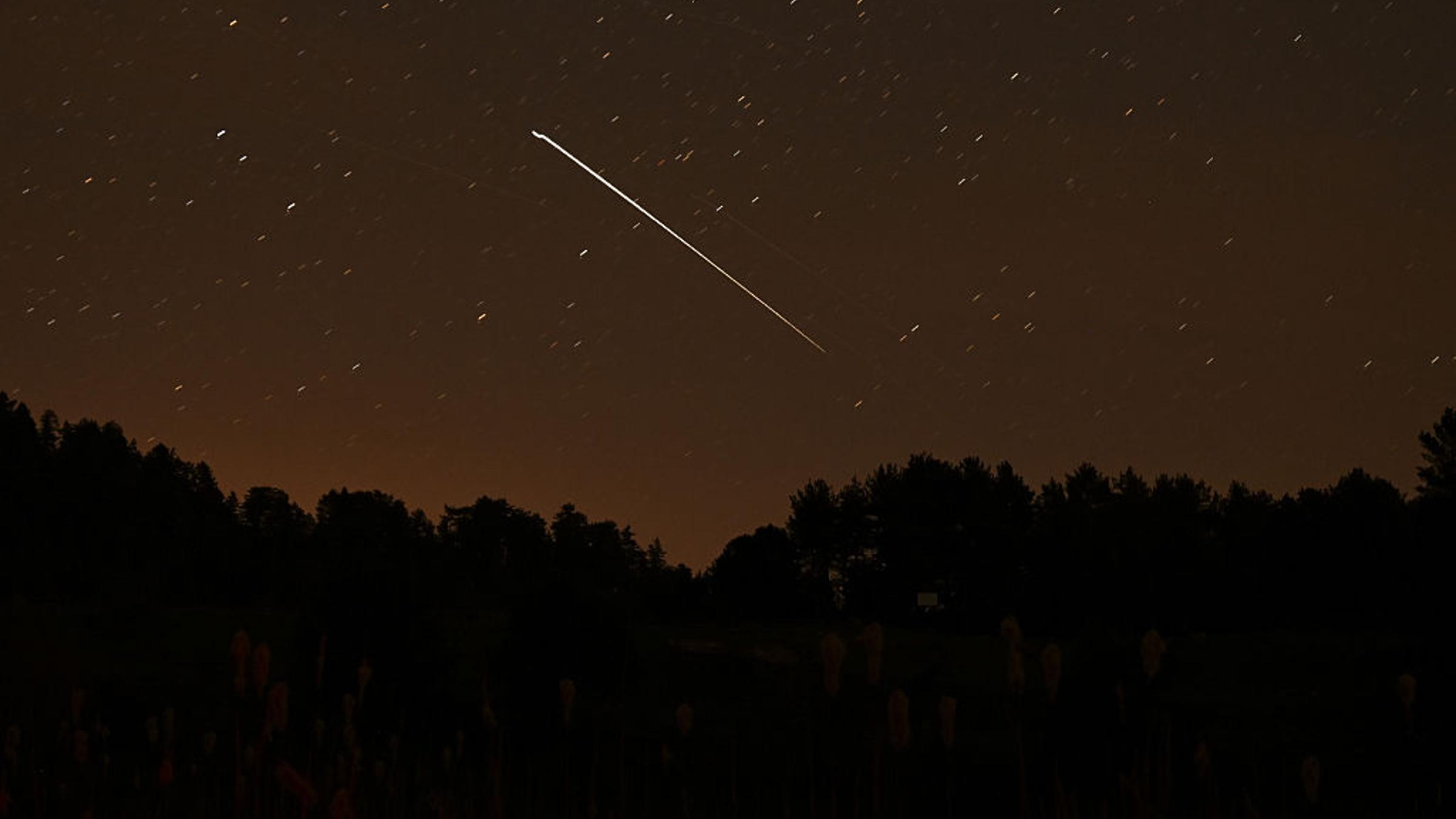
Meteors are the “shooting stars” or “falling stars” that result when small pieces of space rock burn up as they pass through the Earth’s atmosphere, tracing bright streaks across the sky. You may be able to see several meteors an hour on any given night. When there’s a meteor shower, though, you can see many more in the same timeframe; during the peak of the Lyrid meteor shower, for instance, you might be able to see anywhere from 10 to 20 meteors each hour.
The Lyrid meteor shower, which takes place every April, is caused by debris from Comet Thatcher entering the Earth’s atmosphere.
Humans have been observing the Lyrids for more than 2,000 years, according to NASA. While it’s not as plentiful as the Perseid meteor shower, which peaks in August, the Lyrid meteor shower is known for its “fast and bright meteors,” the agency said on its website.
“Lyrids don’t tend to leave long, glowing dust trains behind them as they streak through the Earth’s atmosphere, but they can produce the occasional bright flash called a fireball,” NASA said.
Read the full article here
