

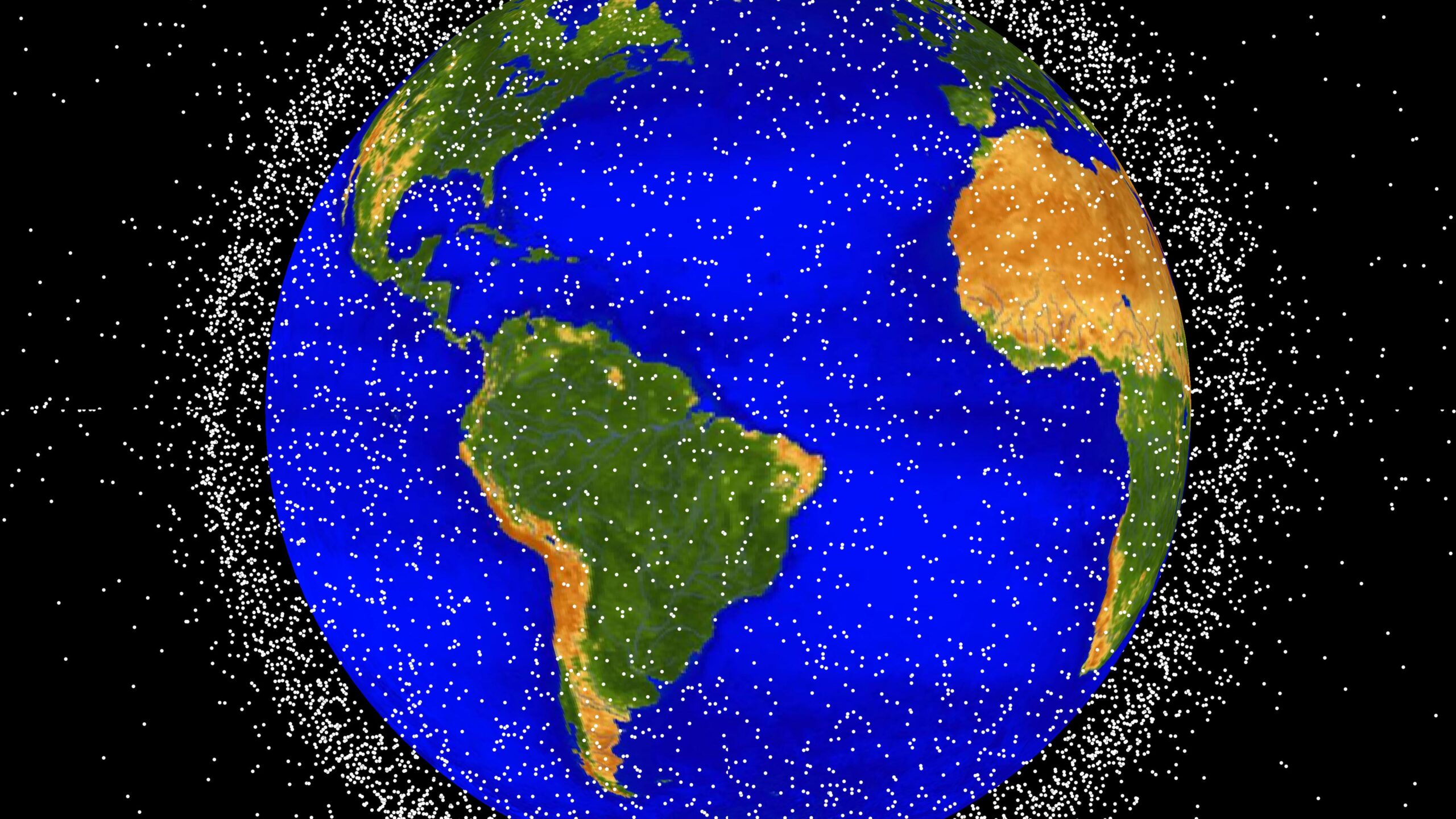
Just two years after its launch, in 1995, the satellite failed, becoming nothing more than space junk, tumbling uselessly through its orbit. On Feb. 10, 2009, the dead bird and the live bird crossed paths and collided, resulting in an explosion of metal, silicon, wire, plastic, tanks, fuel, and more. The loss of the defunct Kosmos meant nothing to the Russians. The loss of the living Iridium left a hole in the American space communications web. But far more important were the conditions in space—at the site of the collision.
The cosmic crackup between the two ships left behind more than 1,800 pieces of debris at least 10 cm (4 in.) or larger. That’s a huge problem, since even such small bits of scrap can carry the bang of a bullet when they’re traveling at orbital speed. Should one or more of them strike one or more other satellites—or, much worse, a crewed spacecraft—they could destroy that object, creating more debris clouds, which would strike still more spacecraft, leading to a chain reaction known as the Kessler syndrome that could potentially wipe out whole flocks of spacecraft in that orbital band.
Read the full article here
