

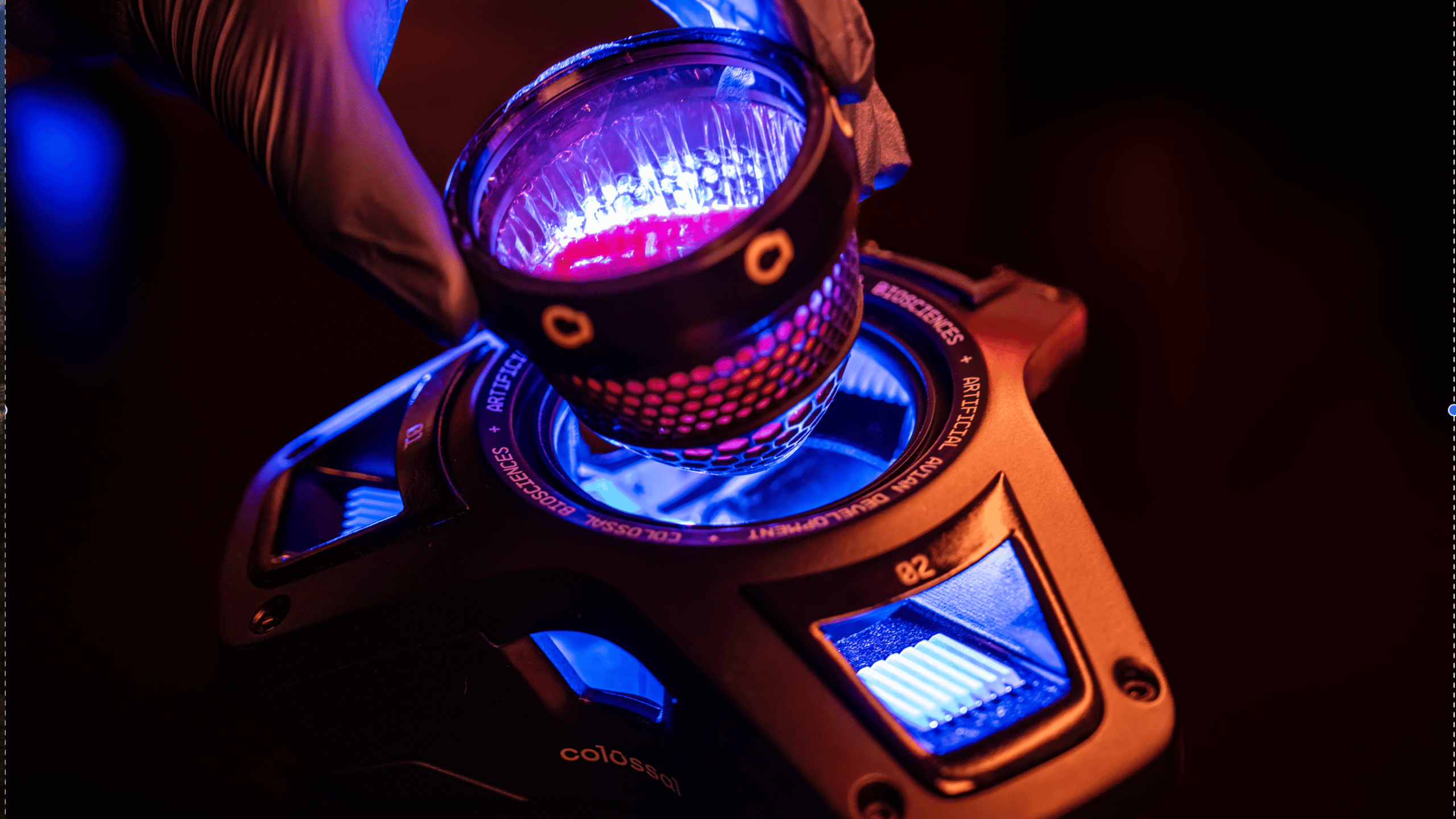
De-extincting the moa will begin with sequencing its genome from abundant tissue samples that exist in museums and private science collections. The scientists will then turn to a closely related related living species—either the tinamou or the emu—and extract primordial germ cells, or cells that develop into egg and sperm, from a tinamou or emu embryo and rewrite their genome to match key features of the moa. Those edited cells will then be introduced into another embryonic tinamou or emu inside an egg. If all goes to plan, the cells will travel to the embryo’s gonads, transforming them so that the females produce eggs and the males produce sperm not of the host species but of the moa. The result will, in theory, be an emu or tinamou that hatches, grows up, mates, and produces eggs containing moa chicks.
But there’s a problem with this plan. A fully developed moa egg is 80 times the size of a chicken egg and eight times that of an emu egg. A surrogate emu could lay an egg that, for a time, would be big enough to accommodate a tiny moa embryo, but as the chick-to-be continued to grow, it would be far too large for the shell that encased it. The strategy then would be to carefully crack open the shell and transfer the contents to an artificial egg like the ones that produced the chickens, but 80 times larger.
Read the full article here
