

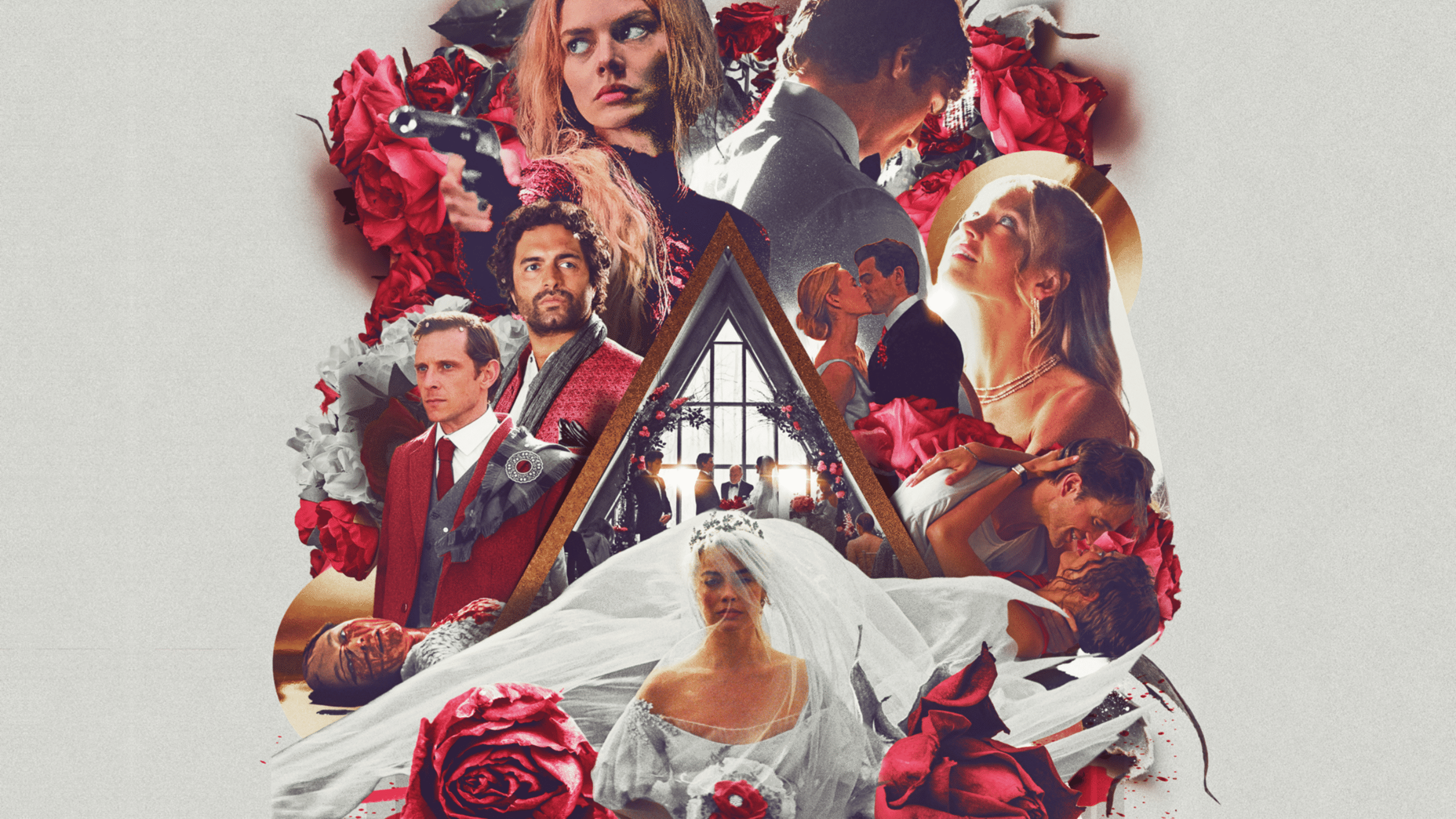
This article discusses the endings of The Drama, Ready or Not 2: Here I Come, Something Very Bad Is Going to Happen, and the first season of The Testaments.
Wedding season has barely started, and already this year I’ve witnessed enough catastrophic nuptials for a lifetime. I’m not talking about tacky dresses or those ill-timed downpours that struck Alanis Morissette as ironic. The weddings I have in mind were soaked in tears, vomit, and other bodily fluids. Many involved violence or death, of the soul if not the flesh. One union was sealed by Satanic rite, alongside a pit of corpses. Another ended with lifeless bodies splayed out on the dance floor or slumped in their plates, their blood staining white tablecloths crimson.
I wasn’t physically present for any of this, thankfully. These nightmare celebrations happened in shows and movies released within the last few months. Although there’s horror in the mix (Something Very Bad Is Going to Happen, Ready or Not 2: Here I Come), their genres vary, from the dystopian teen drama of The Testaments to the Victoriana of “Wuthering Heights” to The Drama’s black comedy. Not all concern heterosexual love (see: Half Man). The common factor is a wedding so traumatic, any guest would be lucky to make it to the afterparty with body and sanity intact.
Brutal fantasies like Game of Thrones‘ Red Wedding massacre aside, this is not the way we typically see these sacred rituals depicted on screen. Think of the sumptuous spectacles of romance, family, and culture that make up the wedding-movie canon: Monsoon Wedding, My Big Fat Greek Wedding, Crazy Rich Asians, The Wedding Banquet, The Best Man. Having a beloved couple (Jim and Pam, Cory and Topanga) exchange vows was once a foolproof way to juice TV ratings. To the generation now eyeing the altar, such ostentatious bliss may be a relic of more innocent times. But this year’s red wedding season probably says less about their cynicism toward the institution of marriage than it does about broader anxieties regarding the future.
The presumption that a woman’s wedding should be the best day of her life has outlived many waves of feminism. But in Gilead, the totalitarian patriarchy that supplanted the U.S. in Margaret Atwood’s The Handmaid’s Tale, it’s essentially the law. Hulu’s The Testaments, an adaptation of the sequel, spends its first season among privileged pubescent girls training to be Wives to powerful men. A ceremony joining one such character, Becka (Mattea Conforti), to a young Commander, Garth (Brad Alexander), is the centerpiece of the finale. It’s a wrenching scene—not just because Becka is in love with her best friend, Agnes (Chase Infiniti), who is in love with Garth— but because it is interspersed with shots of the bride’s mom being executed for the murder of the bride’s dad. In fact, it was Becka who killed her father, a dentist who molested his teenage patients. Agnes is one of his victims.
Gilead has always been a chilling vision of what America might become if right-wing theocrats seized absolute power and stripped women of all independence. A wedding in Gilead reveals the misogyny still latent in a ritual supposedly liberated from its origins as a transfer of property from father to husband. Evidence suggests that progress toward equality within heterosexual marriage has not moved in a straight line since women’s lib. Just this year, a 29-country study found that Gen Z men are twice as likely as their baby boomer counterparts to believe wives should obey their husbands. Which might help explain why the share of 12th graders who hoped to marry someday decreased significantly between 1993 and 2023—a trend almost entirely accounted for by girls’ declining enthusiasm.
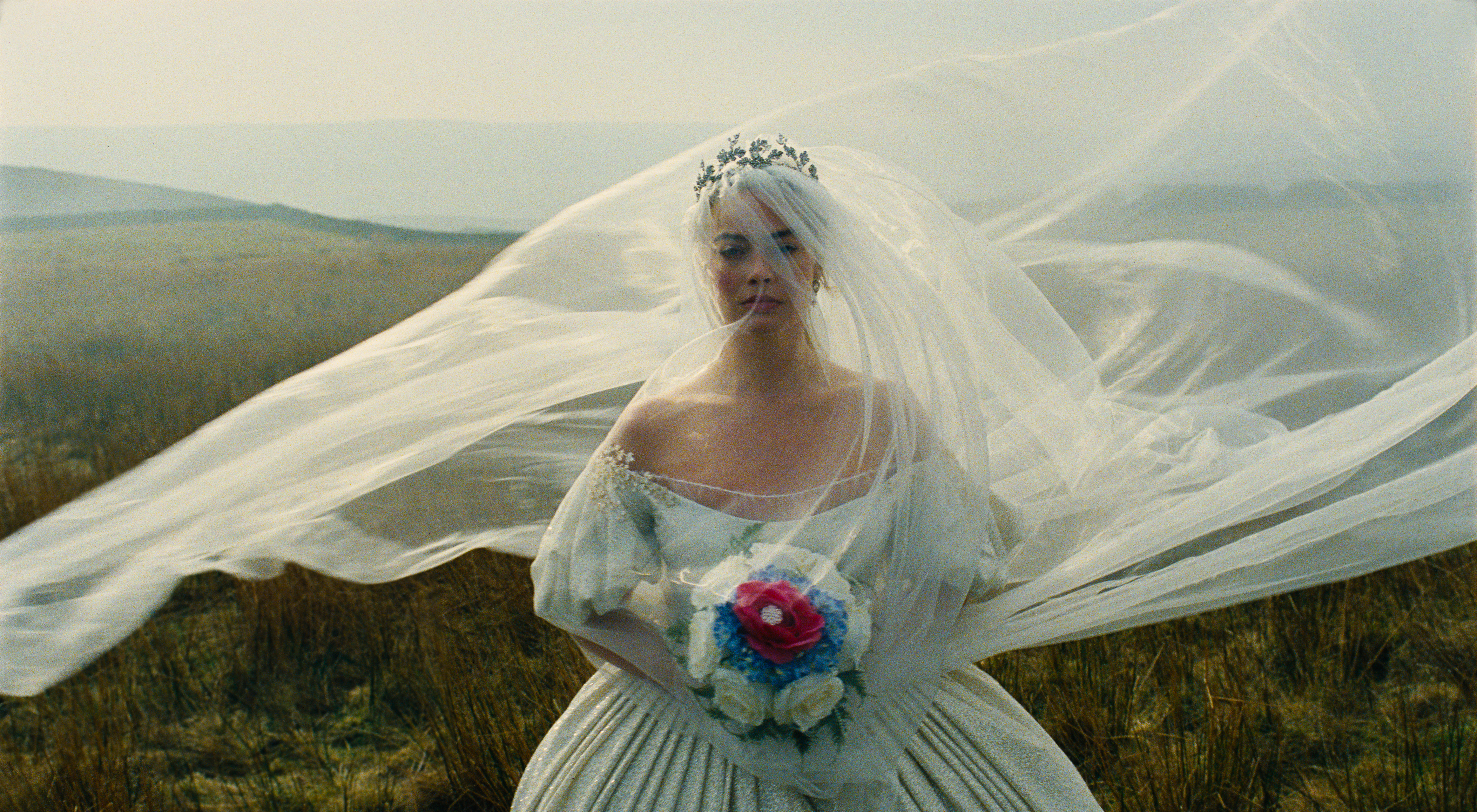
The imagery of gendered oppression suffuses many of the fictional weddings resonating with younger viewers. In her fever-dream “Wuthering Heights,” Emerald Fennell opens a sequence in which Cathy (Margot Robbie), who is obsessed with Jacob Elordi’s foundling Heathcliff but must marry up, finally weds milquetoast Edgar (Shazad Latif), with a closeup of the bride’s inflamed flesh beneath corset laces. Fennell skips over the ceremony, to a scene of Cathy alone at a banquet table where Edgar’s clingy ward, Isabella (Alison Oliver), gives her the wedding gift of a Cathy doll, installed in a dollhouse identical to her new home. Led to her bedroom, Cathy learns its walls were painted to match her skin, down to a freckle. Welcome to a uniquely feminized hell.
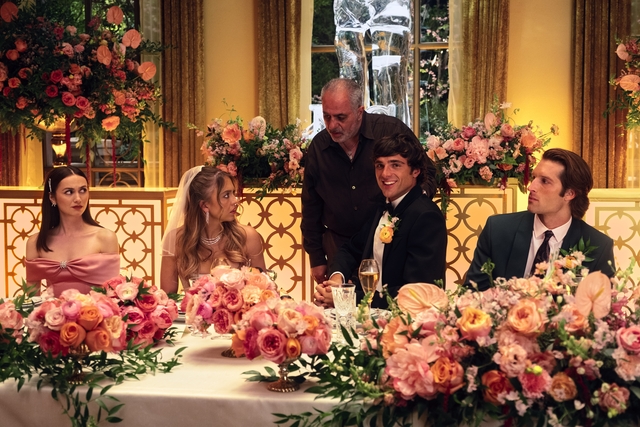
It’s Elordi—Gen Z’s 6 ft. 5 in. monolith of masculinity—who plays the groom in the third season of HBO’s erstwhile teen drama Euphoria, which ages up its high schoolers to early adulthood. Elordi’s Nate, a controlling alpha engaged to Sydney Sweeney’s hyperfemme Cassie, forbids his wife to work outside their retro suburban home, stranding her amid shag carpeting and yellow wallpaper. This grotesque ’50s fantasy dies at their gaudy wedding, which begins with Nate vomiting; talk of diarrhea and divorce, not joy, brings Cassie to tears walking down the aisle. A gangster creditor crashes the reception, leading her to realize Nate’s been lying about his finances and decide the marriage is over before it’s begun. Yet the show goes on, from their tacky dance number to the limo ride home. As he’s beaten in their living room later that night, she sobs operatically: “It was supposed to be the best day of my life!”
Maybe the typical wedding remains an exercise in female subjugation and compulsory heterosexuality, but straight women aren’t the only characters suffering at the altar. As Nate’s ordeal implies, masculinity is its own torture chamber. Nowhere is that clearer than in Half Man, Baby Reindeer creator Richard Gadd’s HBO series. Steeped in violence, sexual confusion, and dark machismo, it traces the bond between two unrelated men who were raised as brothers, framed by a vicious fight at one of the characters’ wedding to another man. Elsewhere, the gendered power imbalance between fiancés echoes a more dramatic disparity in wealth, class, or both. Cathy and Cassie see their husbands as their best chance at securing comfortable lives. FX’s Love Story: John F. Kennedy Jr. & Carolyn Bessette bewitched a new generation with its tragic fairy tale of a chic commoner whose ascent to American royalty is sealed with an excruciating wedding to which she arrives hours late as paparazzi helicopters circle.
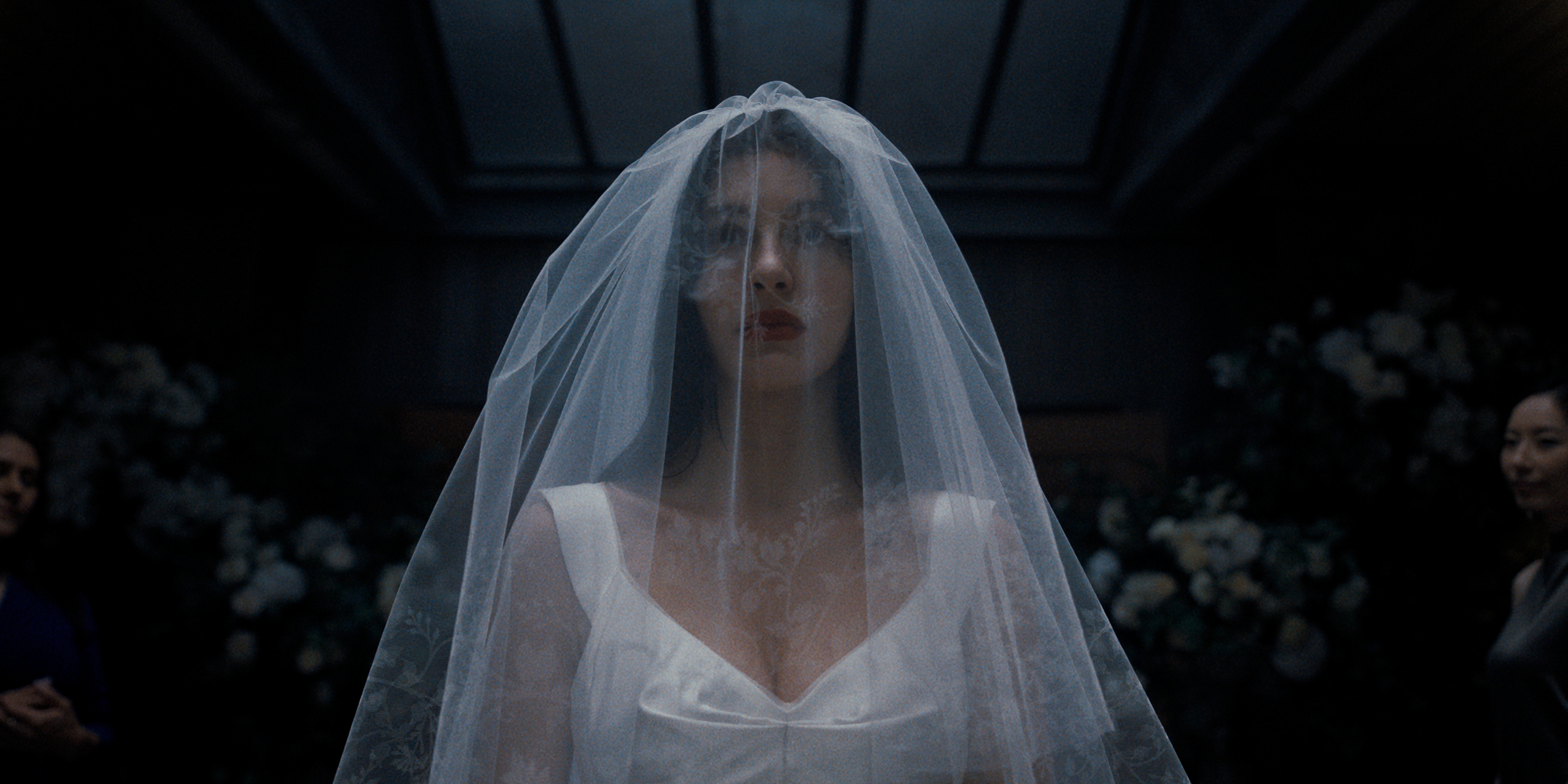
Grace’s (Samara Weaving) initiation into high society is gorier in 2019’s Ready or Not, set on her wedding night, when her new husband’s family of Satan-worshiping aristocrats hunts her in a deadly game of hideand-seek. This year’s sequel climaxes with Grace hijacking her second wedding to a Satanic heir by killing him and banishing his oligarchical cabal to hell. Camila Morrone’s Rachel is about to save herself from an ancestral curse, in Netflix’s Something Very Bad Is Going to Happen, by marrying her rich fiancé (Adam DiMarco), when he decides her damage isn’t worth his trouble. The rejection triggers a bloodbath at his parents’ massive vacation home.
Both horror stories have simple plots but are more complex in their attitudes toward marrying for money or power or security. Grace and Rachel’s lives were precarious until they met rich guys. The only problem is, fortunes come with moral baggage. They have to surround themselves with exploitative monsters who don’t care whether they live or die. What seemed like an ideal mode of survival turns out to be even scarier than eking out an existence on their own.
A plush prison, violent death, or the minefield that is independence— you’re damned if you say “I do” and damned if you don’t. It’s a bleak vision of adulthood. But, as the cost of living soars, the economy further polarizes, and AI eats entry-level jobs, it’s not hysterical. Hence the constant reports that young people are anxious, lonely, stressed, hopeless. Last year, a Gallup–Walton Family Foundation study found that only 39% of Gen Z adults feel they’re “thriving” (versus 56% of Gen Z middle and high schoolers; what a difference paying your own bills makes). If a wedding is two people’s public expression of confidence in their shared future, then it makes sense that the most miserable fictional weddings are striking a chord.
For a regular couple intent on beating stacked odds, the sanest option might be to embrace the chaos. The focal point of The Drama, a twisted rom-com that shares with Euphoria a star in Zendaya and an arty, youth-focused studio in A24, is another calamitous wedding. This time, there’s no great discrepancy in status; both fiancés are part of the urban, white-collar middle class. Following bride Emma’s (Zendaya) confession that she once planned a school shooting, tempers flare, mistrust festers, nasty gossip circulates, and groom Charlie (Robert Pattinson) channels his panic into an abortive hookup with a co-worker. It all comes to a head at the reception, where his bizarre behavior gets him socked in the face; the next thing we know, he’s coming home alone with a bruised face and a blood-stained tux.
A red wedding doesn’t have to herald a failed marriage, though. It can be a test for two people who love each other to pass together. The Drama ends not in eternal misery, but with Charlie and Emma reuniting, battered and dirty, at a diner. “Do you live around here?” she asks, still in her gown but pretending to be a stranger. It’s the best gift a person who has screwed up their wedding can receive: a second chance at making a future.
Read the full article here
