

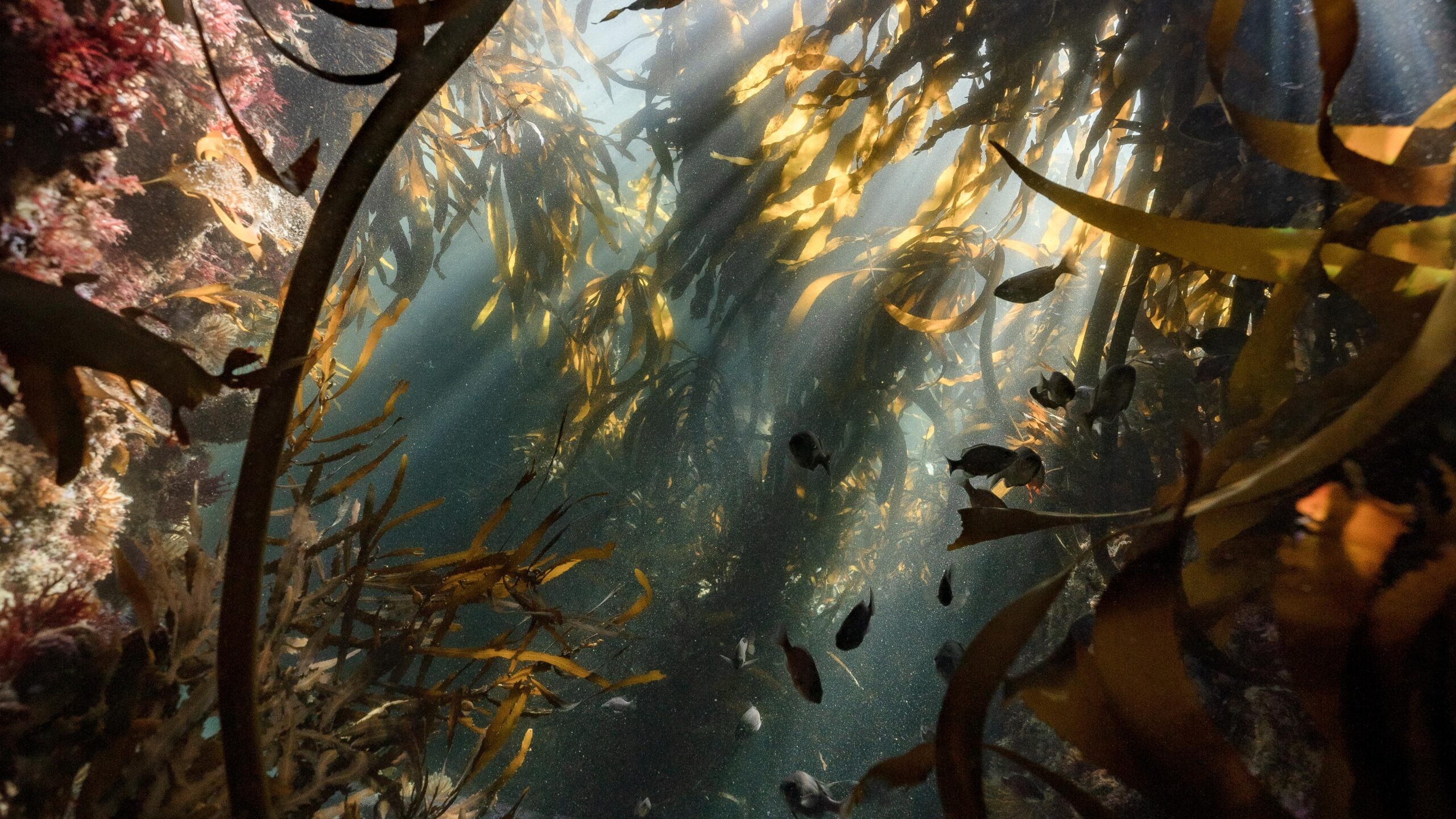
The snail, in turn, must evade the masterful octopus that creeps between the anemone-encrusted rocks, while above them sharks prowl through the kelp understory. Between urchin spines, tiny crabs and juvenile abalone take shelter while hungry fish swirl past.
Each is part of a living network of interactions. Remove enough strands, and the sea forest begins to unravel. Scientists say it is these intricate relationships that allow ecosystems like this to survive a warming ocean. Yet they remain dangerously overlooked, even as they die off. The Great African Seaforest is the world’s only “sea bamboo” forest, a vast underwater jungle stretching more than 1,000 kilometers (621 miles) from Namibia’s desert coast down to the tip of South Africa. Cold upwellings rise from the deep, bringing nutrients that fuel an explosion of life, much of it found nowhere else on Earth. For at least 100,000 years, humans have lived alongside this ecosystem, foraging limpets and mussels from tidal pools and diving through the kelp for pearlescent abalone and fish. Today, the sea forest still sustains coastal communities and fisheries—a living system shaped by countless relationships between species, ocean currents, and people.
Read the full article here
