

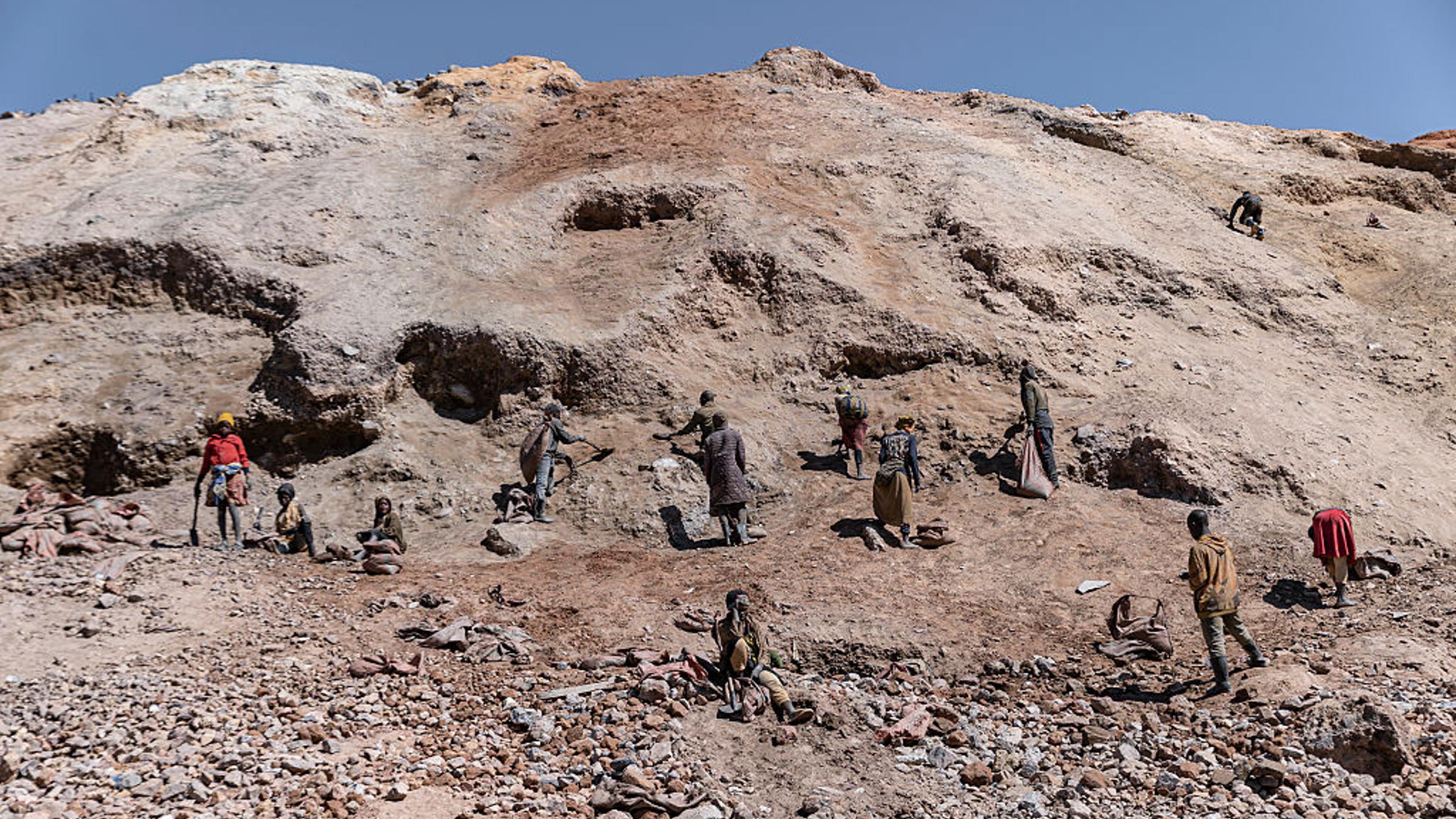
Beijing did not come to dominate the critical minerals market overnight. “The Middle East has oil. China has rare earth metals,” Deng Xiaoping, the leader of China’s economic reforms, is believed to have said in 1992. Even that statement may understate the degree of market concentration seen today. During the Arab oil embargo, the Organization of the Petroleum Exporting Countries accounted for slightly over 50% of global crude oil production, a figure that has since fallen to below 35%. China, by contrast, now leads production for 30 of the 44 critical minerals for which there are reliable estimates, commands an average market share of over 70% for strategic minerals, and accounts for 93% of magnet manufacturing.
The critical minerals standoff between Washington and Beijing last year was novel, but not unprecedented. In 2010, Beijing embargoed rare earths exports to Tokyo as a result of a dispute with Japan. In 2020, China reportedly cut off exports of graphite to Sweden. Indeed, last year’s measures added to a litany of resource nationalism: globally, restrictions on critical minerals have risen five fold since 2009. Despite the high levels of concentration in this market there is, however, no monopoly on the sources of rare earths: Australia, Brazil, Canada, Greenland, Indonesia, Kazakhstan, Ukraine, the US, and Russia all possess substantial mineral deposits, as do many other countries and territories. The landscape changes when we consider the capacity for rare earth purification, synthesis or fabrication, and manufacturing assembly. This is where China has unmatched capacity and a strategy to hold it. As the Department of Defense has noted, Chinese firms, willing to operate at losses, have “strategically flood[ed] the global market” with rare earth elements to decrease competition.
Read the full article here
