

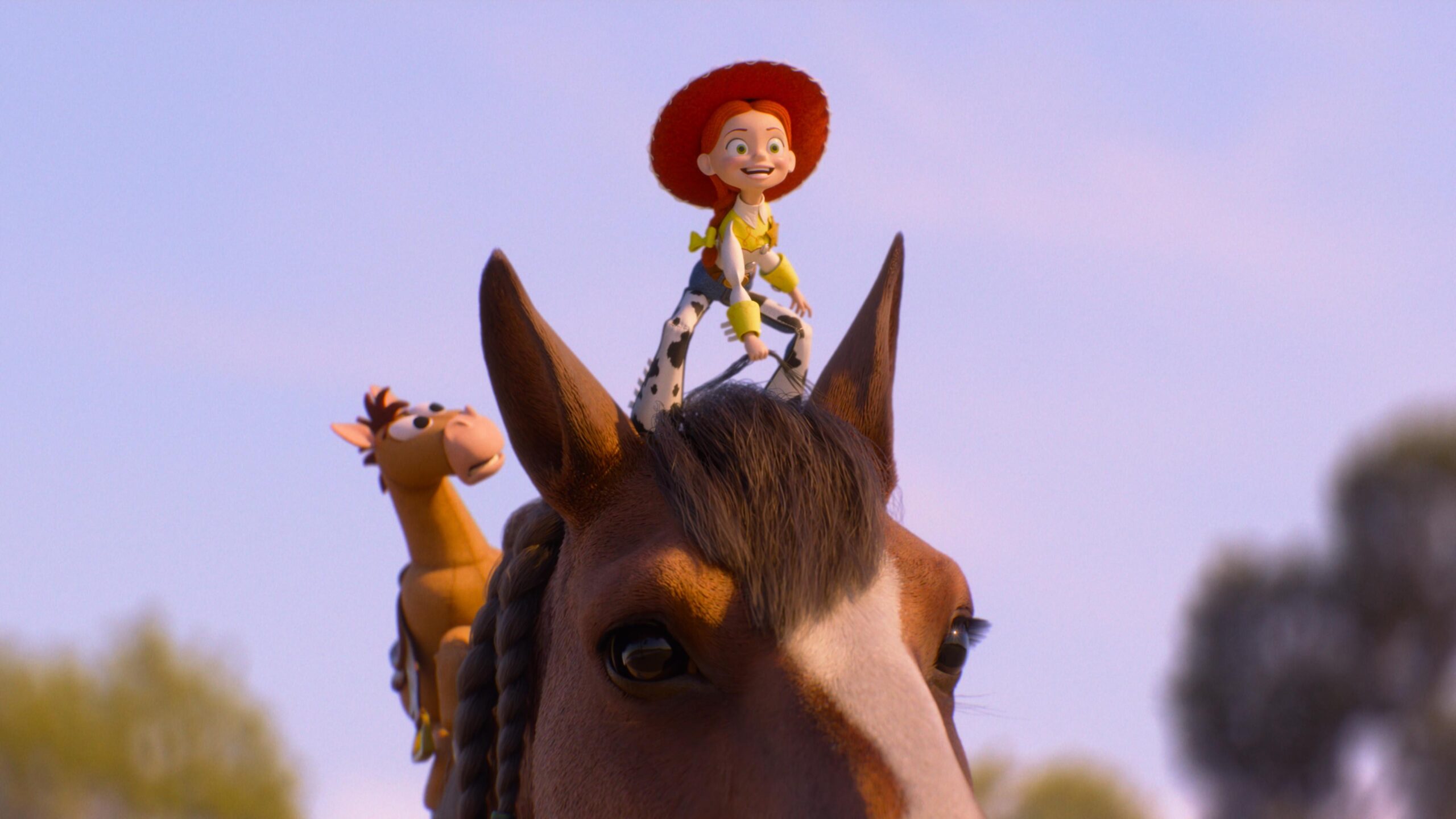
This piece contains spoilers for Toy Story 5.
In 1999, computer animation changed forever. After the massive success of 1995’s Toy Story, Pixar animation returned to the world of talking toys in Toy Story 2. Widely regarded as a masterpiece, the film is regularly hailed as one of the greatest sequels ever made, alongside movies like Aliens and The Godfather Part II. But it did more than just entertain: Toy Story 2 provided the first real evidence that Pixar could not only make your heart soar—it could shatter it, too. The film showed audiences around the world that computer animation could be just as emotionally impactful as traditional animation, the very ethos underpinning Pixar’s existence.
Since then, Pixar has soared to critical and box-office highs as the finest purveyors of computer animation. While other studios seemed to dazzle children with bright colors and goofy gags, Pixar took kids seriously and appealed to the child in every adult. Pixar films developed a reputation for delivering an inevitable emotional wallop, leaving nary a dry eye in a packed cinema. And the studio regularly delivered: Finding Nemo, Up, Inside Out, Coco, Onward, and Soul are just a small selection of the films that proved that Pete Docter, Andrew Stanton, and the whole crew were operating on a different level of storytelling mastery.
When I settled into Toy Story 5, like many others, I wondered how long it would take to make me cry. The previous three entries all got me one way or another, and in the case of Toy Story 3, I sobbed so hard through the last 15 minutes that I could barely see the screen in front of me. (I’ve rewatched it a half-dozen times since, and the tears still come). The franchise has always felt personal to me: Toy Story was the first film I ever saw in a cinema, and Toy Story 3 came just as I was graduating high school, getting ready to set off on my own for the first time, just like Andy did in the film. And though many (myself included) consider the first three films a perfect trilogy, I found Toy Story 4 an impressive addition and a thoughtful meditation on finding your purpose in life.
Toy Story 5 is primarily a movie about the endearing Jessie (Joan Cusack), a toy cowgirl central to Pixar’s first heartbreaking moment, when she recalled her past kinship with her former owner Emily. The root of Jessie’s trauma, abandonment by Emliy, is established via flashback almost immediately in the latest film. And just like that, the wait to cry is on. But does it pay off? Let’s get into it.
The scene that gets the waterworks going
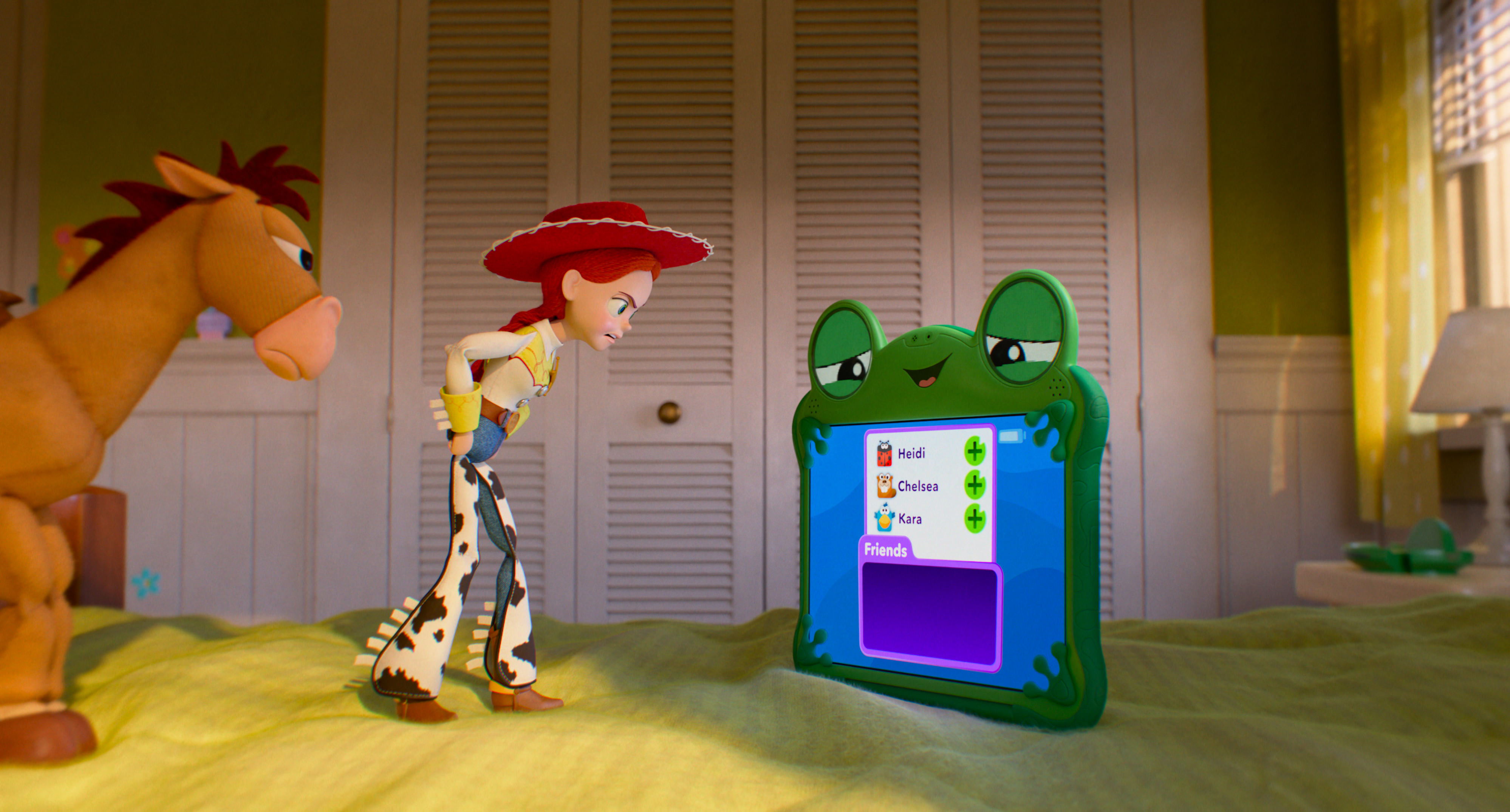
In due time, the wallop arrives. Throughout the film, the shadow of Emily weighs on Jessie, steadily increasing her fears of irrelevance and obsolescence. Those concerns are compounded by her new human, Bonnie (Scarlet Spears), casting her and her fellow toys aside to play with Lilypad (Greta Lee), a tech device that’s completely captured her attention. It leads to a crisis of the highest order: Is Jessie even a good toy? Has she ever been worthwhile?
Through a series of mishaps that begin when Bonnie ditches her for making her seem babyish before heading into her very first sleepover, Jessie finds herself sitting against the very tree she and Emily used to play at all those years ago. The property now belongs to the family of Blaze (Mykal-Michelle Harris), a young, horse-loving girl who takes an interest in Jessie. But Jessie is facing the prospect of her fourth owner, and after enduring the pain of three heartbreaks, she’s feeling at her lowest. “I can’t do this again,” Jessie laments. “I can’t love another kid just to find out I never mattered.”
As the music swells, Jessie glances at the tree at a new angle, and sees something she never expected: the words “Jessie was here” with an arrow pointing down to the ground. There beneath the dirt, she discovers a buried lunchbox full of memories from Emily’s past, and a note from Emily to her daughter. “Jessie, you’ll always be my little cowgirl,” it reads. Jessie, astonished, realizes she meant more to Emily than she ever realized—so much so that Emily has named her daughter after her favorite toy. The message on the tree wasn’t referring to the toy, but rather Emily’s daughter. Suddenly, Jessie has a new appreciation for her own purpose: “Bonnie’s growing up, and we don’t get to decide when that happens,” she says. “All that matters is that we were there at the right time to help them along.”
Of course, I cried. There’s a lot wrapped up in this moment, both in terms of Jessie’s self-worth and our own nostalgia for a childhood now passed. But instead of the typical release that comes with watching a Pixar movie, for the first time in a very long time, I felt annoyed at myself for crying. Releasing emotions that have been burrowing inside can be a spectacular kind of catharsis, especially alongside hundreds of strangers in a dark room along for the same journey. It can be hard to tell, especially in the moment, when those tears are earned or manipulated. Yet Toy Story 5 ultimately comes to feel more like the latter, rendering the film’s big breakthrough moment hollow.
A retcon of Emily’s role in Jessie’s life
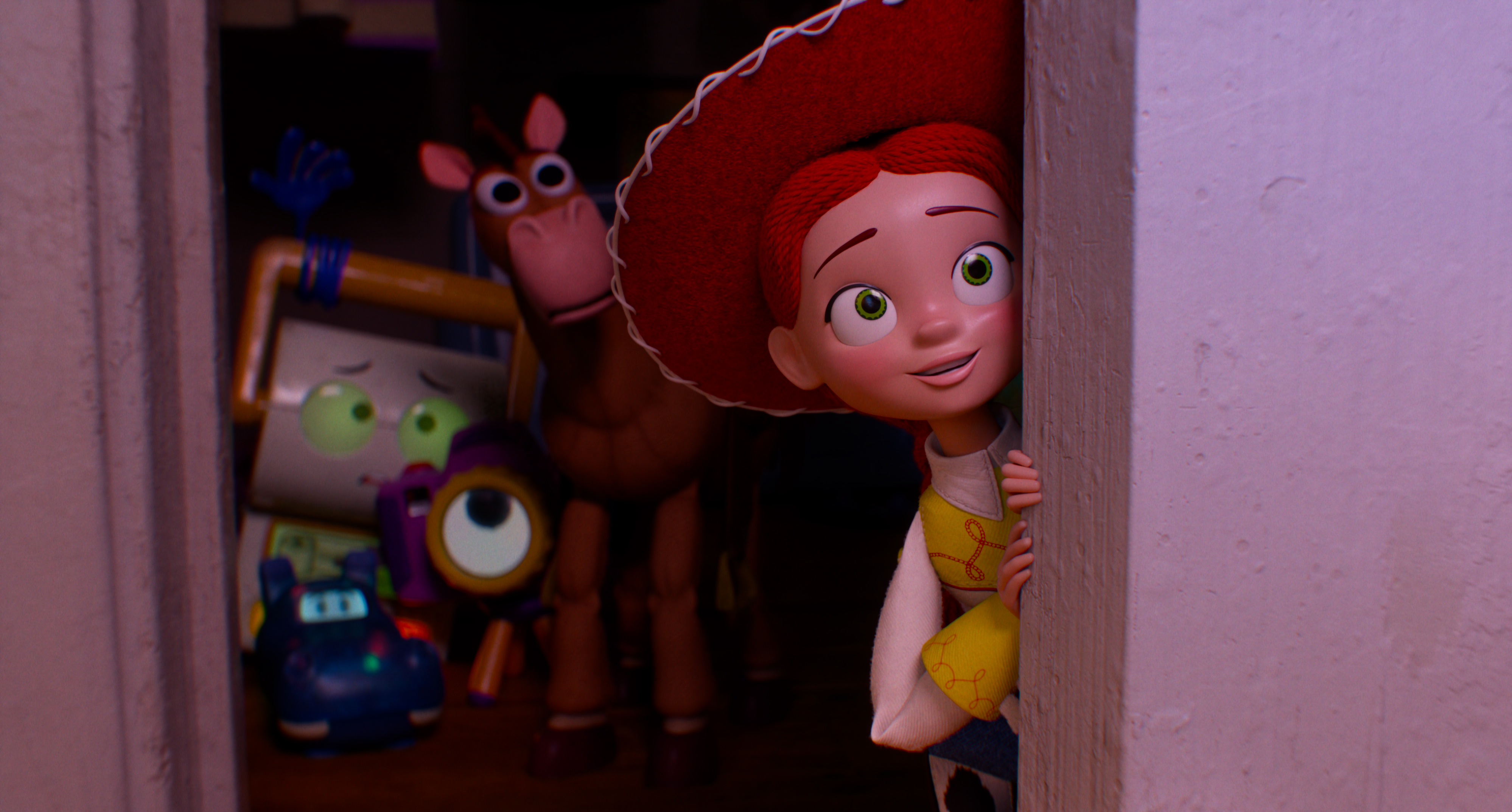
This sudden plot machination that Emily loved Jessie all along feels unearned at best, patently absurd at worst. It’s extraordinarily unlikely that Emily, who played with Jessie for a brief time in her youth before developing other interests as a young teenager, would name her child after a toy she didn’t hesitate to drop off on the side of the road like it was nothing more than gum on the bottom of her shoe. This is exacerbated by the decision to quickly brush past the moment so the film can get on with what feels like the franchise’s hundredth rescue mission, piling on one joke after another, rather than letting us marinate in the moment. (Perhaps we’re not meant to think too hard at all.)
The moment feels even emptier when compared with the pivotal emotional moment in Toy Story 2. Now this is a scene I’ve seen so many times that it’s practically embedded in my brain. Before it begins, Jessie looks mournfully out the window, as her new friend Woody prepares to depart to get back to Andy. She knows exactly what Woody’s experiencing, because it turns out that Jessie hasn’t been a collectable doll her whole life. She, too, once had a cherished companion. And her name was Emily.
Set to the song “When She Loved Me,” written by Randy Newman and sung by the incomparably emotive Sarah McLachlan, the montage sees Jessie as the apple of Emily’s eye. The two are inseparable, and Jessie is wholly fulfilled. But as Emily grows older, she trades her fascination with the Wild West for nail polish and flower power. A devastated Jessie gathers dust for what feels like years under Emily’s bed. One day, Emily searches around under her bed and finds Jessie. Jessie is thrilled, but her enthusiasm is crushingly fleeting, as Emily abandons Jessie with other items in a donation box on the side of the road. Jessie watches through a hole in the box as Emily drives away with her mother, never to be seen again.
This scene works not just because McLachlan’s voice is so impactful, and the lyrics so effectively upsetting—tearjerking music without the dialogue and character development to support it is pretty much the worst offender when it comes to cinematic emotional manipulation. It works because it allows us to see a whole other way these toys experience emotions. It makes us long for what we once had and consider our own potential callousness. Did we once leave behind something, or, worse, someone, that loved us more than anything?
The difference between the two big Jessie scenes
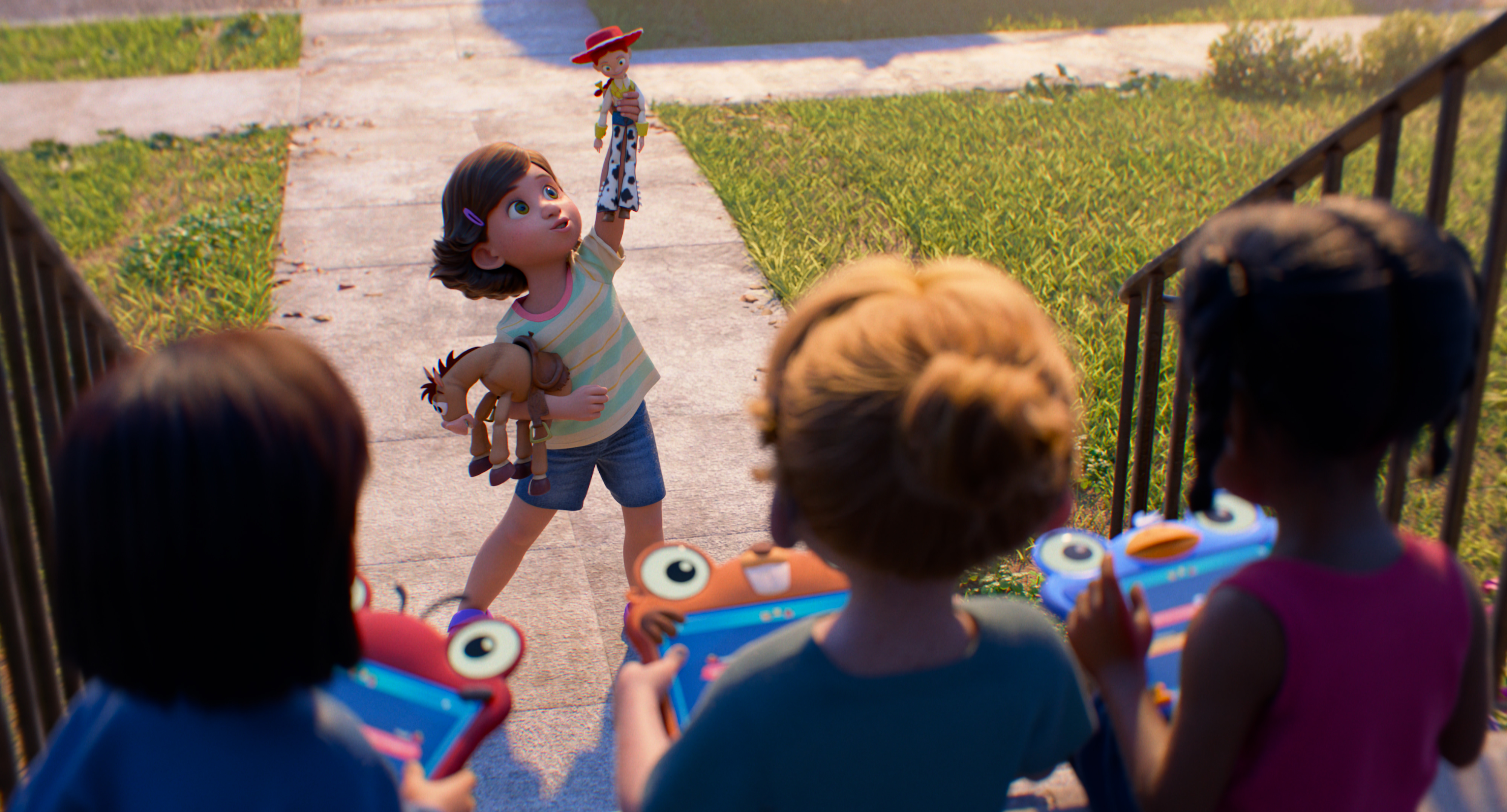
Toy Story 2 earns our tears because it addresses a fundamental fear in an artful and impactful way. The same goes for Toy Story 3, which conjures tears by having characters many have loved for years come to terms with their own inevitable deaths, before inciting the waterworks all over again by asking us to consider all the warmth and comfort we left behind in order to grow up. But Toy Story 5 manipulates us into crying by introducing a farfetched plot twist that doesn’t hold up to scrutiny, relying on emotive music from a previous film and Cusack’s gorgeous, almost haunted voice acting to wring tears out of the viewer. Is it possible an adult would look back fondly on a toy her teenage self thought was garbage? Sure. That that fondness would define the very identity of her progeny? As likely as a class of kindergarteners named Gumby, Polly Pocket, and Lil’ Bratz.
In altering Jessie’s relationship with Emily on such a fundamental level, it almost feels like Pixar is trying to retcon the very foundation of Jessie’s character. As if Toy Story 5 is saying that, sure, Jessie was abandoned, leading to a lifetime of trust issues, but Emily really did care about her, and therefore Jessie’s heartbreak ever since has been misguided. Without this chance encounter, she’d have been misguided forever. It almost feels cheap, a word almost never associated with Pixar, lacking in the studio’s trademark authenticity.
Perhaps this is a cost of refusing to let a franchise go. After all, creating new stories within beloved, familiar worlds has become the safest bet in an increasingly conservative Hollywood. They’re comfortable. Not unlike a toy that once brought you joy but no longer serves its purpose. This misguided manipulation of tears might just signal a worn-out franchise. Perhaps it’s time to let it go and embrace the new. That’s something Pixar is more than capable of doing—2023’s Elemental and this year’s Hoppers are the two highest-grossing original animated films of the decade.
More likely, we’re a few days away from a record breaking box-office weekend and the official announcement of Toy Story 6 and 7.
Read the full article here
