

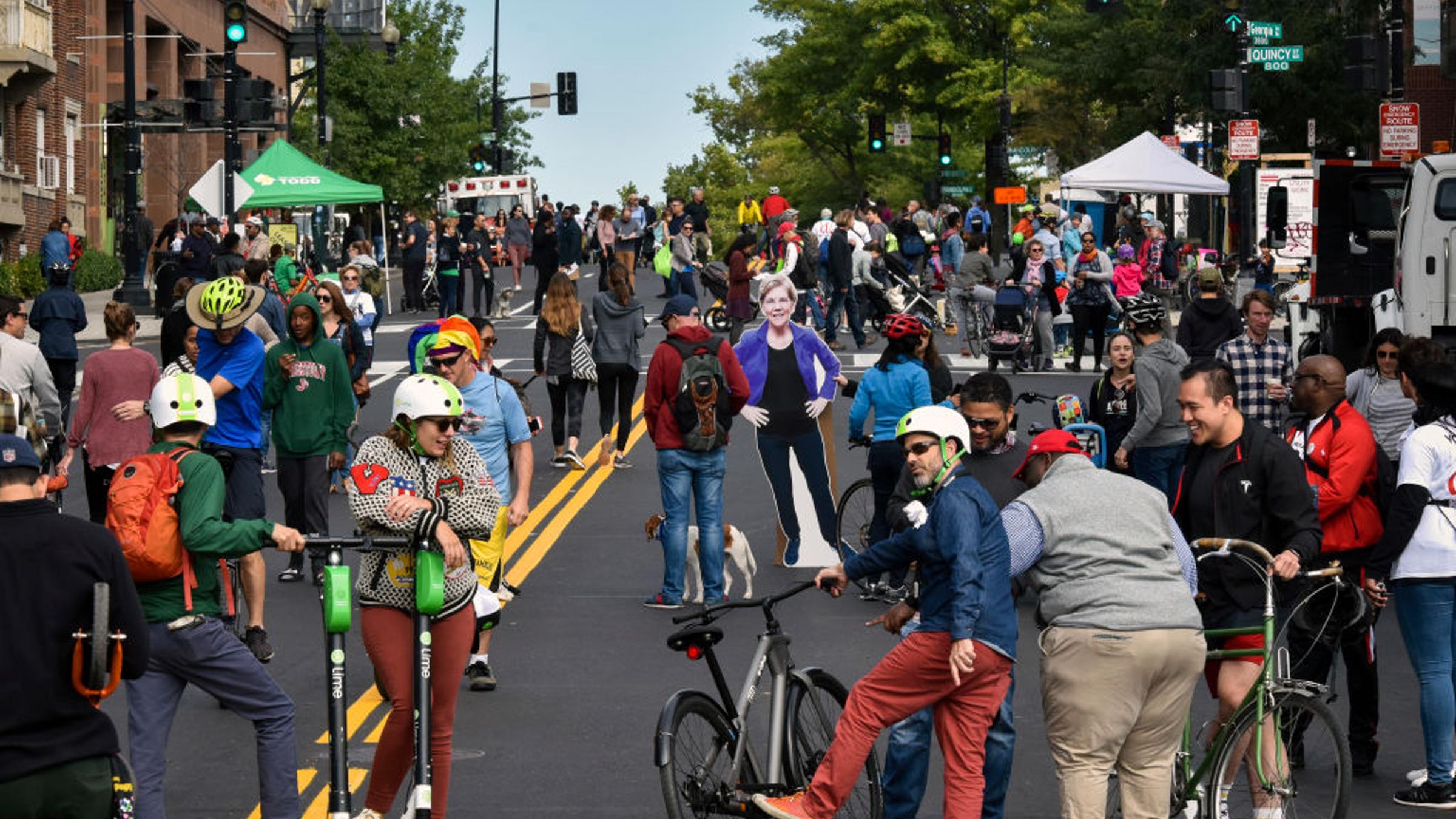
Spaces without cars also provide opportunities for safe exercise in urban environments that often lack open space. “A lot of people use pedestrian streets for the sake of relieving stress and getting exercise, especially in urban environments…and so to bring cars into those spaces where people are seeking exercise, stress relief, a chat with a friend, etc. is really problematic,” says O’Brien. As an added benefit, people get to enjoy fresher, less polluted air.
Car-free zones also bring more foot traffic to local businesses. When New York City opened streets up to pedestrians during the pandemic, restaurants on “open streets” saw more business than those on nearby, car-friendly streets.
The change isn’t limited to major metropolitan areas. Smaller towns can do it too—whether it be closing off the inner roads of a city center on a weekend, or a couple blocks surrounding a school.
These car-free days can serve as a reminder that, despite how ingrained cars have become in the modern world, they don’t have to be a necessity—there are other choices that can be better for both our health and environment. “People have just accepted this slow-drip growth of cars and are now living in neighborhoods that are overwhelmed by cars, but they can’t see a way out of it,” says Marsden. “As an individual, you can’t make a different choice. You getting the bus does not solve the traffic problem in your area. What these car-free days do is to say, look, when we’ve got all this space, you have children independently cycling around, people are walking in the street. We can reimagine some of the areas as mini parks, places to sit and chill out…It gives us that opportunity to have a different discussion about, is that really what we want for the future?”
Read the full article here
