

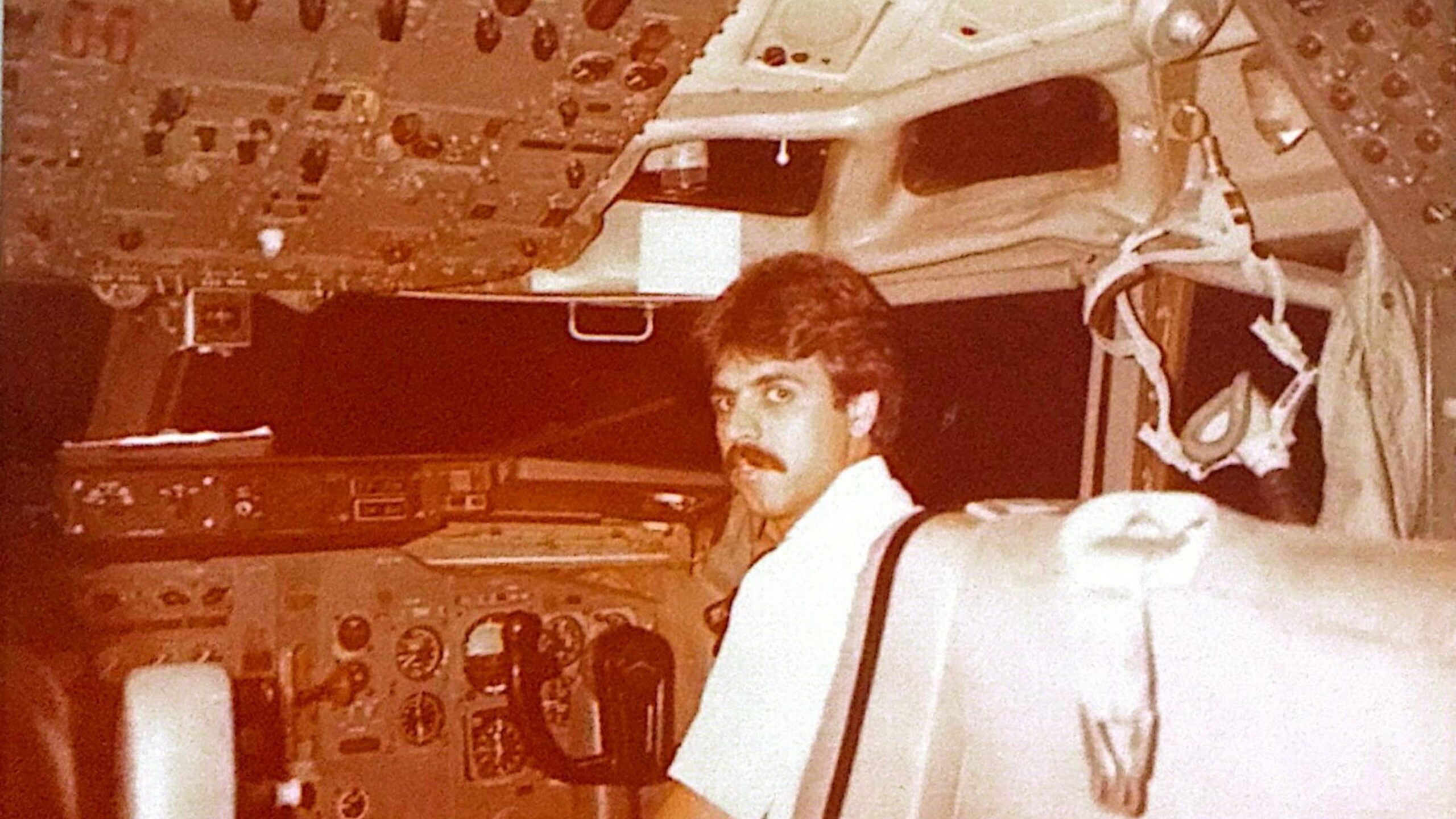
My mother spoke of the fear she felt more than he ever did. She would tell me how she sheltered with my older sister when the air raid sirens went off, and how she listened for the jets overhead. In those moments, what frightened her most was not her own safety but the knowledge that her husband was up there somewhere, flying in the same sky swarming with fighter planes dropping their bombs on Tehran.
My father did make sure I grew up knowing these things: the stops in the street, the nights sheltering from bombs, and the family and friends swept up in the massacres of political prisoners in the late 1980s. He hated flying for an Iran Air that now belonged to the people who had terrorized and murdered so many Iranians he had loved. Yet he kept flying, because he had no other trade, and because for years he was doing the slow work of getting us out, to either Canada or the United States.
On July 3, 1988, Captain Mohsen Rezaian, a colleague of my father’s, was at the controls of Iran Air Flight 655, traveling from Bandar Abbas, Iran, to Dubai, when the American warship, the USS Vincennes, reportedly mistaking the aircraft for a threat, fired a missile that struck the plane. Two hundred and ninety people fell into the Gulf, including him. Captain Rezaian had trained in Florida before the revolution, as my father had, and shared his sense of disillusionment that Iran could no longer offer a safe or prosperous future for their families. He was already emigrating to America; my father was waiting to move his family to Canada. My father continued flying Iran Air for close to a year after Flight 655. There was no alternative for a man whose life was defined by flight.
Read the full article here
