

Iran said it had targeted U.S. assets in Kuwait, Bahrain, and Qatar overnight after the U.S. military struck Iranian assets for a second day in a row.
In a statement carried by semi-official state media Fars, in the early hours of Thursday morning, the Iranian army said it had targeted a Patriot missile interceptor system in Kuwait, an early-warning satellite antenna site in Qatar, and fuel storage facilities in Bahrain with “a large number of various types of attack drones.”
Kuwait’s Ministry of Defense said four missiles and ten drone attacks had been intercepted, with one person left injured by falling debris. Bahrain’s Ministry of Interior issued several warnings to civilians to seek shelter early Thursday. Qatar also issued an elevated “security threat” alert overnight.
Later on Thursday morning, the U.S. Embassy in Jordan publicized a security alert stating that “reports indicate missiles, drones, or rockets are in Jordanian airspace.” Residents were advised to “seek overhead cover and shelter in place immediately.”
U.S. Central Command (CENTCOM) launched new strikes against Iran on Wednesday in order “to further degrade their ability to threaten freedom of navigation in the Strait of Hormuz.”
U.S. forces struck “approximately 90 Iranian military targets,” in addition to the roughly 80 targets they hit on Tuesday. The U.S. strikes left some areas along the Iranian coast without power, with electricity lines in the southeastern Chabahar County temporarily impacted, according to semi-official state media.
Iran’s Health Ministry said the U.S. strikes had killed 14 people and injured 78 across five provinces on July 8 and 9.
The traded assaults come after President Donald Trump on Wednesday told reporters at the NATO summit that the interim agreement to end the Iran war is “over.”
The U.S. initially launched strikes against Iran on Tuesday, following attacks on vessels in the Strait of Hormuz. Iran responded by targeting U.S. military sites in Kuwait and Bahrain into the early hours of Wednesday morning. A pattern that was repeated again no less than 24 hours later.
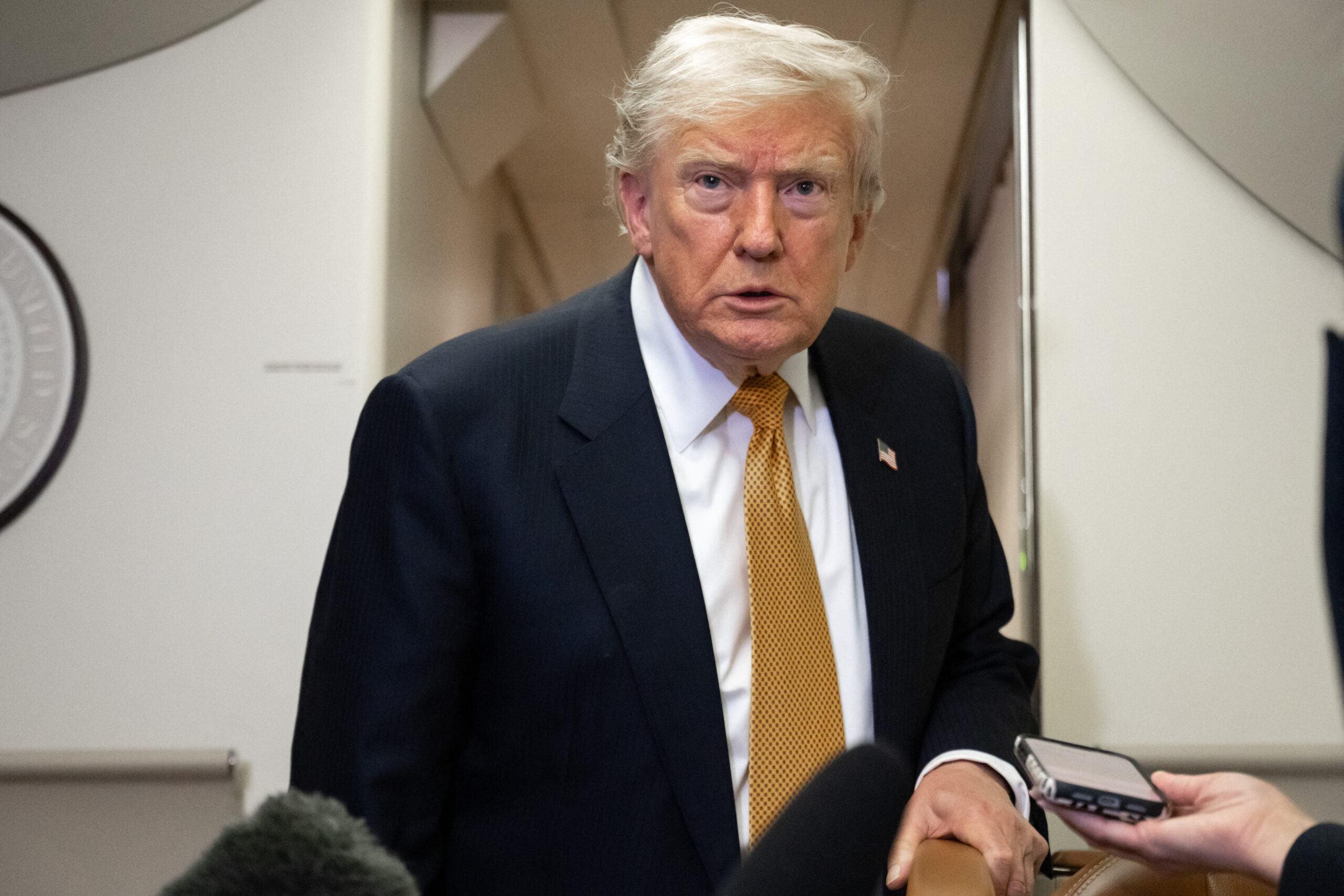
During his flight back to Washington, D.C. from the NATO summit in Ankara, Turkey, Trump said the U.S. was “winning” and claimed Iran had “called” and wanted to make a deal.
“I just don’t know if they’re worthy of making a deal. I don’t know that they’re going to honor the deal. That’s the problem,” he told reporters.
Trump also warned, via a social media post, that the U.S. military response “will get much worse” should Iran target any more vessels transiting the Strait.
With the Gulf countries once again feeling the volatility of the renewed hostilities, leaders in and around the region have called for de-escalation and restraint.
In a call with Iranian Foreign Minister Abbas Araghchi on Thursday, Qatar’s Foreign Minister Sheikh Mohammed bin Abdulrahman bin Jassim Al-Thani condemned the Iranian attacks on vessels.
They “undermine trust, threaten international maritime security, and harm efforts to consolidate regional security and stability,” he said, according to an update shared by Qatar’s Ministry of Foreign Affairs.
Egypt’s Foreign Ministry equally denounced the Iranian attacks on Bahrain and Kuwait, calling them “a dangerous escalation and an unacceptable violation.”
Following a second night of traded strikes, the current status of the U.S.-Iran negotiations remains unclear.
When asked about the Memorandum of Understanding (MoU), signed on June 17, Trump told reporters Wednesday: “I think it’s over. I don’t want to deal with them anymore.”
The MoU laid out the terms for an extended 60-day cease-fire, allowing time for further technical talks to take place.
That deadline is set to expire in mid-August, but amid flare-ups of violence and accusations of violations from both sides, it seems little progress has been made.
U.S. envoy Steve Witkoff and Trump’s son-in-law Jared Kushner discussed the Iran deal with mediators in Doha at the end of June, but there were no high-level talks held with Iranian officials.
TIME has reached out to the White House and Witkoff’s office for comment.
Read the full article here
