

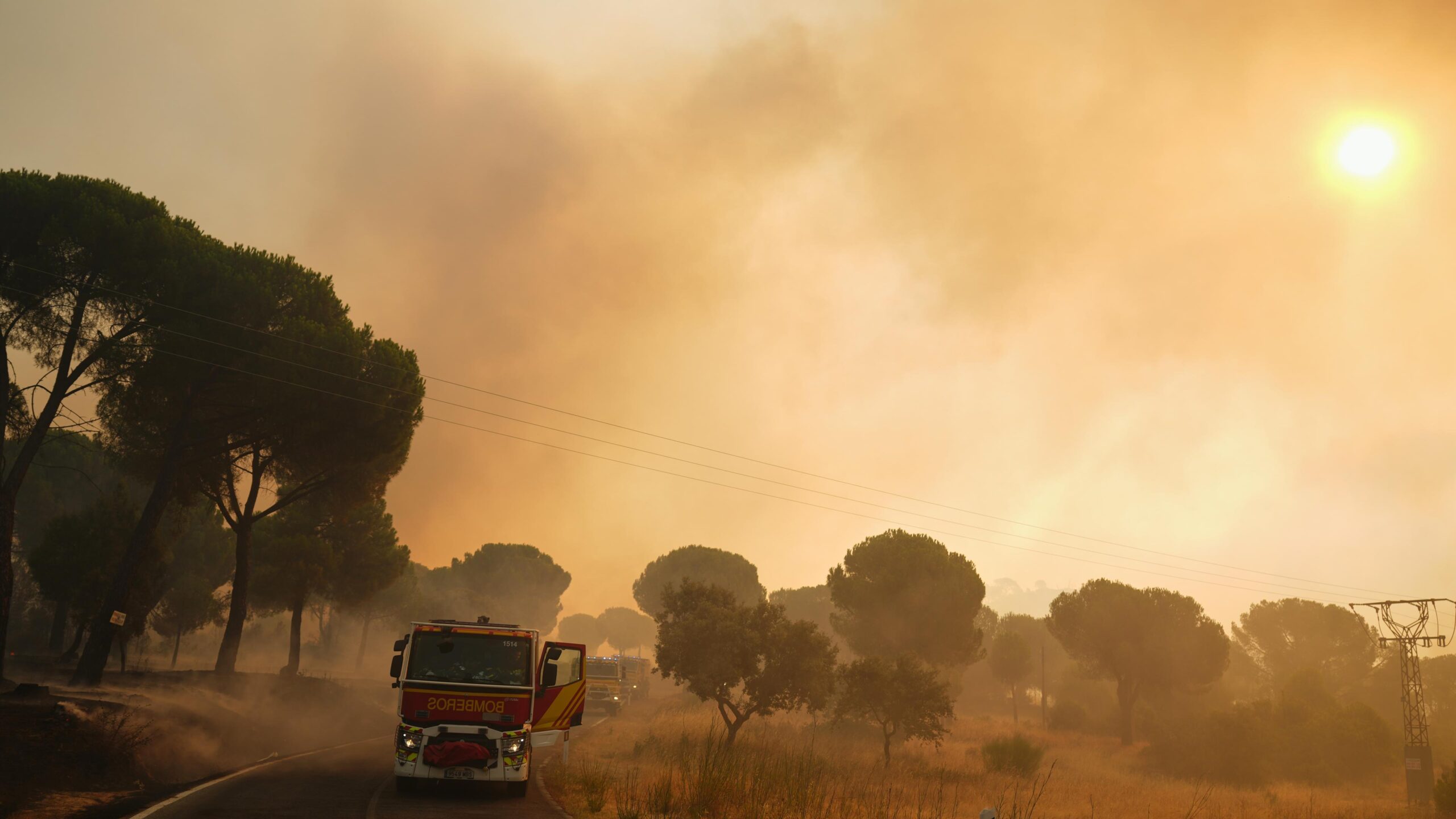
The smoke from the fires contains “particulate matter” consisting of burnt material, she explains.
“Firstly, that can affect visibility because these particles can reflect the sunlight and just create a haze and a sort of a cloud that is really hard to see through,” Wagner says.
But there is also the question of air quality, which could hinder viewers’ ability to safely stand outside and observe the eclipse.
“There’s high levels of this smoke, and high levels of the particulate matter within the smoke, which is really harmful to human health, as these particles are really small,” Wagner says, referring to a type of fine air pollutant known as PM2.5, which has been linked to lung cancer and heart disease. “They can be breathed in, and it can affect people’s health, particularly vulnerable populations with respiratory and cardiovascular problems.”
Totality occurs when the moon passes exactly between the sun and the Earth, blocking out the daylight and casting impacted areas into complete darkness for about three minutes. While the experience of totality is brief, breathing in wildfire smoke can make people sick “right away,” leading to coughing and headaches, among other symptoms, according to the United States Centers for Disease Control and Prevention.
Read the full article here
