

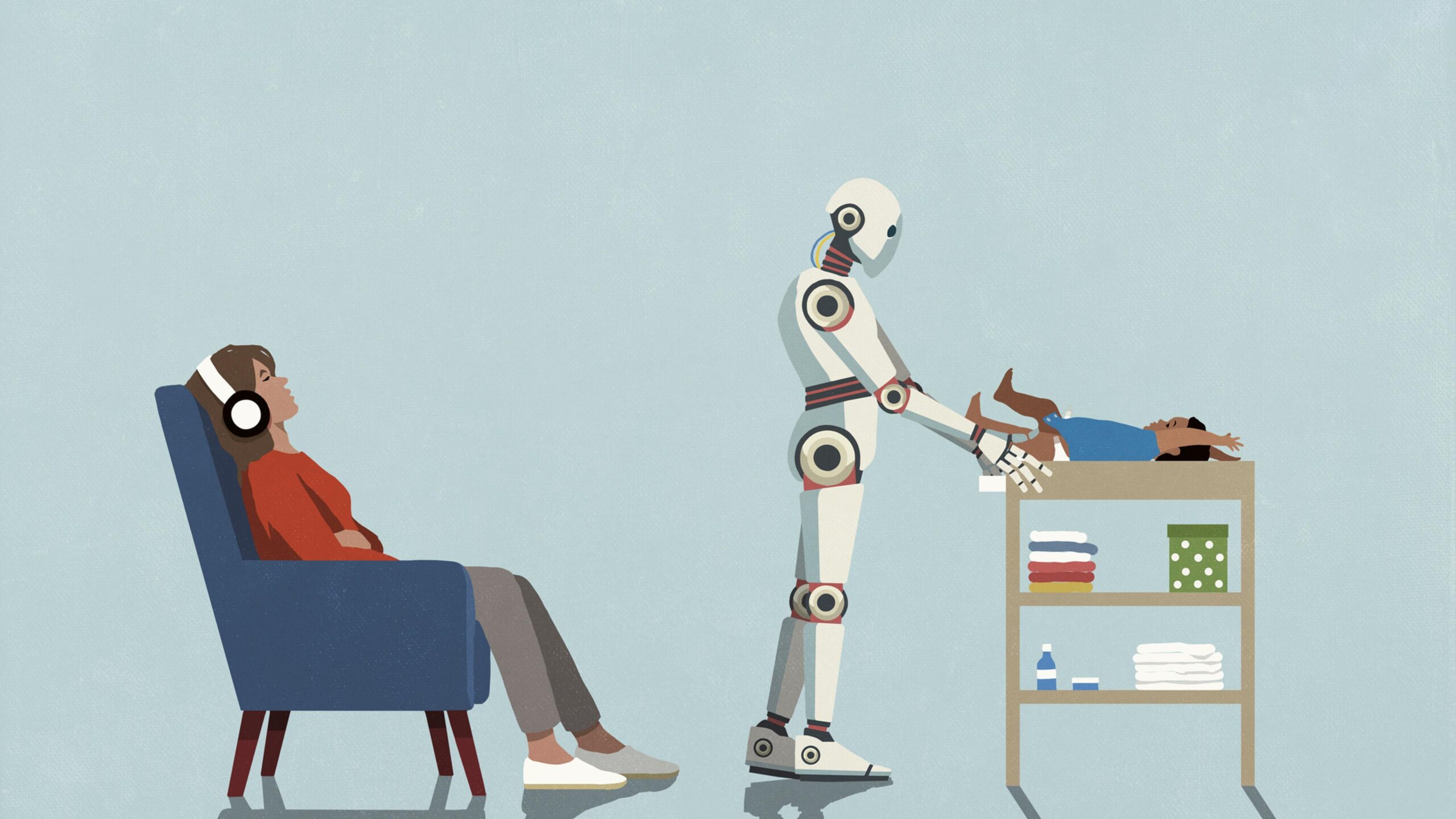
And there’s high demand. A new survey from LoigicMark, a provider of personal safety and connected care technology, found that almost eight in 10 caregivers would embrace or try AI that predicts health issues before an emergency happens.
But for these gains to materialize, we must guard against Care AI creating even more intensive care standards. If “frictionless” family life becomes the norm, whatever downtime or peace of mind AI might give women will instead be consumed by datafication, mommymaxxing, and an endless quest for optimization.
In the end, what is most likely to ignite the gender revolution at home are not large language models but a cultural reckoning over why we continue to expect women to do it all and hold them to such impossible standards.
What’s really needed is for men to do more at home and for women to be given the green light to do less. In her recent book, anthropologist Carrie M. Lane shows how professional organizers do this kind of “feminist work.” Not only do organizers give their mostly women clients the permission to part with belongings, but also the permission to let go of exacting societal expectations like having a perfectly organized and spotless house. As one organizer explained, “Moms who are doing so much and have all this stuff and think they’re supposed to be able to handle everything… ‘You cannot do it all. You can’t. So, it’s okay.’”
Read the full article here
