

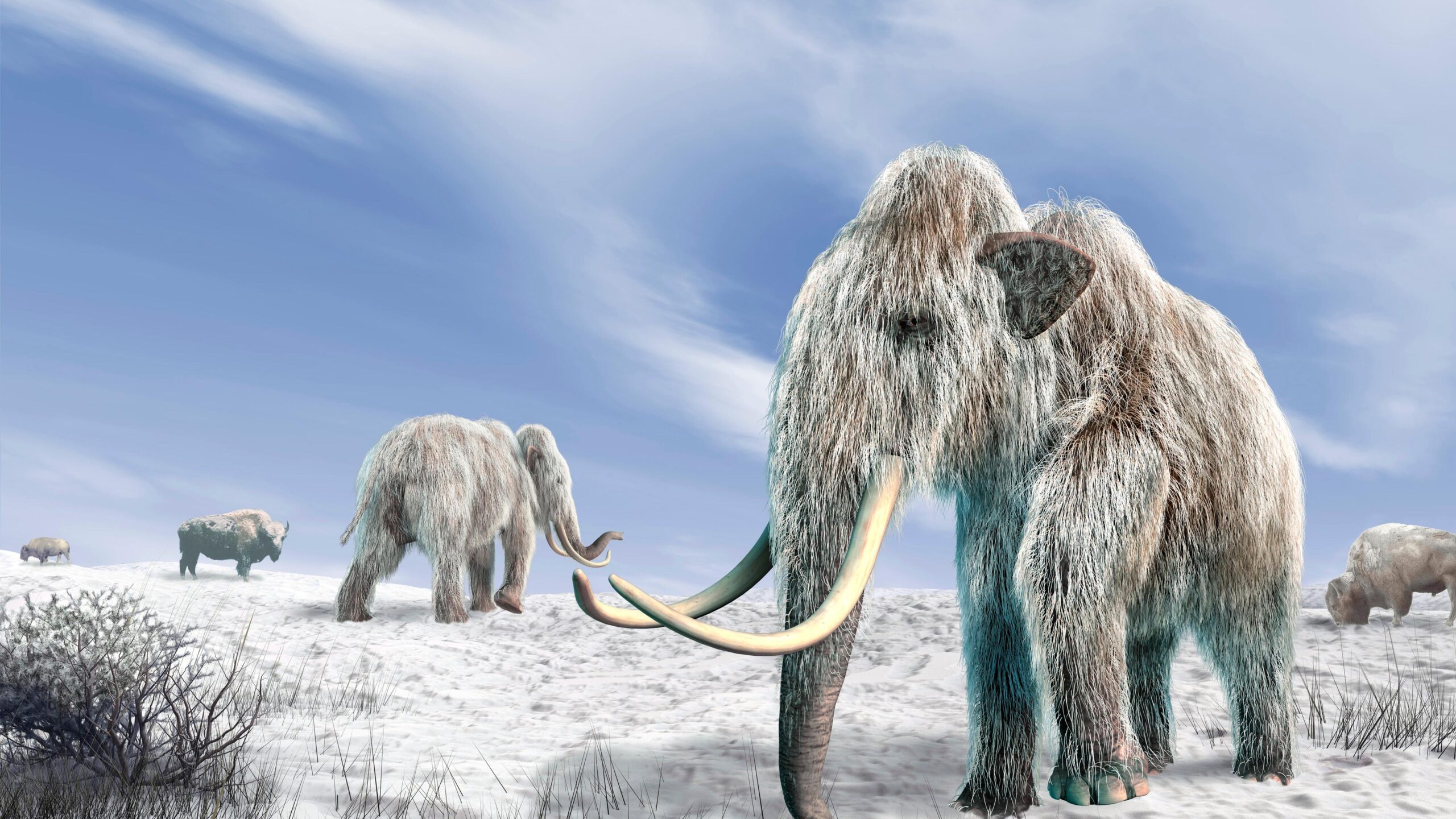
No more. In a recent conversation with TIME, Colossal CEO and co-founder Ben Lamm concedes that those goal posts have moved more than a little. “We are thinking it will be in the early 2030s,” he says. “We don’t have a hard date. Not 2036, but not 2030 either.”
In just the past year, Colossal has learned vastly more about both the mammoth and the elephant genomes than has ever been known before, not only improving the odds that the mammoth can be brought back to life, or de-extincted, but also unpacking basic genetic science that could one day have knock-on effects for humans—including potentially increasing resistance to cancer.
Bringing back the dire wolf
Colossal proved its de-extinction chops in the spring of 2025, when it announced that it had brought the extinct dire wolf back to life, editing the genome of the closely related gray wolf to replicate the features of its vanished cousin—including a white coat, larger size, more powerful shoulders, wider head, larger teeth and jaws, more-muscular legs, and characteristic vocalizations, especially howling and whining.
Read the full article here
