

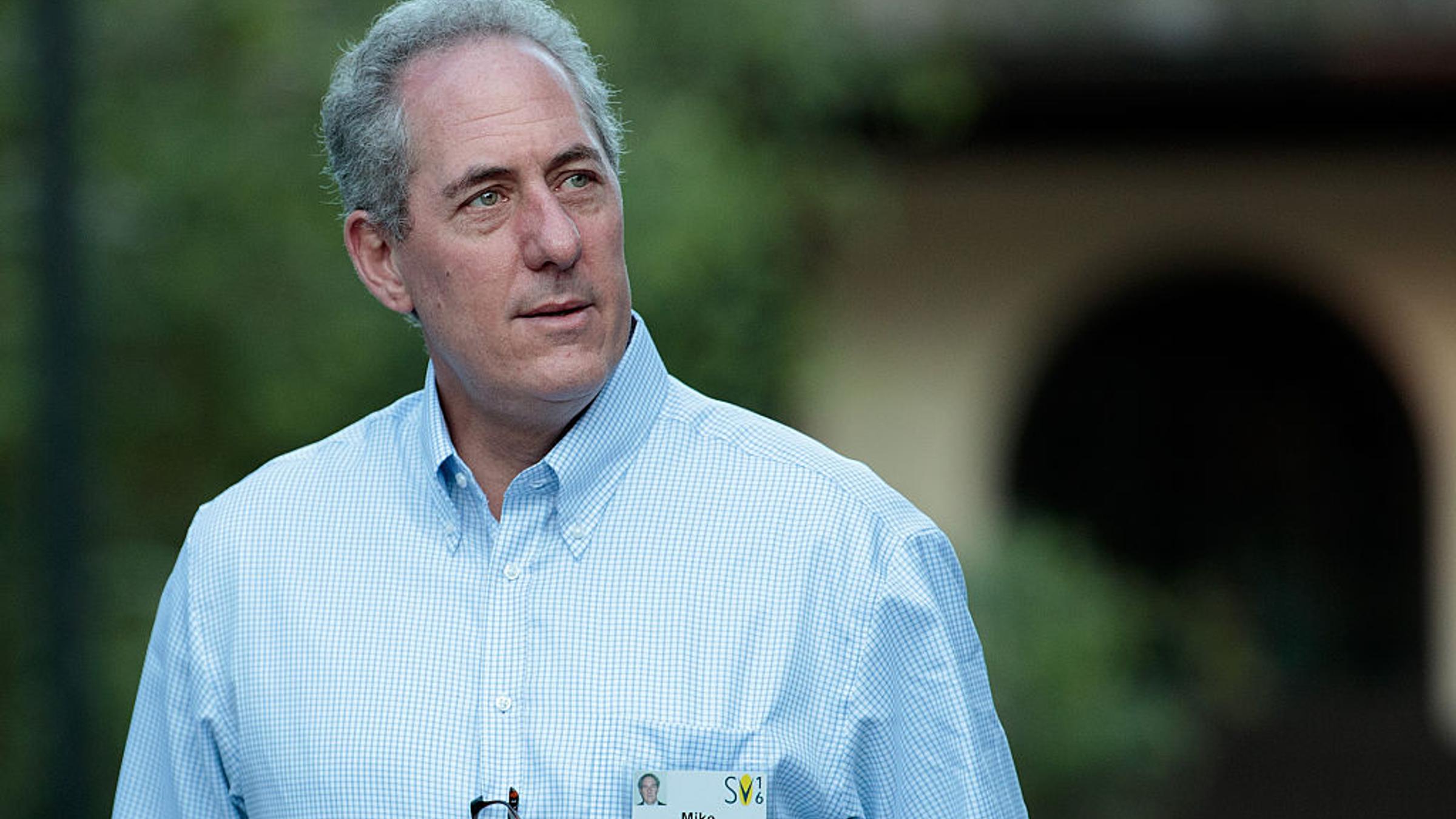
When I spoke with Michael Froman, president of the Council on Foreign Relations, last year, he described the Trump Administration’s opening weeks as potentially the most consequential stretch in American history in 80 years. It was a striking assessment at the time, one that the ensuing months have only made more so.
I sat down with Froman again recently to take stock of this remarkable period that has upended so many of the structures and assumptions that have defined modern American power. Few institutions are more closely associated with analyzing (and sometimes influencing) those shifts than the Council on Foreign Relations, a forum where for more than a century policymakers, scholars, business leaders, and journalists have wrestled with America’s changing role in the world.
In our conversation, Forman discusses Trump’s emerging foreign-policy doctrine, the rise of “coalitions of the willing,” the role of business, and what he’s most worried and most optimistic about in foreign affairs going forward.
(This conversation has been condensed and edited for clarity. Disclosure: I am a CFR member.)
When we had our last conversation, about a year ago, you had just spoken at Princeton, where you made the case that the previous five or six weeks may have been the most important five or six weeks in American history in 80 years. This was a little over a month after President Trump took office.
Since then, it seems fair to say there have been some additional weeks that might compete! How do you think about this now?
I would extend it and say that when it comes to America’s role in the world, the last year may have been the most significant 12 months we’ve had over the last 80 years.
Even before the current war with Iran began, you had Vice President Vance’s speech in Munich in 2025, which began a year-long discussion about the Transatlantic relationship. You had April 2, “Liberation Day,” and the announcement of worldwide tariffs, which fundamentally upended, in many respects, the global trading system.
You had the President’s intervention in the Russia-Ukraine and Israel-Gaza negotiations, the bombing of Iran in July, the release of the National Security Strategy and the National Defense Strategy, and the action in Venezuela that demonstrated implementation of aspects of that strategy.
And you’ve had the conflicts with Denmark over the future of Greenland, which probably in retrospect had the most meaningful impact on the Transatlantic relationship of any of these events. Those effects are still reverberating.
Any of these on its own would be a seminal event.
What are you seeing emerge as the theory of the case for the Trump Administration’s foreign policy?
There have been a number of speeches and documents issued with the goal of putting context around decisions the President has made based on his instinct and intuition.
On the economic side, some advisors have worked to explain how tariffs or a weakening dollar will have a positive benefit on the U.S. economy. On the Transatlantic side, you’ve seen Secretary Rubio and others talk about a kind of tough love toward Europe—on the one hand underscoring our shared interests and on the other hand making it absolutely clear that the burden will need to shift more toward Europeans themselves.
That includes reforms to become more productive and innovative economies and to create a coherent defense industrial base. Instead of every country building its own tanks or air-defense systems, Europe could develop a continent-wide industrial base that might allow it to achieve a degree of strategic autonomy, something President Macron and others have emphasized.
The Council on Foreign Relations played important roles in the architecture of the post-war rules-based international system. Is that system gone? Are there still rules?
The multilateral rules-based system, embodied by institutions like the United Nations and the World Trade Organization, has fundamentally changed.
But that doesn’t mean there are no rules. Rather than anarchy, we’re likely to see “coalitions of the willing” come together around common interests and develop their own sets of rules.
It will be more fragmented and more complex but not necessarily rule-less or lawless.
So fewer rules, or different rules?
Both. In some cases, countries are simply moving forward without the United States. Europe has negotiated free-trade agreements with the Mercosur bloc and India. The U.K. has announced other agreements.
Meanwhile, the Trump Administration has convened ministerials on critical minerals and proposed initiatives like the “Board of Peace.” So we’re seeing older institutions supplemented or partially replaced by new approaches.
In so many areas, the President may have an unconventional way of presenting his views but there’s often some truth in his critiques. When he stood before the U.N. General Assembly in September and said that the United Nations has not lived up to its potential, who could possibly argue with him?
Now, whether we should replace the Security Council with a Board of Peace is another issue. But he’s pointing to a real problem that the U.N. has not been effective in dealing with the major conflicts around the world.
We talked a year ago about “polyamory” in today’s international relations or multi-alignment.
Yes. It won’t be the same system we had in the 30 years after the Cold War, but it’s not a fully multipolar world either. Countries will form relationships of convenience based on mutual interests.
It’s inherently more transactional, which is consistent with President Trump’s view of the world. And it may be more focused on common interests than common values.
Where do you see the role of business in these evolving new models?
The Administration has emphasized leveraging the private sector where possible. That includes talking with oil companies about investing in Venezuela, encouraging investors to support Gaza reconstruction, and reauthorizing the International Development Finance Corporation, which seems to be one of the major institutions that the administration is comfortable with.
Many recent trade agreements—with Japan, Korea, the E.U., the U.K.—include major investment components focused on investing in the United States. So the nexus between government policy and private capital is clearly central to their foreign-policy approach.
A few rapid-fire questions. What has surprised you most over the last year?
Until recently, the willingness of other countries to fall in line behind the Administration’s approach. After “Liberation Day,” one might have expected much more retaliation. China demonstrated its capacity to use leverage on critical minerals. Canada responded somewhat on electricity and potash.
But most partners, they may not have been happy about it, but they responded by negotiating.
What keeps you up at night now that maybe didn’t a year ago?
I worry about the immediate operational challenge of reopening the Strait of Hormuz, as well as the larger strategic question of whether the United States still has the political capital and goodwill necessary to assemble a coalition in a moment of crisis. The response of our allies to the request for helping the U.S. secure the strait raises the stakes not only for this conflict, but for how we think about alliance management more broadly.
I also worry about the sheer number of critical issues on the agenda at the same time, seemingly being managed by a very small group of people in the administration.
What is the role of American soft power in the aftermath of all the cuts and changes?
The National Security Strategy actually says the U.S. should have unrivaled soft power. At the same time, we’ve made significant cuts to many of the tools of soft power, whether it’s our investment in R&D, or USAID, or Voice of America.
So we’re going to need new ways of exercising soft power. It’s important that we do, because some of the actions that the administration has taken has had the effect of diminishing trust, and we need to be able to get other countries to follow our lead when it’s critically important to our interests. Trust takes a long time to build, and can be dissipated very quickly. That means we’re going to have to find some new tools, or reinvest in some of the ones that we have cut.
Do you see any movement in that direction?
I’m hopeful on research, innovation, and talent attraction. These align with the President’s own economic goals, so funding may eventually be restored.
Final question—where are you more optimistic today than a year ago?
The agreement on releasing hostages in Gaza and returning remains, prisoner exchanges, and increased humanitarian aid was a significant accomplishment. I am hopeful about reaching phase two or three of those agreements, but we shouldn’t lose sight of the fact that the first phase was important.
I also think there was a concern a year ago that the President was coming into office as an isolationist. He is not an isolationist. He is deeply engaged in the rest of the world. His form of engagement is different than that of his predecessors over the last 80 years, but he is engaged. My hope is that commitment to engagement can be channeled into constructive purposes, ultimately including more peace and security around the world.
(To receive weekly emails of conversations with the world’s top CEOs and decisionmakers, sign up for the Leadership Brief here.)
Read the full article here
