

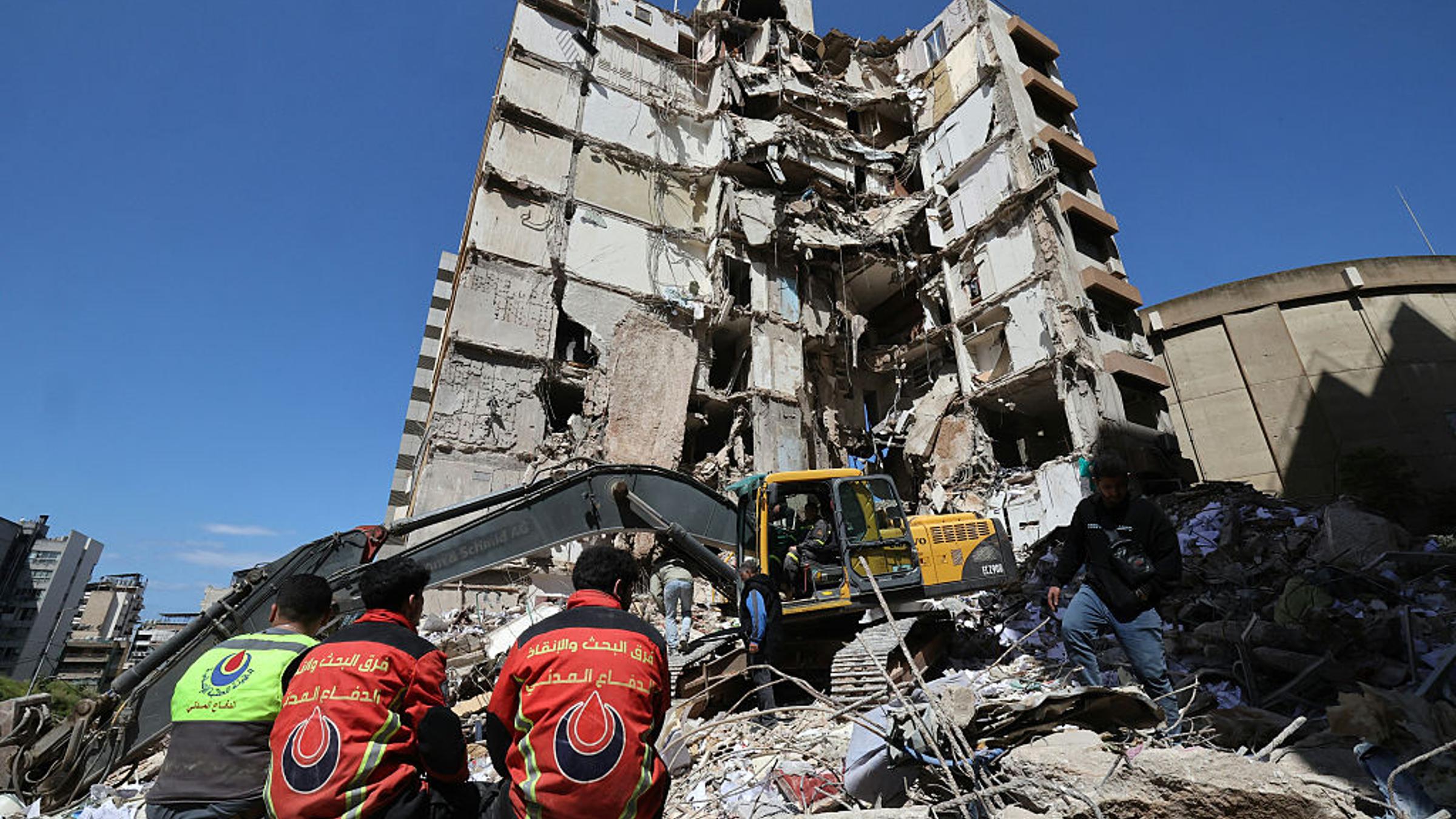
Israel’s strikes against the Hezbollah militant group in Lebanon are straining the already fragile U.S.-Iran cease-fire.
Over 300 people were killed in Wednesday’s strikes alone during a 10-minute attack, according to Lebanese authorities. It marked the deadliest day in the Israel-Lebanon conflict, which reignited following the initial U.S.-Israeli strikes against Iran on Feb. 28.
Iran argues the ongoing assaults are a “grave violation” of the temporary truce, with deal broker Pakistan originally indicating that Lebanon was factored into the agreement. But the U.S. and Israel maintain the country was never part of the cease-fire.
While U.S. and Iranian officials are set to launch negotiations in Islamabad over the weekend, Israeli and Lebanese representatives are expected to meet in Washington, D.C. next week.
However, the talks are far from locked in, as a senior official from the Lebanese President’s office reportedly said Friday that Lebanon will only engage in negotiations with Israel if a cease-fire comes into effect beforehand.
In the meantime, the countries continue to trade strikes.
As concerns mount that Israel’s parallel war with Lebanon could jeopardize progress in U.S.-Iran negotiations, here’s what to know about the escalating conflict, its key players, and the steeped history behind the clashes.
What is Hezbollah?
Hezbollah, meaning “Party of God,” is an Iran-backed Shi‘ite Muslim militant and political group based in Lebanon.
It was founded by a number of Shi‘ite clerical groups during the 15-year Lebanese Civil War, in direct response to Israel’s invasion of the country in 1982.
Israel occupied southern Lebanon and briefly took control over Beirut, the Lebanese capital. Both areas are home to significant Shi‘ite populations. More than 17,000 people were killed and another 30,000 wounded during the Israeli invasion, according to Lebanese media reports citing hospital records.
“Hezbollah was founded explicitly to resist that occupation, and was also founded explicitly to destroy Israel,” Urban Coningham, a research fellow and course lead at the Royal United Services Institute, tells TIME. “So naturally, since then, there’s been almost continuous fighting between the groups.”
Hezbollah maintained guerrilla-style warfare against Israel throughout the occupation of southern Lebanon up until 2000, when Israel withdrew from the country.
In the immediate years after, a number of smaller wars and missile exchanges between the two sides occurred, with Hezbollah maintaining a hold in Lebanon.
One of the most significant clashes was the 2006 war, during which Hezbollah launched strikes against targets in Israel, resulting in a retaliatory invasion of southern Lebanon.
Israel’s offensive, which lasted just over a month, was largely seen as a success for Hezbollah, with the militant group holding off Israeli advances and ambushing troops in the south of the country.
Coningham describes the militia as “one of the most successful paramilitary groups in the world,” which has “been able to effectively become a state within a state of Lebanon and hold to ransom any Lebanese political process.”
Iranian funding has been crucial for Hezbollah’s development.
“It didn’t take Iran long to realize the potential of a potent militant group armed to the teeth on Israel’s northern border,” notes Nimrod Novik, a distinguished policy fellow at Israel Policy Forum and the former Special Envoy and Policy Adviser to the late Israeli Prime Minister Shimon Peres. The outside support allowed Hezbollah to turn “into the most potent political military force inside Lebanon,” he says.
After years of smaller-scale clashes, a full-blown conflict erupted between Israel and Hezbollah in response to the Israel-Hamas war in October 2023.
Hezbollah and Israel Defense Forces exchanged missile fire along Israel’s northern border with Lebanon, with almost daily strikes from either side in the months that followed.
The conflict escalated, with Israel ramping up its offensive operations against Hezbollah, delivering decisive blows.
Israel carried out “pager attacks” across Lebanon and parts of Syria. On Sept. 17, 2024, through remotely targeting the pager devices of Hezbollah members, they killed 12 people, including two children, and injured thousands more, according to the Lebanese authorities.
Israeli strikes killed Hezbollah’s long-time leader, Hassan Nasrallah, that same month.
Thousands of people in Lebanon were killed during the war, with around 900,000 people also displaced, according to the United Nations.
Read more: ‘We Can’t Predict What Israel Will Do.’ Inside the Fear and Chaos Gripping Lebanon
The two sides reached a cease-fire in November 2024, which was only held for days before small missile exchanges once again resumed, with both sides accusing each other of violating the deal.
One of the conditions of the agreement was the disarmament of Hezbollah, something which ultimately failed, notes Dr. Sanam Vikal, director of the Middle East and North Africa programme at Chatham House.
The Lebanese Armed Forces (LAF) and the country’s government, which are distinct from Hezbollah’s military wing, was tasked with disarmament, but it was a “difficult project” complicated by international pressures, she says.
“There was growing pressure from the Israeli government on Lebanon, but also via the United States, to be permitted to militarily reinforce an effort to demilitarize,” Vikal tells TIME. “That’s what has set the precedent for this war. Israel was itching to go in and finish the job.”
When did Hezbollah become involved in the Iran war?
The U.S. and Israel launched initial strikes against Iran on Feb. 28, killing Supreme Leader Ali Khamenei and sparking a widespread conflict that has engulfed the Gulf states and disrupted the global economy.
On March 2, Iran’s proxy, Hezbollah, joined the war and launched missiles at Israel, marking the first notable clash since the 2024 cease-fire agreement.
Israel has since launched repeated strikes on Hezbollah targets across the country, including in the south, suburbs across Beirut, and the Beqaa Valley in the east, one of the militant group’s historic strongholds.
Just days into the war, medical emergency groups in Lebanon raised concerns about the impact that strikes were having on civilians, with Médecins Sans Frontières saying that evacuation orders in impacted areas left residents with “nowhere safe to go.”
Press freedom groups have also sounded the alarm over a spate in killings of journalists in Lebanon.
Since the U.S. and Iran agreed to a two-week cease-fire on April 7, the fragile truce has been threatened by Israel’s continued strikes on Lebanon.
While Israeli Prime Minister Benjamin Netanyahu has said he is open to talks with the Lebanese government to “focus on the disarmament of Hezbollah and the establishing of peaceful relations between Israel and Lebanon,” he shot down the possibility of a cease-fire prior to negotiations.
Hezbollah leader Naim Qassem, meanwhile, has reportedly vowed to continue fighting Israel “until the last breath,” according to a statement read out on the militant group’s Al Manar TV on Friday.
When did Israel launch its ground assault on Lebanon?
Israel announced “limited and targeted” ground operations in Lebanon in mid-March, a little over two weeks into the Iran war.
“This activity is part of broader defensive efforts to establish and strengthen a forward defensive posture,” said the IDF at the time, citing the intent was to “remove threats and create an additional layer of security for residents of northern Israel.”
Israeli Defence Minister Israel Katz later mapped out Israel’s “clear” policy in Lebanon.
“Where there is terror and missiles, there are no homes and no residents, and the IDF will control the security zone up to the Litani [River],” he said.
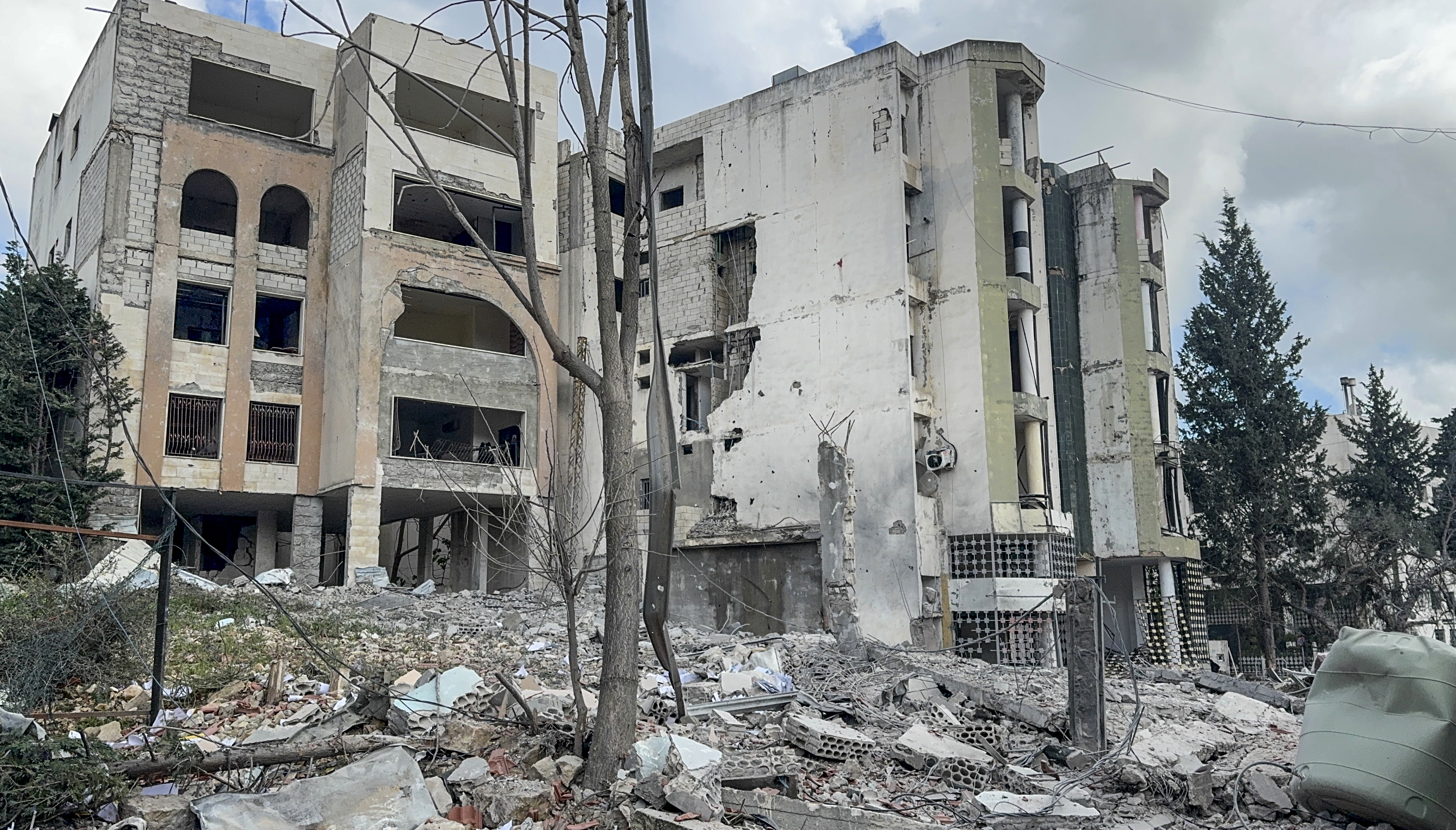
Israel has followed through with its campaign in the south, utilizing both air and land operations to progress south of the Litani River, in efforts to establish a buffer zone.
Since the Israel-Hamas war, the IDF has strengthened its intelligence in Lebanon, and trained troops to fight within Hezbollah territory, says Coningham, giving them an added advantage now.
Distinctions have been drawn between the operation in Lebanon and that which was launched in Gaza following Oct. 7, 2023.
“Hezbollah has historically been very strong in southern Lebanon, so it seems like a sort of rehash of the tactics which the IDF used in parts of Gaza, where they essentially reduced areas of land, villages, cities, to rubble,” says Coningham.
This Israeli objective has sowed further doubt in Lebanon of Israel’s long term intentions, according to Dr. Renad Mansour, deputy director for the Middle East and North Africa programme at Chatham House.
“Hezbollah has argued that Israel is moving to a more permanent occupation in southern Israel,” he tells TIME.
Experts also note a shift in Israel’s military strategy in the latest reignition of the decades-old conflict.
“What has changed now is the conflict with Iran and, with the U.S. involved so heavily, it means the Israelis have a much freer hand in Lebanon, because Iran’s unable to respond,” says Coningham. “Essentially, there’s a much lower risk for Israeli forces operating in Lebanon, and also a much lower risk of Iran retaliating.”
“Now, every problem with Hezbollah is dealt with exclusively by preemptive military force,” argues Novik. “The current national strategy is limping on one leg, totally dismissing the other, equally essential part of the toolkit, which is diplomacy.”
Is Lebanon included in the U.S.-Iran cease-fire?
There are conflicting accounts between Iranian and U.S. officials regarding whether or not it was intended for Lebanon to be included in the temporary cease-fire.
Iranian officials, bolstered by Pakistan Prime Minister Shehbaz Sharif’s initial announcement of the agreement, argue that Lebanon is part of the cease-fire and any strikes from Israel since have been a violation. Israeli and U.S. officials have strongly refuted this.
Vice President J.D. Vance said the U.S. never agreed that the cease-fire would cover Lebanon and he thinks it was a “legitimate misunderstanding” of the Iranian officials who thought it did.
Iran’s Parliament Speaker Mohammad Qabilaf has stressed that Lebanon and other Iranian proxy allies, known as the Axis of Resistance, are “an inseparable part of the cease-fire,” arguing that Sharif “publicly and clearly stressed the Lebanon issue.”
World leaders have urged for Lebanon to be included in the temporary truce.
European leaders released a joint statement calling upon “all sides to implement the cease-fire, including in Lebanon.”
The statement, endorsed by British Prime Minister Keir Starmer, German Chancellor Friedrich Merz, and French President Emmanuel Macron, said a lasting end to the war can only be achieved through “diplomatic means.”
The chief of foreign affairs for the European Union, Kaja Kallas, also called on Israel to de-escalate.
“Hezbollah dragged Lebanon into the war, but Israel’s right to defend itself does not justify inflicting such massive destruction,” she argued. “Israeli actions are putting the U.S.-Iran ceasefire under severe strain. The Iran truce should extend to Lebanon.”
French Foreign Minister Jean-Noël Barrot has said that France “firmly condemns” the strikes.
Meanwhile, Trump suggested Thursday that Israel would be “scaling back” operations in Lebanon.
“I spoke with Bibi and he’s going to low-key it. I just think we have to be sort of a little more low-key,” he told NBC News.
There are concerns that additional strikes on Lebanon could prompt action—and a cease-fire break—from Iran.
“If strikes continue on Lebanon, then Iran might get involved [against Israel], and then the cease-fire is over,” says Coningham, noting the fragility of the agreement. “That’s one of the last cards [Hezbollah] have to play.”
Death toll in Lebanon and mounting concerns over displaced civilians
Since Hezbollah joined the Iran war on March 2, at least 1,888 people have been killed in Lebanon, according to the country’s Health Ministry. The ongoing war has added to the pre-existing strain on the country’s health sector and the population as a whole.
According to the International Rescue Committee (IRC), the “escalation of hostilities between Israel and Hezbollah, Israeli airstrikes, and evacuation orders” have displaced 1.3 million across Lebanon.
The IRC on Friday called for an “immediate” cease-fire, insisting that “civilians must be protected in all circumstances, and constant care must be taken to spare the civilian population from the effects of hostilities.”
The World Food Programme also warned that Lebanon is facing a food insecurity crisis.
“What we’re now seeing is a very worrying combination: prices are rising, incomes are disrupted and demand is increasing as displacement continues for many families,” said country director Allison Oman.
“There’s immense poverty in the country,” adds Coningham. “Lots of people don’t have constant access to electricity, to clean drinking water, to food. So with a crisis like this, there’s a danger that it tips many communities over the edge, and then they have little choice but to become refugees.”
Read the full article here
