

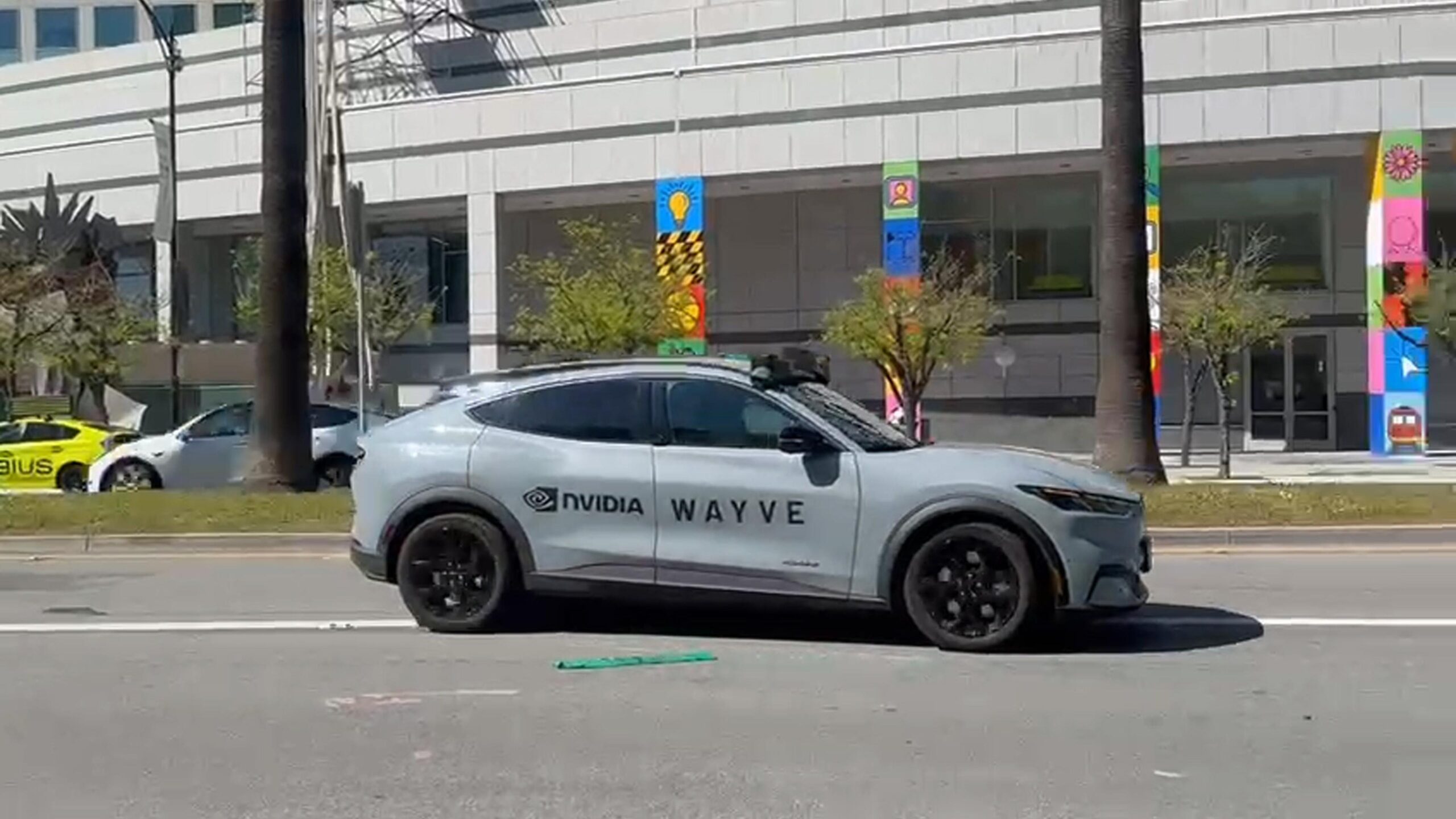
Wayve’s versatility across cars and countries’ opens markets that have, so far, gone untapped by its competitors, according to Kendall. The market for car sales is worth roughly $2 trillion, ten times the taxi market in which Waymo currently competes. Tesla, which, like Wayve, develops partial automation software, does not currently offer its software to other car companies. “The largest opportunity … is to license technology to any fleet or any automaker,” says Kendall. “I think by the 2030s … if you’re selling a car and it doesn’t have hands-off and eyes-off driving, the demand for that product is going to be near zero.”
Wayve plans to begin running its own rides in London and Tokyo in 2026, through Uber, one of its investors, with safety drivers behind the wheel for backup. The deployments will help collect data to train the AI driver and develop “world models:” simulated worlds that Wayve and Waymo use to test how their AI will respond to new environments. “Data is the biggest bottleneck in robotics—it’s extremely time-consuming and expensive to gather,” says Anastasis Germanidis, co-CEO of Runway ML, which makes world models.
Read the full article here
