

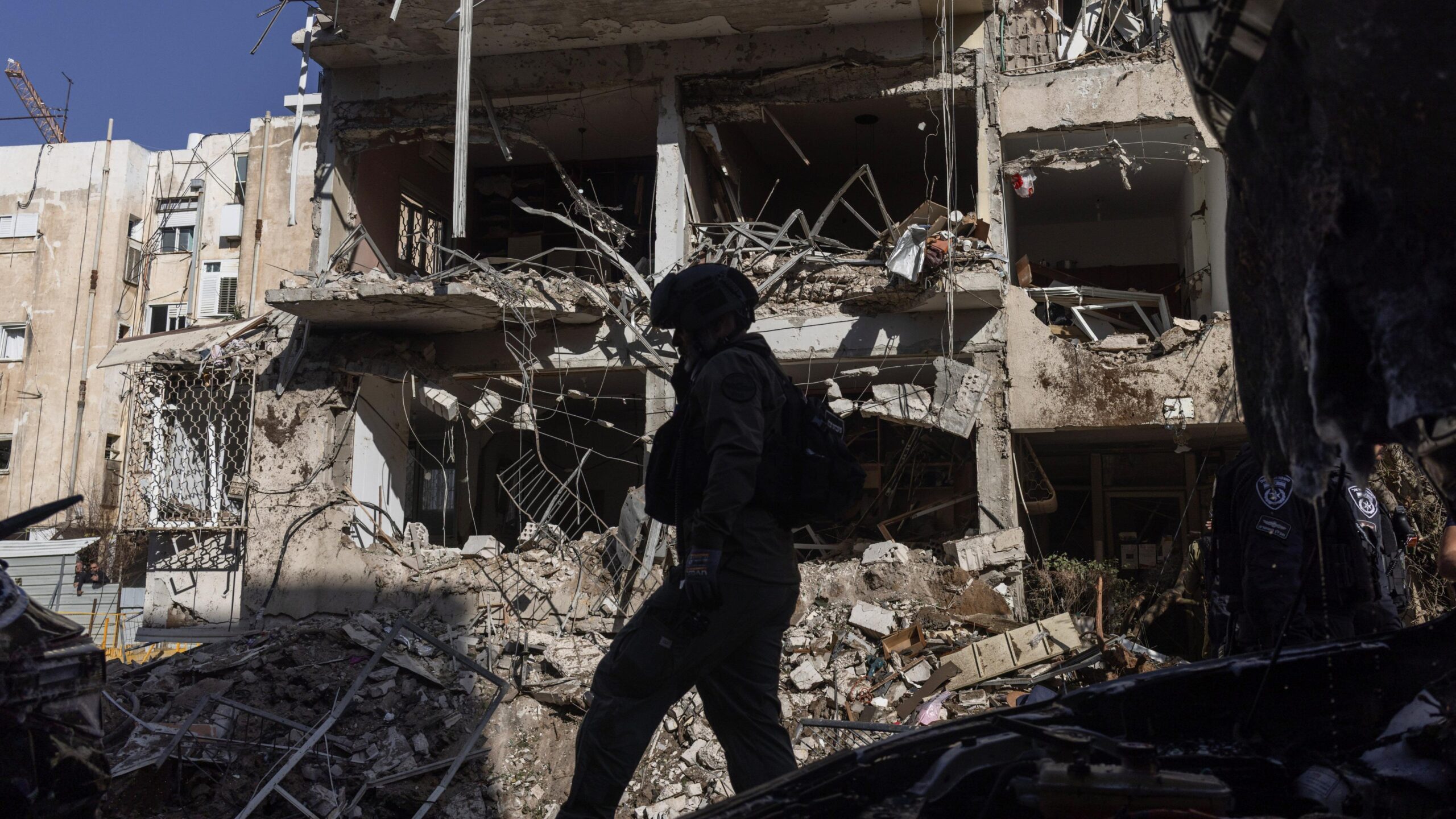
“It is now, for all intents and purposes, a military regime,” a journalist in Iran tells TIME, speaking anonymously for security reasons. “What exists now, in these wartime conditions, is only a façade of the old regime, and Mojtaba Khamenei is the window dressing. In today’s Iran, the Sepah rules alone at the top,” he says, using a Persian nickname for the IRGC.
Trump dismissed the choice as well, though for reasons of his own: “I’m not going through this to end up with another Khamenei. I want to be involved in the selection,” he told TIME in an interview on March 4. In an interview with Axios the next day, Trump said he would his like his involvement in choosing Iran’s next leader to be “like with Delcy in Venezuela.”
That appears unlikely—chiefly because, as the IRGC closed ranks, observers noted that power was concentrated in its most extreme elements. After an Israeli airstrike assassinated the official Khamenei had left in charge, Ali Larijani—a regime loyalist with long experience in foreign affairs—his successor as chief of the Supreme National Security Council was Mohammad Zolghadr, an IRGC general one Iranian journalist privately described as “fascist.” Analysts say the most powerful figure in Iran appears to be IRGC chief Ahmad Vahidi, who is suspected of overseeing the bombing of a Jewish community center in Buenos Aires early in his career, and in 2022 directed the lethal crackdown on Iranian protests.
Read the full article here
