

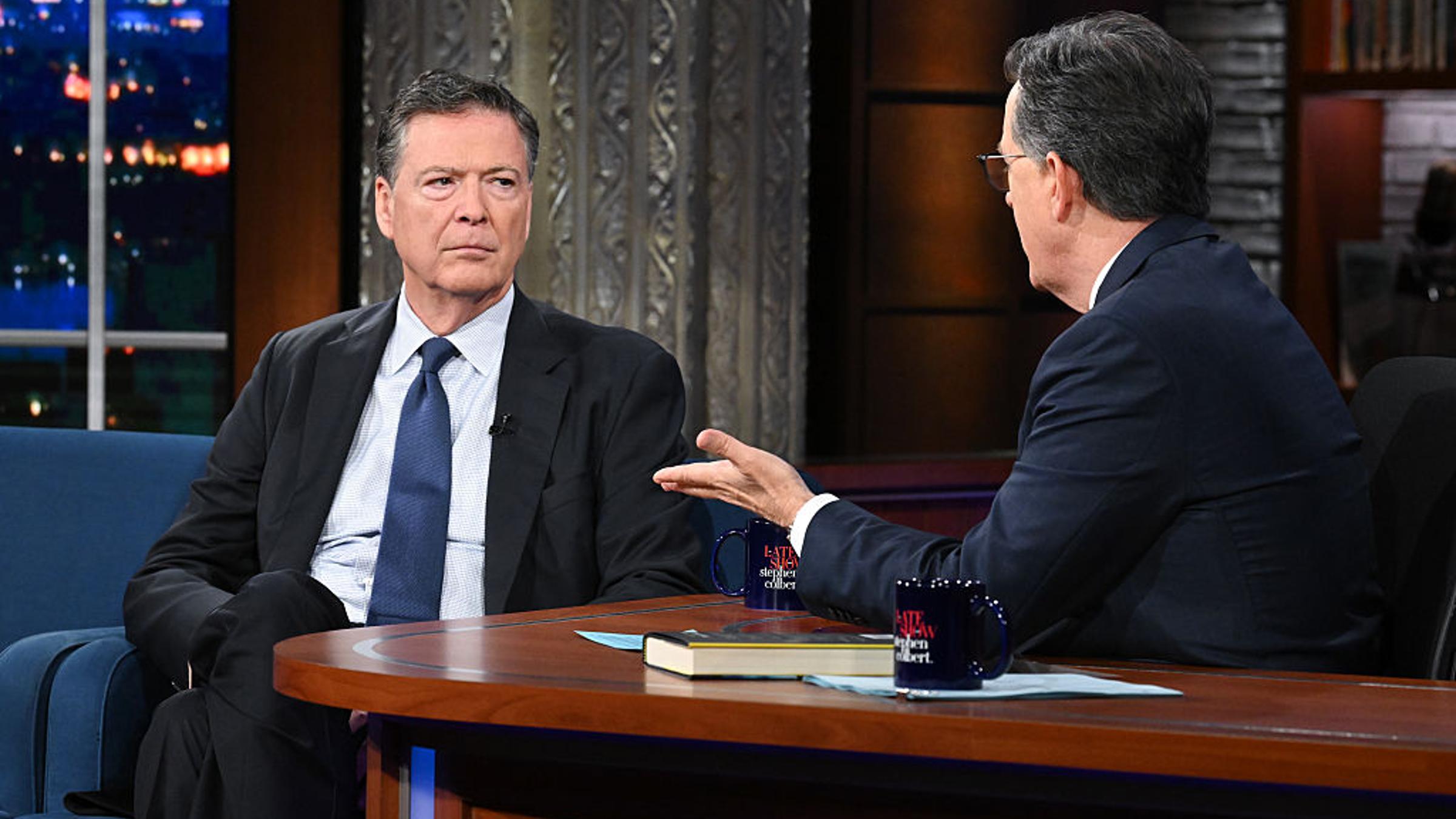
But prosecutors may find it challenging to prove that Comey indeed intended his post as a threat, especially given his clarification soon after. According to standards set by the Supreme Court in 2023, for something to constitute a “true threat,” which is not protected by the First Amendment, the speaker must have “consciously disregarded a substantial risk” that the statement would be perceived as threatening violence.
Comey, a longtime foe of Trump
Trump has for years called for Comey’s prosecution ever since the former FBI director oversaw the bureau’s investigation into alleged ties between Trump’s first presidential campaign and Russian officials in 2016. Comey also led the FBI’s probe into former Secretary of State Hillary Clinton’s use of her personal email at the time.
Trump fired Comey, an Obama-appointee, in 2017, less than four years into Comey’s 10-year term. Trump has accused Comey of weaponizing the justice system against him, while Trump has since publicly encouraged the Justice Department to investigate his own perceived political foes. Last September, the Justice Department charged Comey with making false statements to Congress related to disclosures to the press. Comey’s attorneys filed motions to dismiss the case, arguing that he was being vindictively and selectively targeted by Trump’s DOJ as political retribution. Those motions were not decided as the case was dismissed in November on the basis that the prosecutor had been unlawfully appointed.
Read the full article here
