

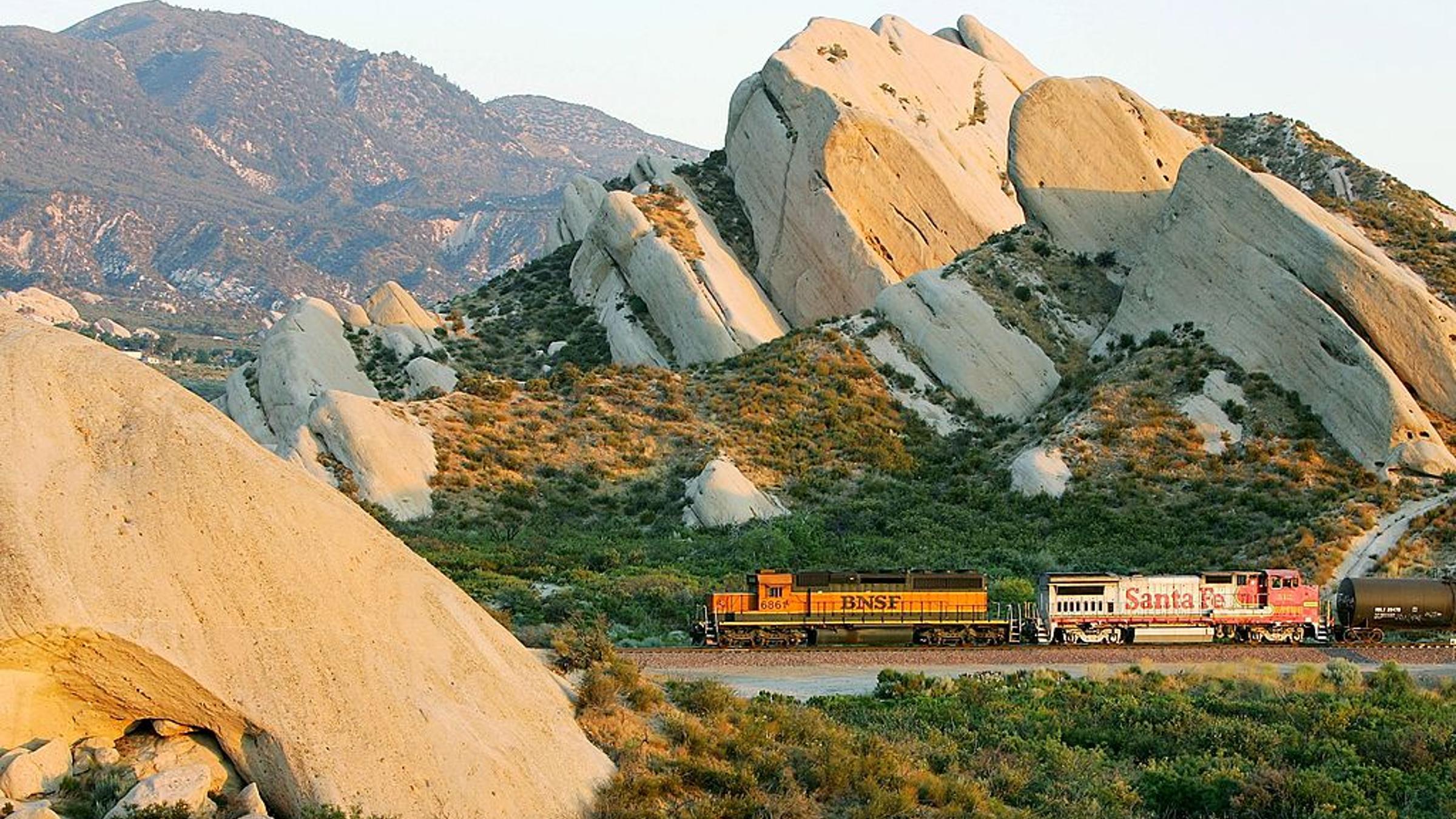
“Cajon Pass is a structurally complex junction,” says Burkhard, “where multiple geological factors combine to create gate-like behavior.”
To conduct their study, Burkhard and her colleagues surveyed existing data of both tree-ring analysis and radiocarbon dating of preserved sediment, reaching back 1,000 years in the geological record. When it came to the sediment, they looked particularly at displaced regions—spots where the ground once shifted and cracked. Tree rings were more complex. Quakes can leave trees standing at irregular angles, uproot them entirely, and disturb their drainage patterns. Such stressors can lead to a narrowing of the rings.
“By precisely dating these anomalies which acts as a natural calendar going back centuries,” Burkhard says, “scientists can identify years in which a major seismic event likely occurred in the region.”
The researchers fed this millennium-long data into a computer model to determine how much stress has built up along the faults in that temporal window. The conclusion: there has been little tree ring or sediment evidence in the geologically recent record, meaning the San Andreas and San Jacinto systems are loaded to blow—more stressed than they’ve been since the 11th century.
Read the full article here
