

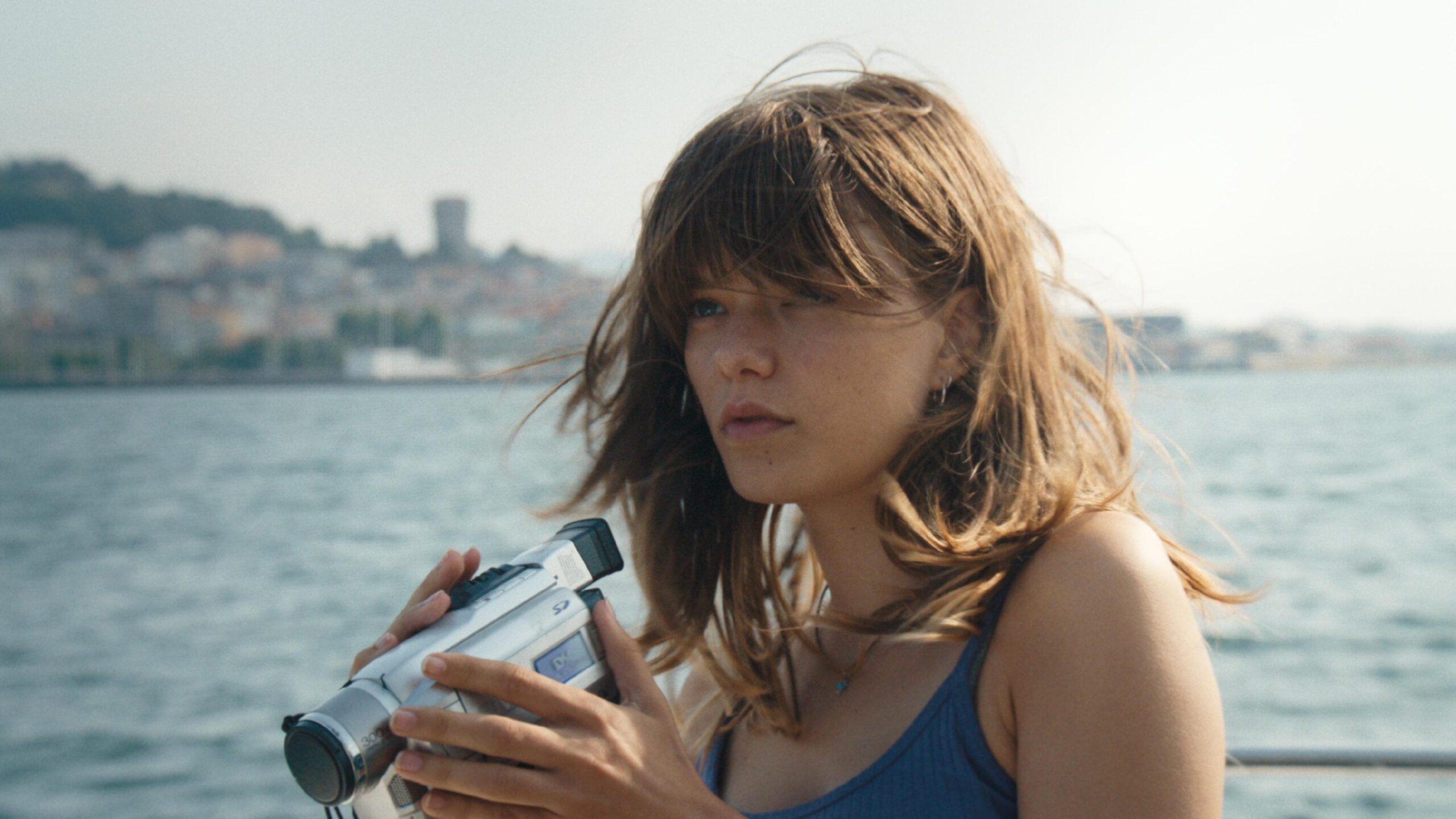
Marina does have allies among her extended family, including a raffish teenage cousin (played, with swaggering charm, by an actor who goes only by the name of Mitch) and a dissolute but extremely sympathetic uncle (Alberto Gracia), who helps her understand the extent to which her father, as he suffered through addiction and a stigmatizing illness, was ostracized by the family. But mostly, this trek through emotionally rocky territory is a solitary mission, and Marina’s navigation of it gives Romería its quiet, restorative power.
Simón was inspired to make the film as she was working on a previous, also autobiographical, feature, 2017’s Summer 1993. Someone had given her letters written by her mother, a gift that made her mother’s voice feel vivid and alive. In Romería, Marina also clings to a relic of the woman who’d brought her into the world, a journal, and returns to the places where her parents lived, to the shoreline off which they sailed, to the boat cabin where they furtively and desperately fed their habit, to the rooftop where, in their glorious, youthful beauty, they sunbathed like deities who thought they’d live forever. The result is a kind of dream memoir, including subtle elements of magic realism, chiefly in the form of a wise and mysterious tiger cat who leads Marina to truths no human can help her find. Romería is a reverie in which the natural world mingles with a mystical one: through Simón’s camera lens, the land- and seascape of Galicia is very real, a panorama of majestic, rocky beaches and sunlight glinting off mischievous waves, and Garcia’s performance has a similar elusive yet grounding power. The film leaves Marina, and us, in a state of grace: sometimes uncovering a truth, no matter how painful the process may be, is the only way to feel the true warmth of the sun—which, on our best days, can feel like the embrace of the parents we’ve lost.
Read the full article here
