

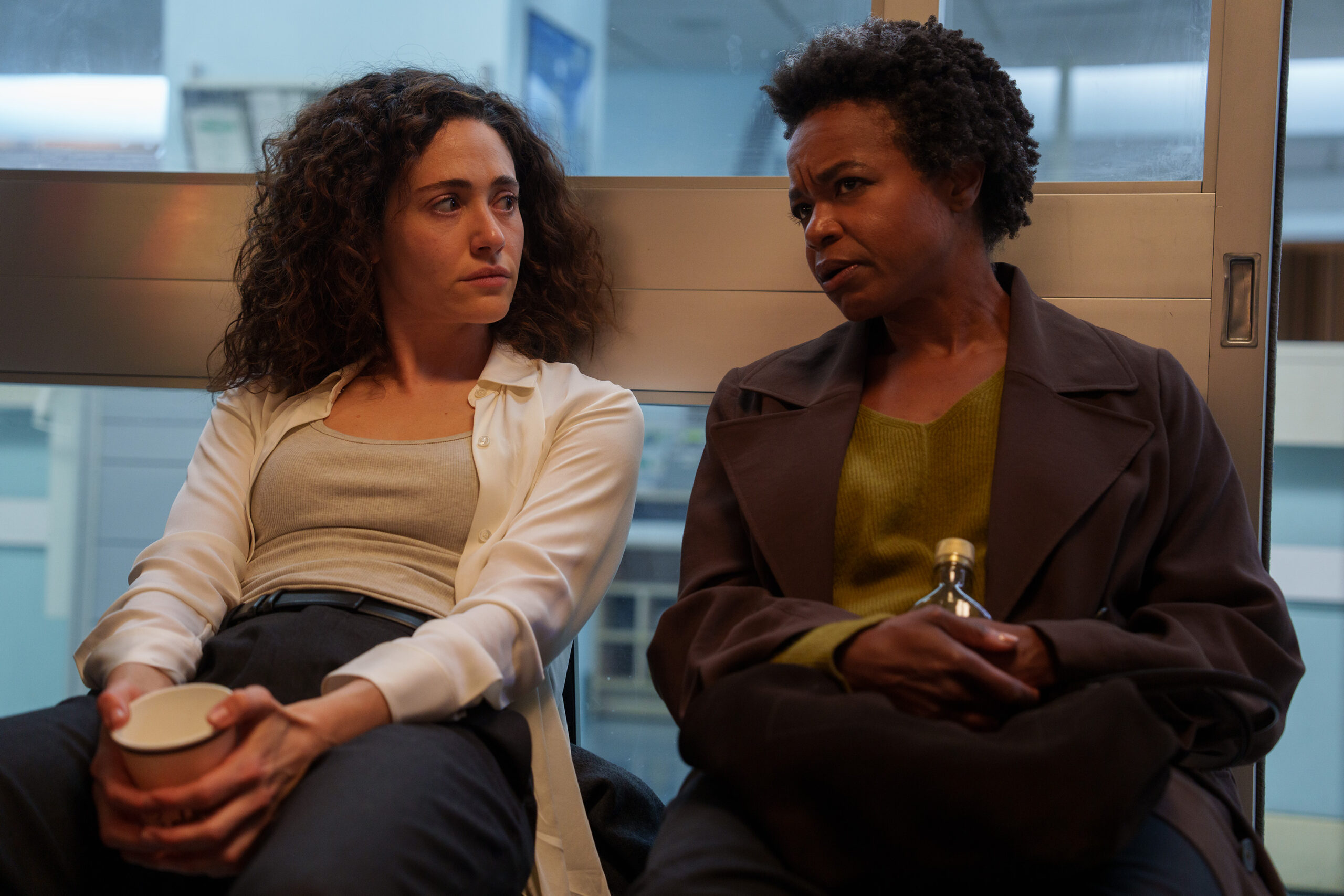
Midway through the Hulu thriller series Furious, it’s the middle of the night and two female FBI agents are on their way to investigate a lead when one notices the other’s bruises. “Who did that to your face?” demands Nora (Quincy Tyler Bernstine), who leads some of the Bureau’s most horrific sex crimes cases, as she pours liquor into her coffee cup. When Alice (Emmy Rossum), a rookie agent who worked as a Brooklyn homicide detective until her abusive, alcoholic cop boyfriend (Jake Lacy) ruined her police career, confesses that she met a man on the internet and asked him to hit her, she’s surprised to find her superior unfazed. “You think I’ve never let someone take a few whacks at this piñata?” Nora cracks. They both cackle.
If you find yourself laughing along with them—or can, at least, imagine why two women who have chosen to professionally immerse themselves in nightmarish sexual violence might seek a consensual version of it and also find the humor in that proclivity—then it’s likely you’ll be able to get on Furious’ wavelength. Created by Elizabeth Meriwether (Dying for Sex, New Girl) and premiering, with three episodes, on July 27, the series is more straightforward in its plot than the typical convoluted crime thriller but also more complex in its layered, often contradictory ideas. Its cat-and-mouse setup resembles that of Killing Eve: a troubled, underestimated female agent chases an eccentric, possibly psychopathic female killer. As its title suggests, one of its subjects is women’s rage. Yet, at its core, Furious is a haunting interrogation of the psychology of victimhood, the logic of revenge, and the myth that the justice system exists to protect the vulnerable, and its conclusions are too messy to resolve into a pat fable of empowerment or healing.
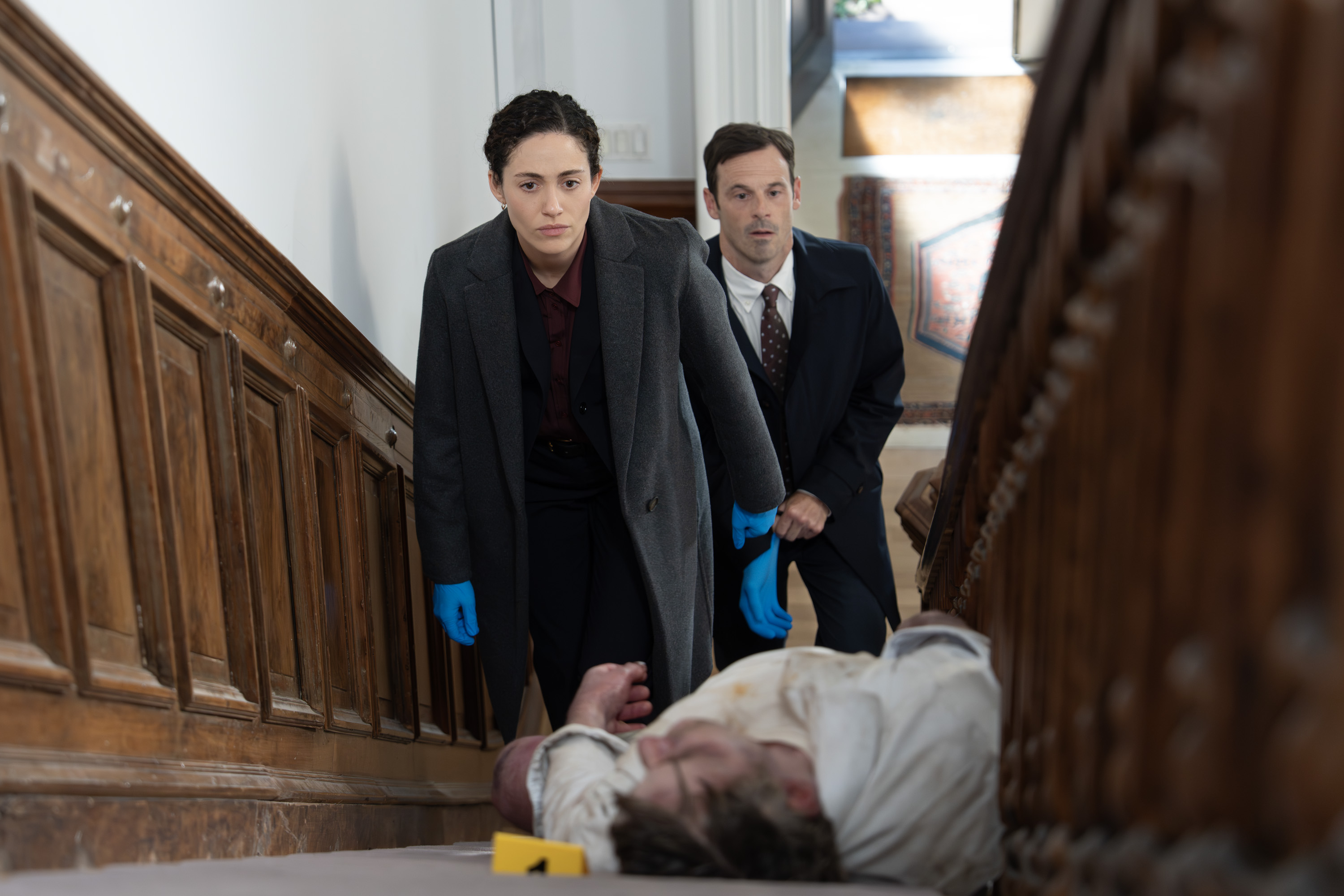
Although stickier questions of guilt and accountability arise, Meriwether doesn’t waste time on an initial murder mystery. Only after we watch a girlish woman in a cat mask (Say Nothing’s Lola Petticrew) administer a lethal injection to an incapacitated man, in between fetching candy for Brooklyn trick-or-treaters, do we meet the agent who will soon be on her trail. Having entered FBI training after her domestic violence allegations against Lacy’s Marshall made her a pariah at the precinct, Alice is pulled off desk duty at the Bureau to help investigate the Halloween murder. Behind that request is Dan (Scoot McNairy), the only NYPD detective still speaking to her and someone with whom she has quite a bit of history. (There aren’t many uncomplicated relationships in this show.) When the ad-hoc partners notice telling similarities between their new case—whose victim is the son of a billionaire, and whose female suspect has yet to be identified—and a year-old unsolved murder, Alice develops a theory that the two targets were involved in a child sex-trafficking ring and that their killer was one of the girls they trafficked.
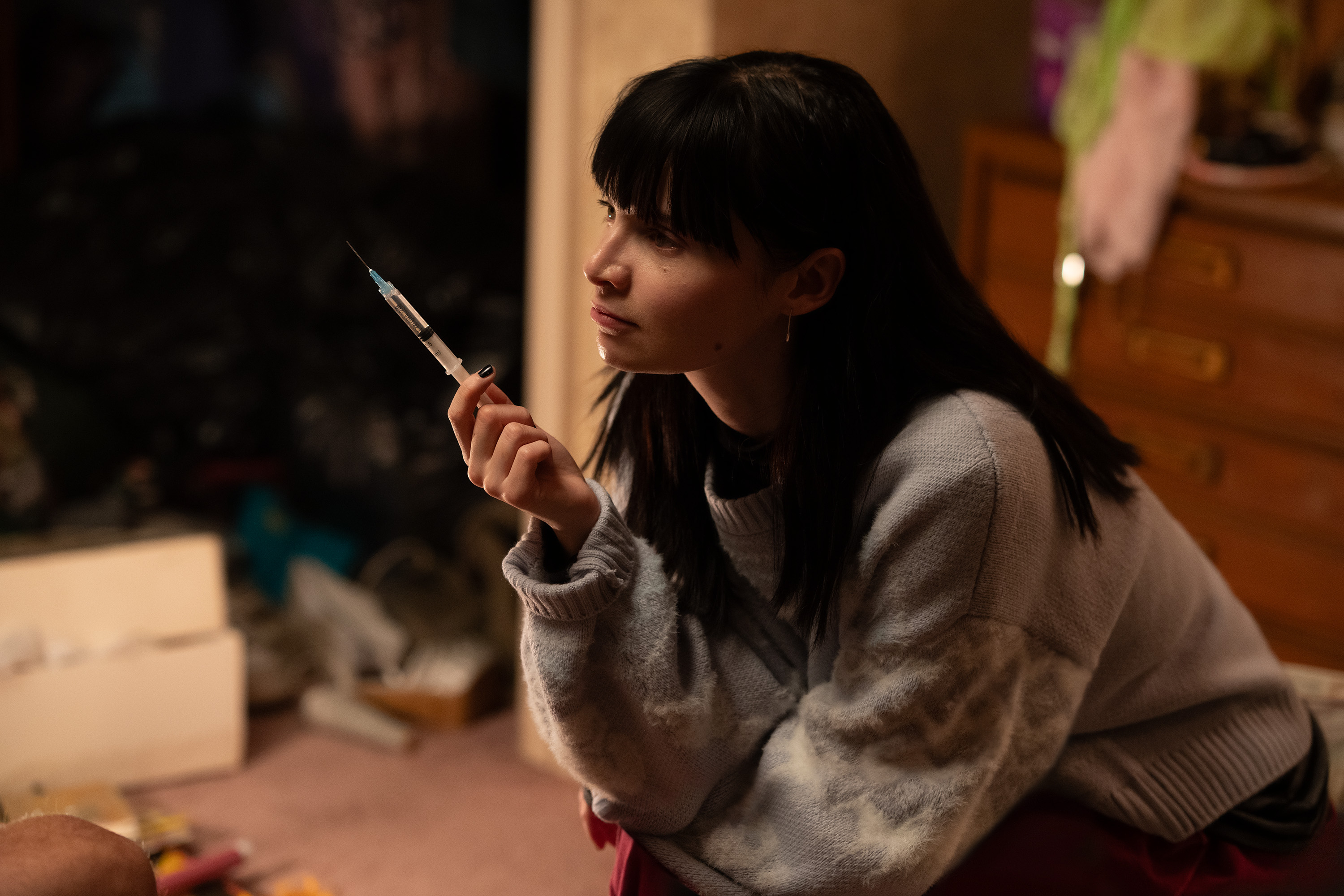
She’s right, though that doesn’t make her investigation any easier. The murderer, whose name is Catherine but who goes by many other aliases, has a one-track mind set to revenge. Moving between domestic violence shelters and subsistence scams, she manipulates kindhearted nonprofit workers, nepo babies who fetishize her sex-worker past, and people who fall closer to the middle of the good-evil spectrum—whatever it takes to keep crossing names off her hit list. The collateral damage of Catherine’s quest can be devastating. Yet it’s hard to hate her. She’s clearly not a sociopath. She cares about children and is capable of authentic tenderness even when it serves no strategic purpose; when she harms innocent people, it palpably hurts her.
Just as Catherine is willing to inflict pain in the service of vengeance, Nora has resigned herself to absorbing it in the potentially fruitless service of justice. When Alice, who had previously asked to be assigned to Nora’s team, seeks her help on the case, the weary agent is locked in her office reviewing child sexual assault materials. “Why do you want to work in the basement on sex crimes and crimes against children?” Nora asks Alice. “Do you hate yourself? Don’t answer that.” By the time she playfully compares their heads to piñatas, we know that both women would, at least on some days, respond in the affirmative.
Nora harbors no illusions of heroism, which might explain why she drinks so much. Toward the end of the premiere, she dissects Medusa’s origin story for Alice, explaining that the mythical hag’s snakey mane was a punishment—imposed by Athena, no less—for the crime of being raped by Poseidon. “She’s a victim,” Nora says. “But it doesn’t make her a good person. It turns her into a monster.” Like Catherine. “Juries want to believe that women who are victims of violence,” she continues, “but in my experience being a victim of violence just makes you colder, more calculating. Victims of violence are the most violent.” Also? Justice is an impossible fantasy. “Anything you do, the ones who are really to blame don’t get caught. Never.”
Speeches like this often come at the end of today’s bleaker crime dramas—”Forget it, Jake. It’s Chinatown,” but for viewers so distracted or dense, they need dialogue that spells out why Chinatown is a lost cause. Meriwether, whose best work interprets the motivations of apparently incomprehensible women like The Dropout’s Elizabeth Holmes and, in Dying for Sex, the real terminal cancer patient turned sexual explorer Molly Kochan, is doing something different. By placing Nora’s monologue so early in the series, then sending her all the way down the rabbit hole with Alice anyway, Furious is showing us a very smart person who has consciously committed to a lost cause. It’s also warning us against expecting the satisfying resolution, with villains punished and institutions redeemed, that draws so many people to detective stories.
In the seven episodes that follow, Meriwether piles on complications and thematic filters. There are parallels to the Epstein saga; tensions between an insular, blue-collar police force and federal agents with elite educations; systemic corruption; office politics. Bitter irony abounds, as when Nora, who is Black, attends a workplace mental health seminar in which a white, male supervisor who once mistreated her pretends to care about employees’ trauma. “What about anger?” she asks. Gender and race aren’t the only vectors of oppression the show considers. While wealth disparity plays pretty much exactly the role you’d expect, nuanced depictions of disability—particularly by Ramy actor Steve Way—challenge easy assumptions about personal agency in ways that relate to but are never conflated with the multiple abuse storylines.
As Nora’s speech and Catherine’s kind moments suggest, characters’ actions don’t consistently reflect their overall moral stance, which is often based on misunderstandings and falsehoods, its validity unknowable even to them. Being a woman, a survivor, or a person with physical differences doesn’t make a person righteous. Everyone you might consider a hero of this story will, at some point, do something abhorrent. “We become evil to fight evil,” says Nora, but if the most pernicious evildoers of all are uncatchable, how can the ends justify the means? Oscar contenders like Promising Young Woman and Three Billboards Outside Ebbing, Missouri have also asked whether revenge, specifically as a response to sexual violence, can rebalance the moral universe, or if it’s ultimately suicidal. But both movies were glib thought experiments that distanced us from their characters to argue their points. Furious takes advantage of its longer runtime to get close to these people in pain. It never reduces them to cartoons.
At the very center of its tangle of experiences and identities, objectives and conflicts, is Alice. She, Catherine, and Nora are all mirrors for one another, similarly obsessed with righting wrongs and punishing abusers of people and power as they are. (All three performances are Emmy-worthy, but my favorite is Bernstine’s. The Tony nominee and Power franchise alum brings the right mix of humor and defiance to animate a character who might otherwise come off as just a hypocritical sad sack.) Nora and Catherine have committed to opposite paths. But Alice doesn’t know what she wants—the pursuit of justice through legally prescribed channels or bloody revenge exacted by any means necessary. What is she even doing in this investigation, chasing a serial killer or trying to bring down a sex-trafficking ring? Putting Catherine in prison or helping her vanquish the men who hurt her? Does she want Marshall to apologize or change or be punished or fired or die? Why is she voluntarily taking on work that reopens her old wounds when she could start healing them with a decent man and a safe desk job? For Furious, there are no right answers. And if there were, they would be no match for the demands anger makes.
Read the full article here
