

Meanwhile, back in Ithaca, Hathaway’s Penelope is weary for a different reason: though she’s holding out hope that her husband Odysseus is still alive, she must fend off 108 boorish suitors—they’re like Airbnb guests who refuse to leave. These men, each aspiring to become king, hope to bully her into marrying. Chief among them is the aggressively reptilian Antinous—Robert Pattinson plays him with a plastered-on leer. Hathaway’s costumes and jewelry are the saving grace of these scenes: at one point she wears a gown that falls around her in lustrous teal folds, a testament to the fact that Nolan does at least strive to hire the best craftspeople—not just anybody can dye fabric to look this luminous. (The costume designer here is Ellen Mirojnick.)
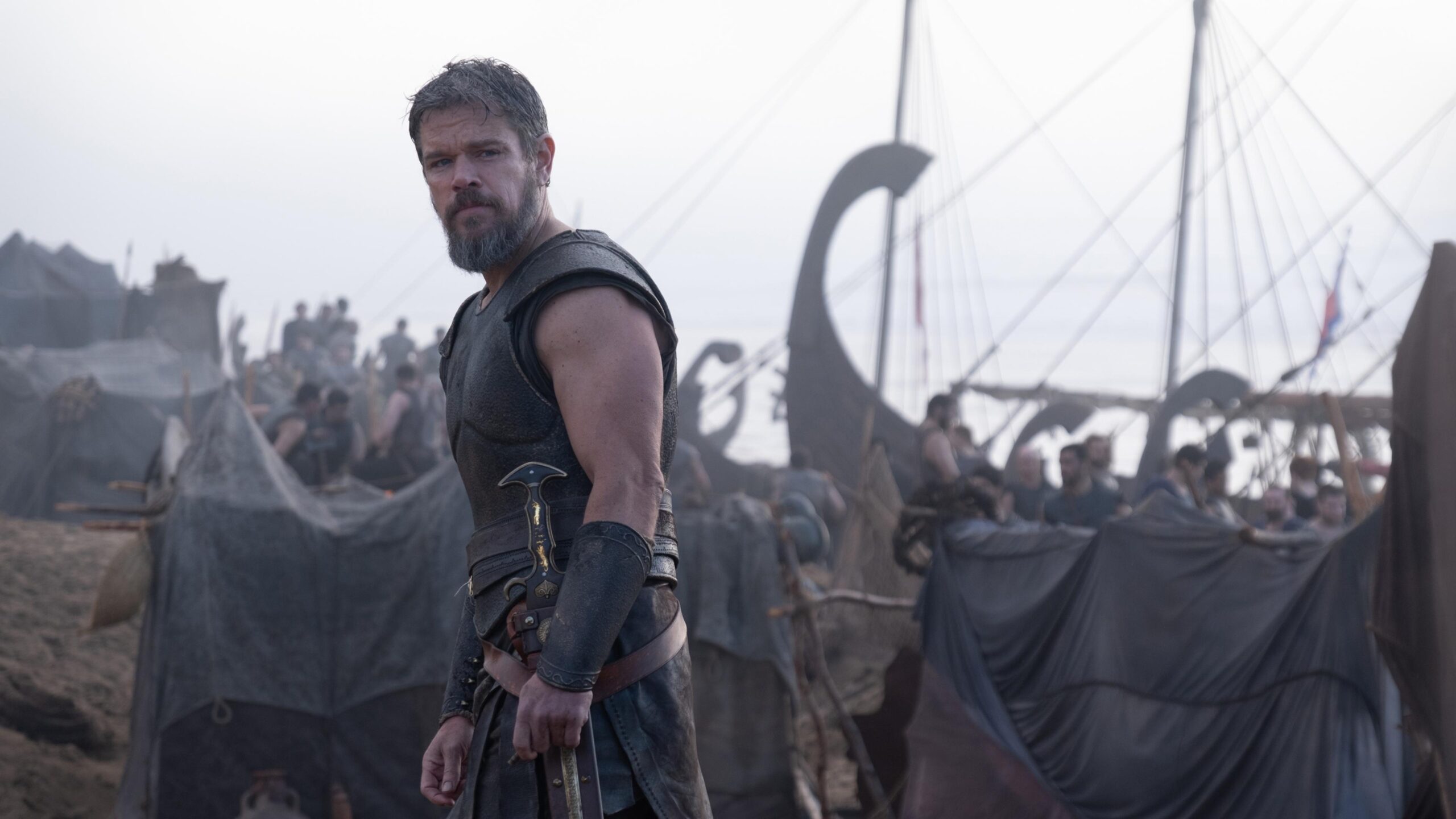
But unlike Odysseus, who survives being waylaid by giants, sorceresses, nymphs, and numerous other distractions, Nolan himself becomes dragged down by the details of his Odyssey. The poem, packed with events, with description, with magic and all manner of deceptions, is episodic by nature. How do you make this story flow and glide on-screen? Maybe you do it not by trying to pack everything in, but by cutting away, by focusing on the most potent, exciting, and moving details. You might do something along the lines of what Uberto Pasolini did with his underseen 2024 picture The Return, with Ralph Fiennes and Juliette Binoche, which takes the final stretch of The Odyssey and weaves it into a graceful, moving whole. It doesn’t help that Nolan’s Odyssey—even when viewed, as he hopes audiences will see it, in IMAX—looks muddy and underwhelming. The Return was shot in Greece and Italy, and its landscapes are part of its vitality; cinematographer Marius Panduru made Ithaca look like a place worth coming home to. In Nolan’s Odyssey, shot by his frequent collaborator Hoyte van Hoytema in a host of locations including Italy, Greece, Morocco, Iceland, and Scotland, almost every landscape—a churning sea here, a set of cliffs there—just looks like business as usual, only bigger. There’s soil, but you don’t feel its texture; there’s sun, but you don’t feel its warmth. When Damon’s Odysseus is greeted by his ancient, dying dog Argos, who has waited patiently and poignantly for his return, Argos’s little tail wriggles mechanically as he takes his last breath. Odysseus expresses a flash of grief, and then it’s on to the next beat. There isn’t a minute to lose here, even in a runtime of nearly three hours.
Read the full article here
