

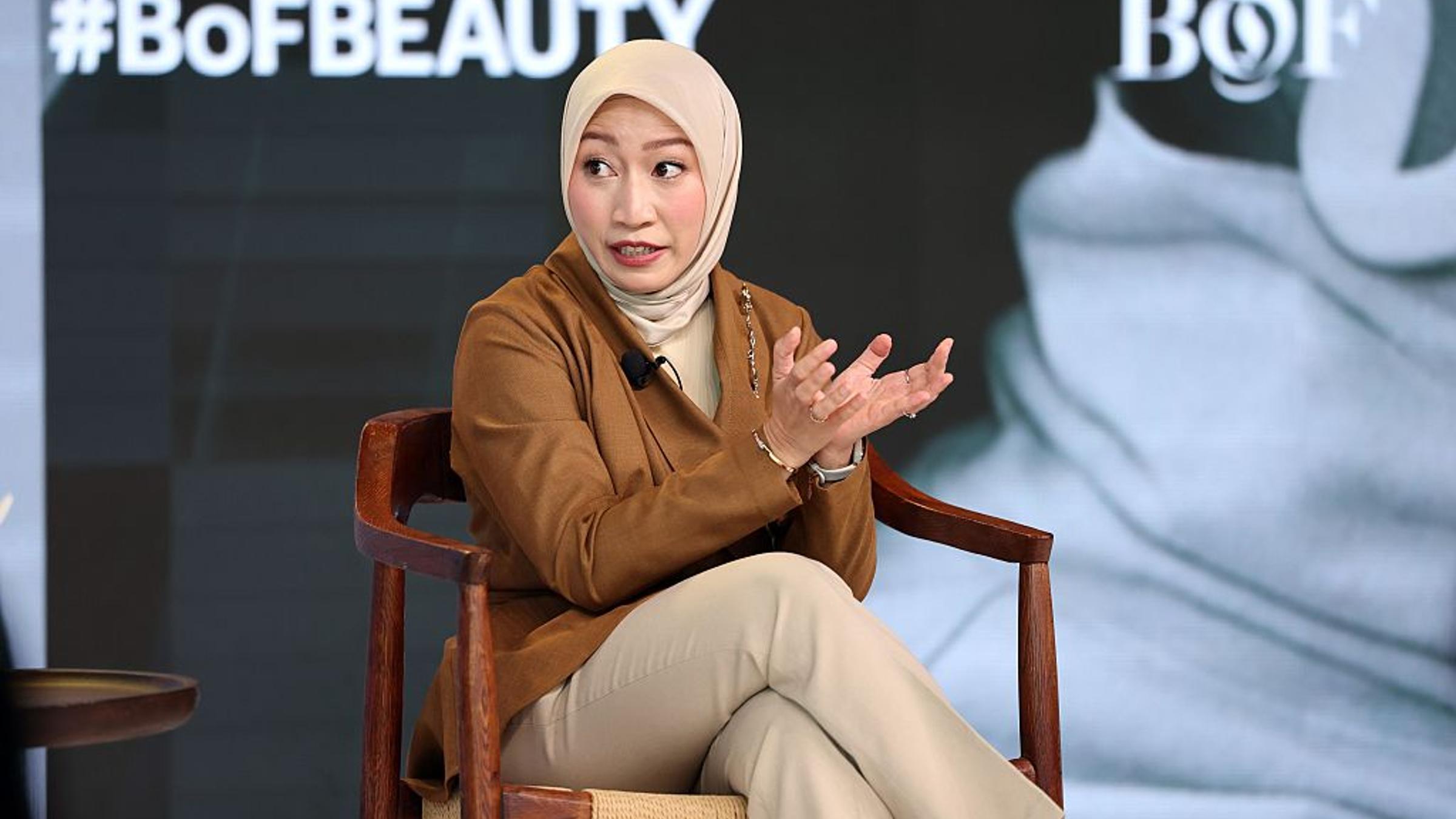
TIME spoke with Sari about Paragon’s journey and redefining what halal beauty means for a global marketplace.
(This interview has been condensed and edited for clarity.)
How has Paragon changed over the last four decades?
It’s been a transformation. In 1985, we started on a small scale and then after 10 years we began to manufacture from a proper factory. And then in 1998 Indonesia had an economic crisis. At that time, Paragon was mostly doing OEM [original equipment manufacturer] business. We also served some big supermarket brands. And then we entered the third phase where our own brands were increasing a lot, because of good timing, good products, right message, and new behavior in Indonesia. So it’s been a very interesting journey.
How would you explain halal beauty to someone who isn’t familiar with the concept?
We understand when you first hear “halal” it sounds very like a religious concept. But we believe this is actually a universal value. Today, people are familiar with ikigai—[Japan’s concept of “reason for being”]—but maybe 40 years ago it’s very Japanese-rooted. So, halal is not just a list of compliance of raw material sources; it is about ethical beauty or an ethical way of making a product. So if I make a product and put in 1% vitamin C but write 10% on the label, that is not halal. If I do unethical sourcing, child labor, [excessive] water consumption, or carbon emissions, environmental impact, then it’s not halal. Because in Muslim [culture] it’s common to say that your job should be halal. It’s not talking about policy; it’s talking about corruption and ethical ways of working.
Read the full article here
