

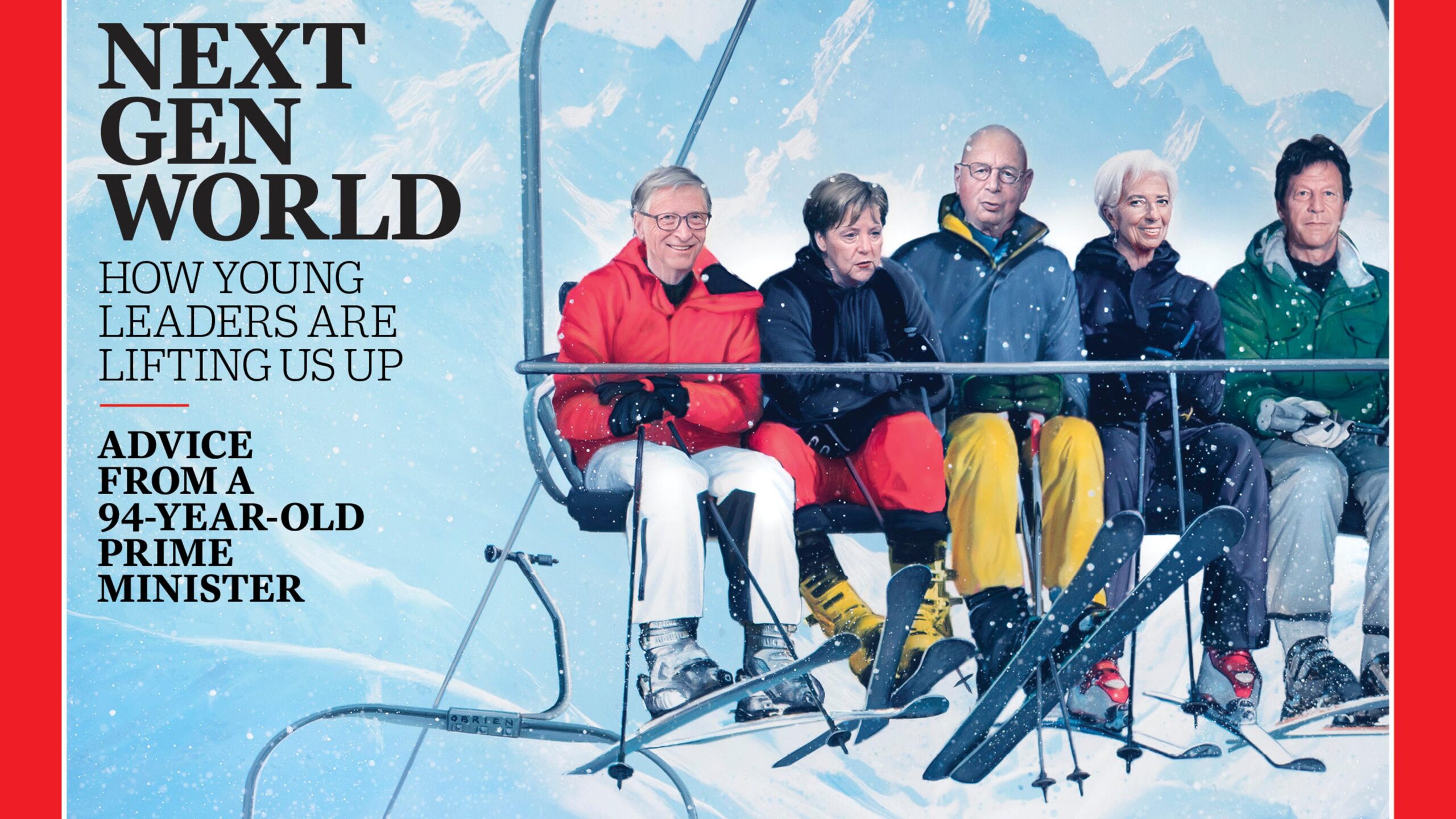
The global under-30 population has been rising since 2012 and today accounts for more than half of the more than 7.5 billion people on the planet. What will the world look like when this new generation leads? That’s the central question in TIME’s second annual Davos issue, produced in partnership with the World Economic Forum. As youth the world over force us to confront the perils of our inaction—and show us the possibilities from recognizing that life doesn’t have to be as it is—we are beginning to see some answers.
Thunberg may have been the most visible, but young leaders raising their voices have become a force across the globe, in areas ranging from climate to inequality to corruption to freedom itself. In the past year, they have been at the forefront of movements on every continent, from the campuses of Hong Kong to the streets of Santiago, where protests were triggered in part by a social-media campaign by middle- school students, to Antarctica, where a group of scientists joined the global climate strike brandishing slogans like rise before The sea level does!
They are innovators like 14-year-old Gitanjali Rao, who developed an app to identify and prevent cyberbullying. Or Xóchitl Guadalupe Cruz López, who, when she was 8 years old, created a solar-powered water heater made from recycled materials to provide much needed hot water to residents of her Mexican village. They are entrepreneurs like Flynn McGarry, who recently became old enough to legally drink alcohol in the locavore restaurant he runs in New York City. They are petitioners like Jamie Margolin, who testified before Congress on the urgent need for climate action. When they take power, they seek far-reaching reform; Finland’s Marin, who tells TIME that she got into politics “because I thought the older generation wasn’t doing enough about the big issues of the future,” wants to make Finland one of the first countries to achieve net-zero emissions.
For 1966, the year I was born, TIME named “Americans Under 25” as Person (then called “Man”) of the Year—the baby boomers whom the magazine dubbed “The Inheritors.” Having inherited the bounty of decades of economic growth and relative stability, the youth of the 1960s are now, by and large, the benefactors of the present. What do they—what do we—owe the inheritors of tomorrow? Clearly there is work to do.
Edward Felsenthal is Editor-in-Chief and CEO of TIME.
Read the full article here
