

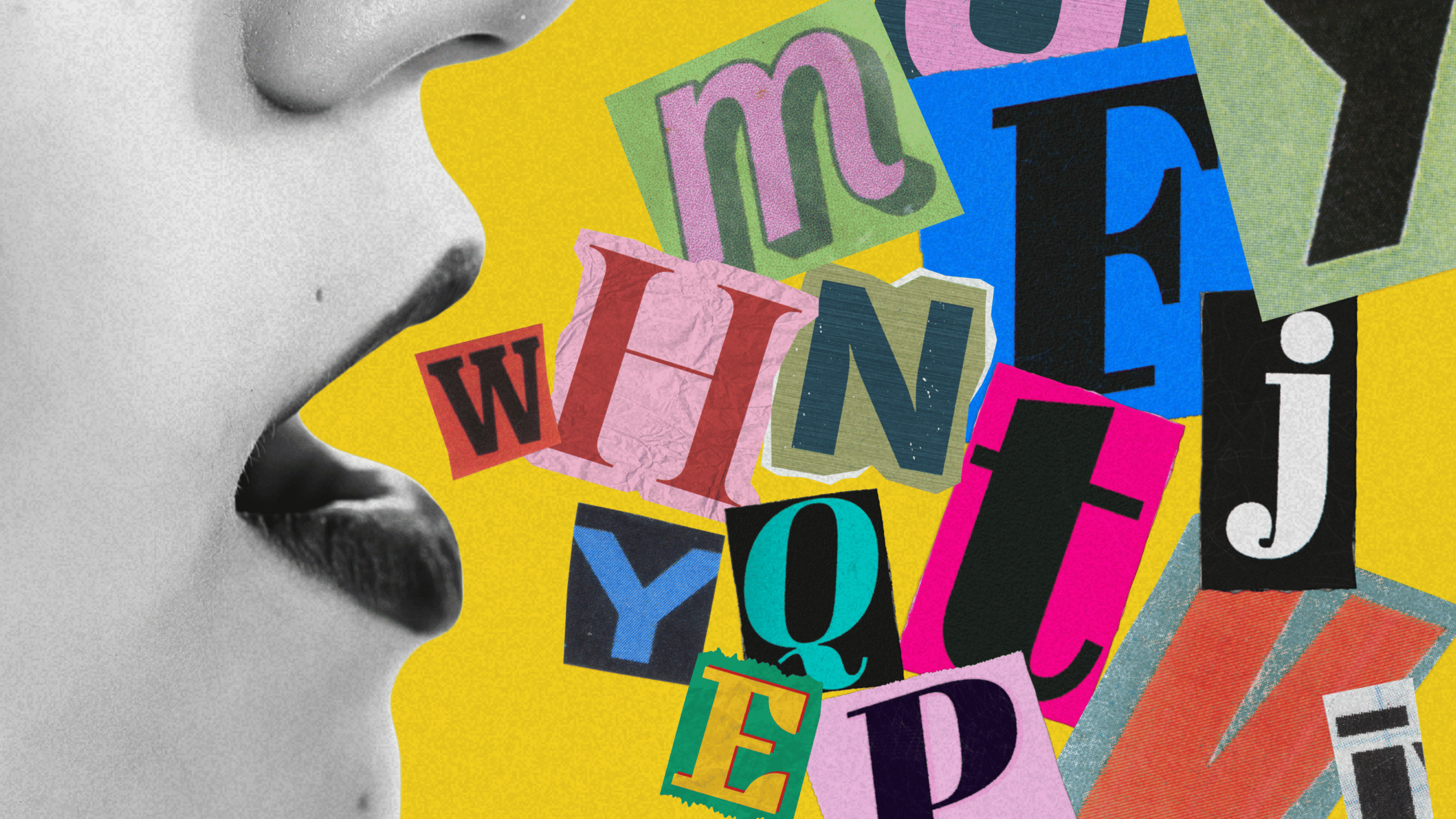
Today, AI can impressively help anyone to write and read in almost any language. This allows a surface-level exchange of ideas, but comes at a steep price: the loss of honest engagement with the magic organ that makes us human. The challenges of learning a new language are exactly why it is still so important to do so in the AI era.
Recently I’ve received many emails in flawless English from Chinese readers of my writings. At first I was amazed at such readers’ superb English, but soon I realized they’d exploited AI—either to translate a text they’d written in Chinese or to turn a text in wobbly English into glib native-sounding English.
Such readers probably imagined they were thereby drawing nearer to me, but I felt the opposite. I told them I felt I was dealing with a false façade. It was as if a video of me dancing salsa (I’m intermediate) had been run through an AI system, and now showed me dancing like a pro. That would be truly creepy. I feel the same way about super-smooth English that arrives from afar, courtesy of AI; suddenly I feel a vast, creepy gap between us.
As a teenager, I fell in love with foreign languages—first French, then Italian, then German, Spanish, Dutch, and Hindi. Over my lifetime, I’ve worked on at least 10 languages, several for many years. The results have often left me highly frustrated, but also have given me indescribable joy at the fact of having absorbed (although only partially, of course) some of the elusive beauty of those marvelous, magical, mysteriously alluring tongues.
Why did I tackle all those languages? Out of love for different sound systems, different writing systems, different grammars, different sets of concepts, different idioms, different ways of seeing the world. I also loved repeatedly listening to songs from other lands and feeling the culture and history silently lurking in the words, melodies, harmonies, and rhythms.
To me, it is a deep joy to try to internalize another culture, to try to feel what it would have been like to grow up in, say, France, India, or China. Since my earliest-tackled and most beloved language was French, there was a period when I wished like mad that I’d grown up bilingual in French and English. My French was very good, but I wanted it to be perfect, and I was hugely jealous of people who’d grown up immersed in it.
But after some years, I realized that those effortless bilinguals didn’t experience one whit of the ecstasy that I had in dealing with French. For them, speaking French was as easy as falling off a log, so they didn’t appreciate it.
Mastering the subtle sounds of French was unprecedentedly thrilling. Learning lots of French idioms was endlessly fascinating. For example, where an English-speaker says “spinning one’s wheels,” a French-speaker says “pédaler dans la choucroute,” which translates to “pedaling in sauerkraut.” What a delightful contrast.
Having conversations in fluent French, acquired by dint of immense hard work over many years, was an unmatchably rewarding experience. Figuring out all the words to an enchanting French song—say, for example, “Rue Lepic” as sung by Patachou—was a profound joy that reverberated in my soul for decades.
Much the same is true for me and Italian, although my Italian is not as good as my French. French and Italian were both precious acquisitions, rather than free gifts from heaven, and I treasure my limited mastery of each of them beyond measure.
Having made French and Italian truly my own is a key defining achievement of my life. I’m not saying either of them is perfect, but I speak those mellifluous languages with as much grace and elegance as I can possibly muster. Whenever I’m taken for a native speaker (gratifyingly often in French; once in a blue moon in Italian), it gives me a huge burst of pride.
Chinese is another kettle of fish, alas. I’ve struggled with it for many years, yet I’m almost always lost in a group of native speakers. It’s discouraging, but if someone were to say to me, “I have a serum I can give you via injection, and once it’s in your bloodstream, your Chinese will be as good as a native speaker’s. Want it?”
I would answer, “No, thanks.” I want to try to conquer the Everest of the Chinese language on my own. I don’t want a helicopter ride to the summit.
If I never acquire fluent Chinese, so be it. As a fallible and mortal being, I will have given it my all, and I will be proud of whatever level I’ve reached through my ardent struggles. I will be sad at not having climbed higher, of course, but that is la condition humaine. We try our best, and sometimes we succeed admirably, and sometimes we don’t. It’s all part of being human.
Learning another language is one of the deepest and most human things one can possibly do. Language is at the core of who we are. Language makes us who we are. I don’t want an injection for native-level mastery of Chinese, or any other language. And as for AI producing glib Chinese for me, or handing me Chinese websites on an English platter, or even borrowing my voice to express my thoughts aloud in a perfect Chinese accent, no thank you.
I want to be me, 100%, not a human-machine hybrid. I want to savor languages directly, not through a creepy robotic interface.
Maybe I’m just a dinosaur and attitudes like mine are fading fast these days, but that’s how I grew up, and that’s how I’ll feel till my dying day.
Read the full article here
