

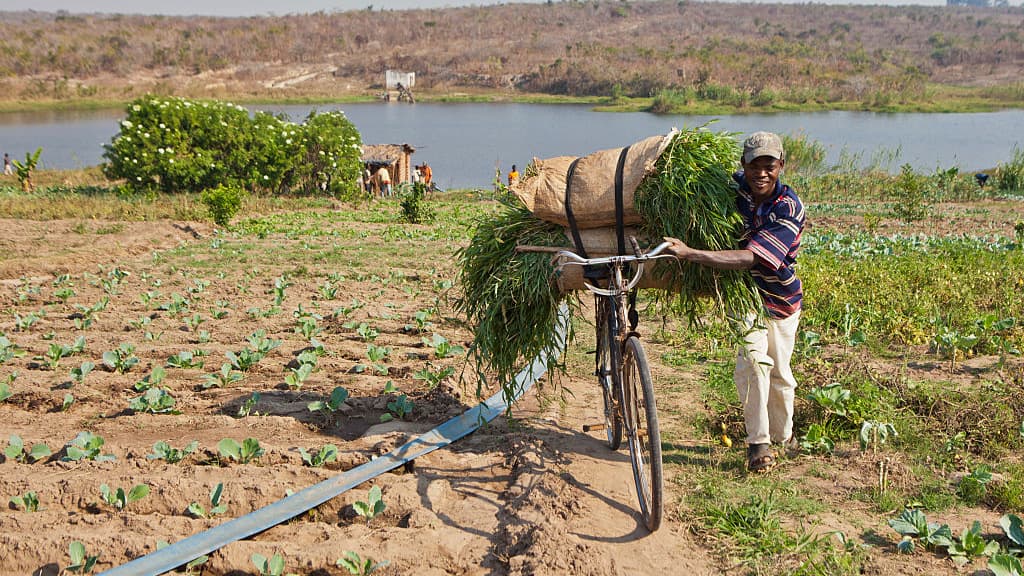
The challenge is not simply producing more food. Agricultural production has increased in Africa over the last few decades, but growth isn’t necessarily durable. Agri-food supports two-thirds of African livelihoods and generates a third of the continent’s GDP. But farmers generate less value than their counterparts elsewhere: about $1,500 per worker annually versus $4,300 globally, according to figures from AGRA, the organization formerly known as the Alliance for a Green Revolution in Africa. Higher profits mean more farmers can afford to stay in the business and younger people will be enticed to join, thereby creating a more sustainable food system for the continent.
Profitable farming isn’t just about feeding people, as important as that is. A developed agriculture sector creates opportunities for investment in processing, trading, and other functions along the agriculture value chain, leading to further economic growth opportunities. Only around 12-15% of Africa’s agricultural GDP comes from processing, compared to more than 60% in developed regions, according to AGRA. And agricultural outputs can be the basis of new industries: think of biofuels. From a climate perspective, too, higher profits create adaptive capacity. Farmers with margin can invest in irrigation, improved seeds, better soil health, or simply absorb a bad season.
Read the full article here