

Automobiles
Selected by Tekedra Mawakana
America was founded on the aspiration to freedom and the pursuit of happiness. For over a century, the automobile has been the living embodiment of that promise. Today, autonomous technology is the boldest reimagining of those ideals: an improbable idea that travel should be safe, reliable, and even magical. Waymo was born in the U.S. and speaks to that audacious belief in the pursuit of happiness—and that everyone deserves certainty, freedom, and to arrive home safely.
Mawakana is co-CEO of Waymo.
Artificial General Intelligence
The artificial intelligence revolution (which I saw coming in 1999) is the most profound change in human performance ever. We have determined how human knowledge is coded, and we will multiply our ability to understand it exponentially. This will greatly enhance our creativity and innovation.
Kurzweil, a leader in AI for 64 years, an author, inventor, and futurist, has predicted that AI will achieve human-level intelligence by 2029. His latest book is The Singularity is Nearer.
Autocomplete
Selected by Nicholas Carr
A harbinger of generative AI, the autocomplete function brought the American dream of an effortless life a little closer. In the future, it told us, we would no longer need to compose our own thoughts and words. The machine would speak for us.
Carr is a journalist and writer. His latest book is Superbloom: How Technologies of Connection Tear Us Apart.
News Feeds
Selected by Tristan Harris
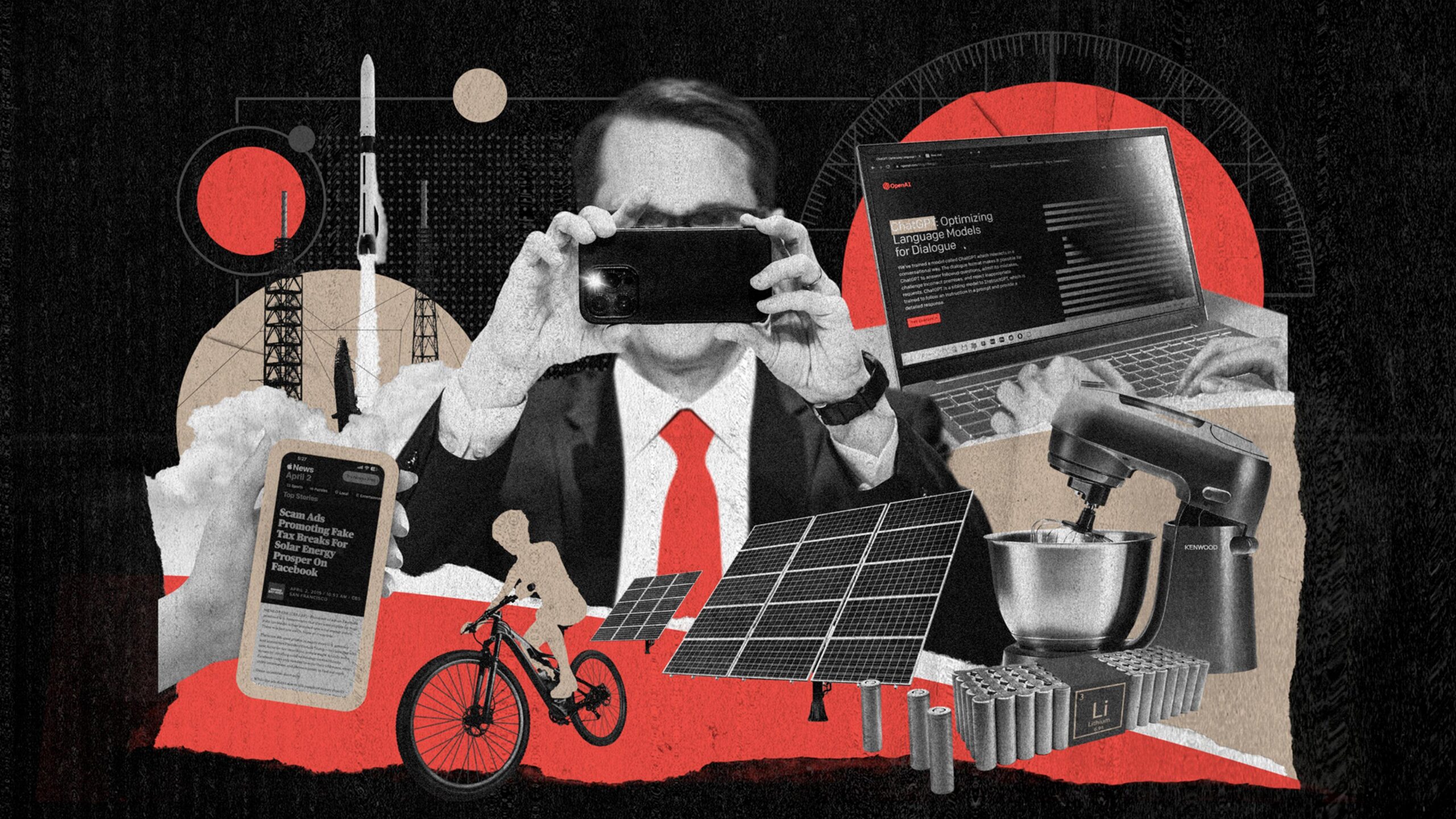
Scrolling news feeds are a human invention that have taken over the world, directing the infinite, raw creative potential of billions of human beings and collapsing it into billions of hours a day of information consumption and “doom-scrolling.” They have not only shaped the information we see, but also the incentives of all other media that is now invisibly optimized to “fit” into the medium of bite-sized content. They have reshaped the white matter of our brains and terraformed the ways humans perceive their “reality.” By optimizing for attention, these systems subtly privilege outrage, novelty, and emotional intensity, distorting perception in ways that are hard to see but impossible to ignore. The result is a society that struggles to agree on what is real at all. It is the problem beneath other problems, because it constrains our ability to coordinate.
Harris is the co-founder of the Center for Humane Technology.
Read the full article here
