

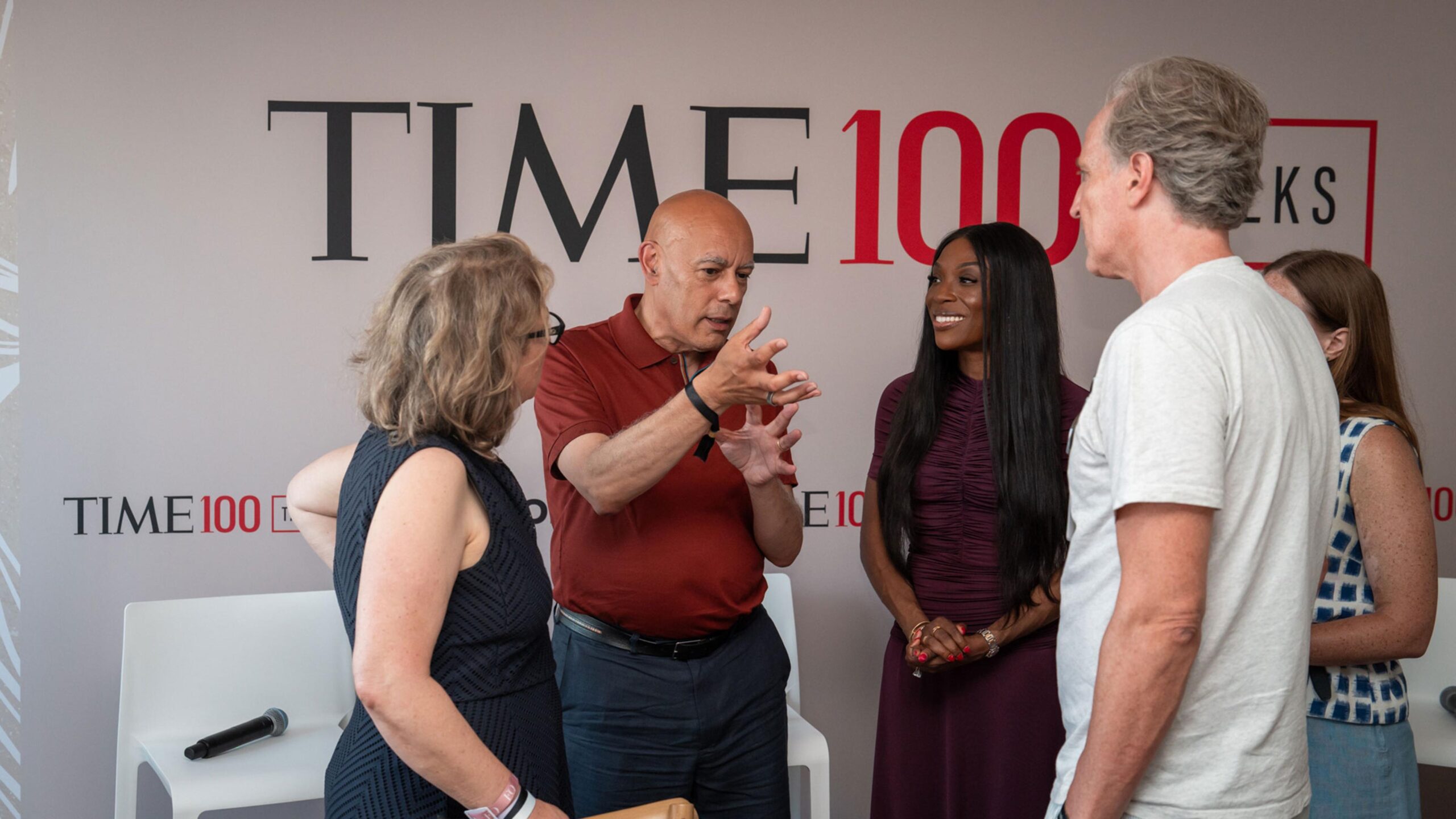
AI may be playing an increasing role in filmmaking, but humans are the drivers of the creative process, a panel of industry insiders said during a TIME100 Talk in Cannes, France on June 23.
“AI is raising the floor for everyone, but it’s still human ingenuity and creativity that is going to vault the ceiling,” said Dara Treseder, chief marketing and commercial officer for Autodesk, which builds software for 3D design, engineering, and entertainment, and sponsored the event. It’s up to users to know when they should and shouldn’t use the technology, she said. “Our customers are not starting with an existing process and just layering AI on top of it, but instead they’re being very thoughtful about ‘what is the outcome I want to accomplish, and how do I redesign what the process should be with the new tools and technology I have available?’”
Lincoln Wallen, who leads technology for visual effects house Framestore, emphasized the distinction between syntax and semantics, when thinking about AI’s potential uses. “AI is an amazing technology for managing and accelerating the work that we do with syntax, and that’s syntax in language and syntax in image,” he noted, citing the benefits and cost savings that the technology can provide. “When it comes to meaning, that’s a whole other ball game,” he said, adding that the idea that AI can “work in a semantic world” was a “fallacy.”
“We’re the ones that determine what things mean, we read things, we write things, we’re the ones doing the communication. So, the question is how much control you get” he said. “The current AI systems aren’t controllable, which means they’re not very good at allowing people to express what they want to do, what they want to say.” That creates more friction than benefit in the creative process, he said.
Discussing whether AI could help to lower barriers to entry by taking on some post-production work and thus reducing costs, documentary filmmaker Lauren Greenfield said that most of the expenses are associated with the essential workers needed during the production process. “I think where you can save is organizing all of your footage and transcribing, and maybe a first cut.” She added: “I do think there are a lot of technical parts that will become more efficient, but I don’t think it’s going to change the human part.”
Greenfield noted that in the age of AI, she believes that authenticity is “being valued more than ever.”
“We’re in the new industrial revolution,” said Treseder. “AI is here to stay, but AI is not replacing humans…AI is here to serve humanity, but humans are still in charge.”
Read the full article here
