

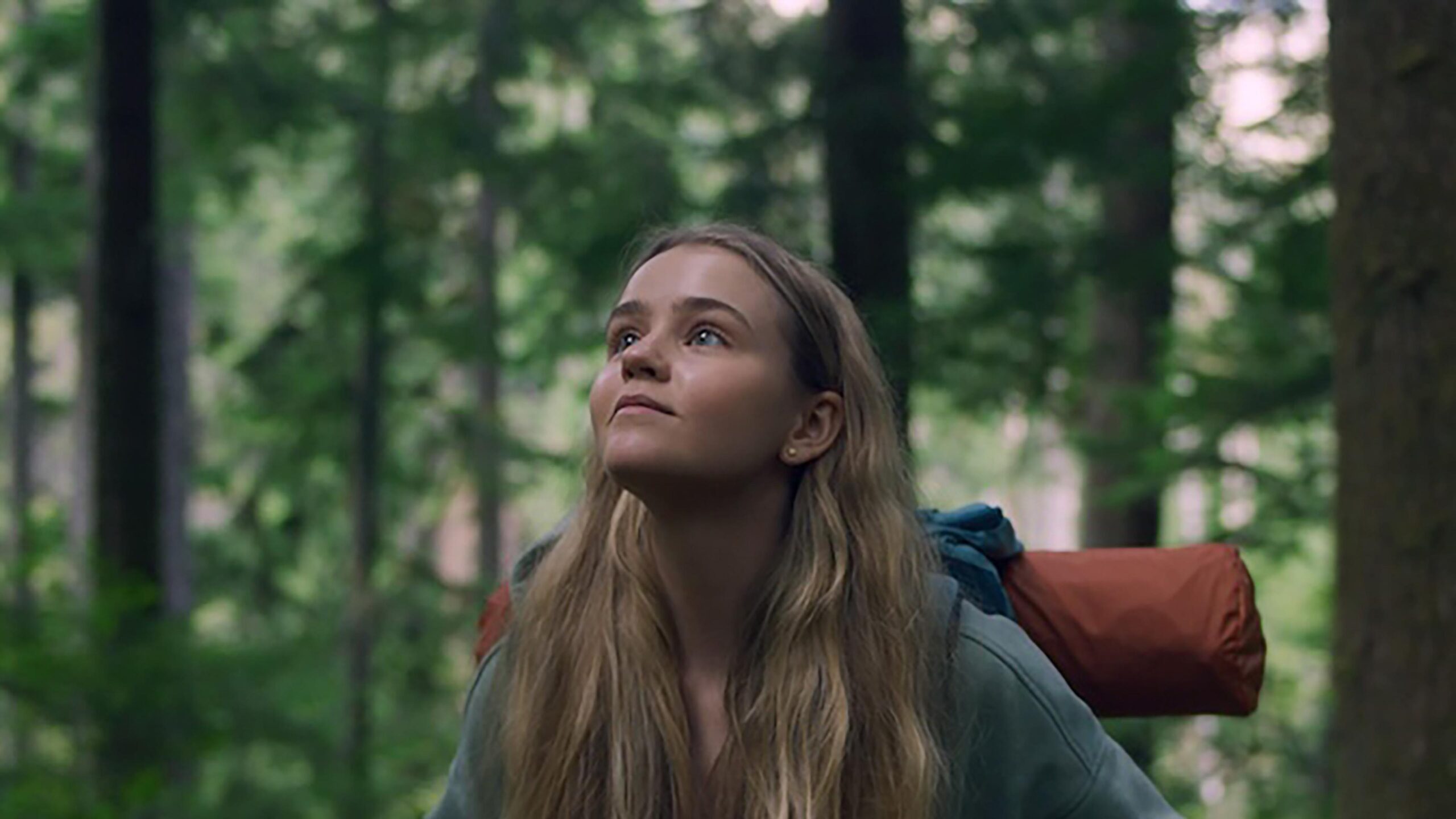
Self-financing is an anomaly in TV, which doesn’t have the same infrastructure to support independent production as film. But in the case of 2024’s Penelope, it was the only option that allowed creators Mark Duplass and Mel Eslyn the freedom to make the unprecedented work they envisioned. As Duplass explained in interviews, when they pitched the half-hour drama about a girl who runs away from an apparently normal 16-year-old life to tough out a Thoreauvian existence in Cascade National Forest, the response from many execs was: “This is beautiful and unique and poetic, and are you crazy, we can’t make it unless there’s a murder in the first 30 seconds!” Which pretty much sums up the current streaming marketplace. Happily, the indie-cinema veterans had the means to produce the series—a lyrical, often wordless portrait of the spiritual seeker as a young woman, soulfully portrayed by Megan Stott. Because it never fully explains itself, Penelope suggests many resonant interpretations. It shows us a teen girl driven by a thirst for freedom rather than love or social status. It has environmental overtones. It feels representative of a tech-saturated generation’s longing to liberate itself from algorithms, surveillance, the attention economy. Yet the show, eventually licensed by Netflix, seems meant to be experienced more than analyzed. Like silent meditation or a hike in the wilderness, it’s a chance to run some fresh air through your 21st-century brain and see what detritus it displaces.
Read the full article here
