

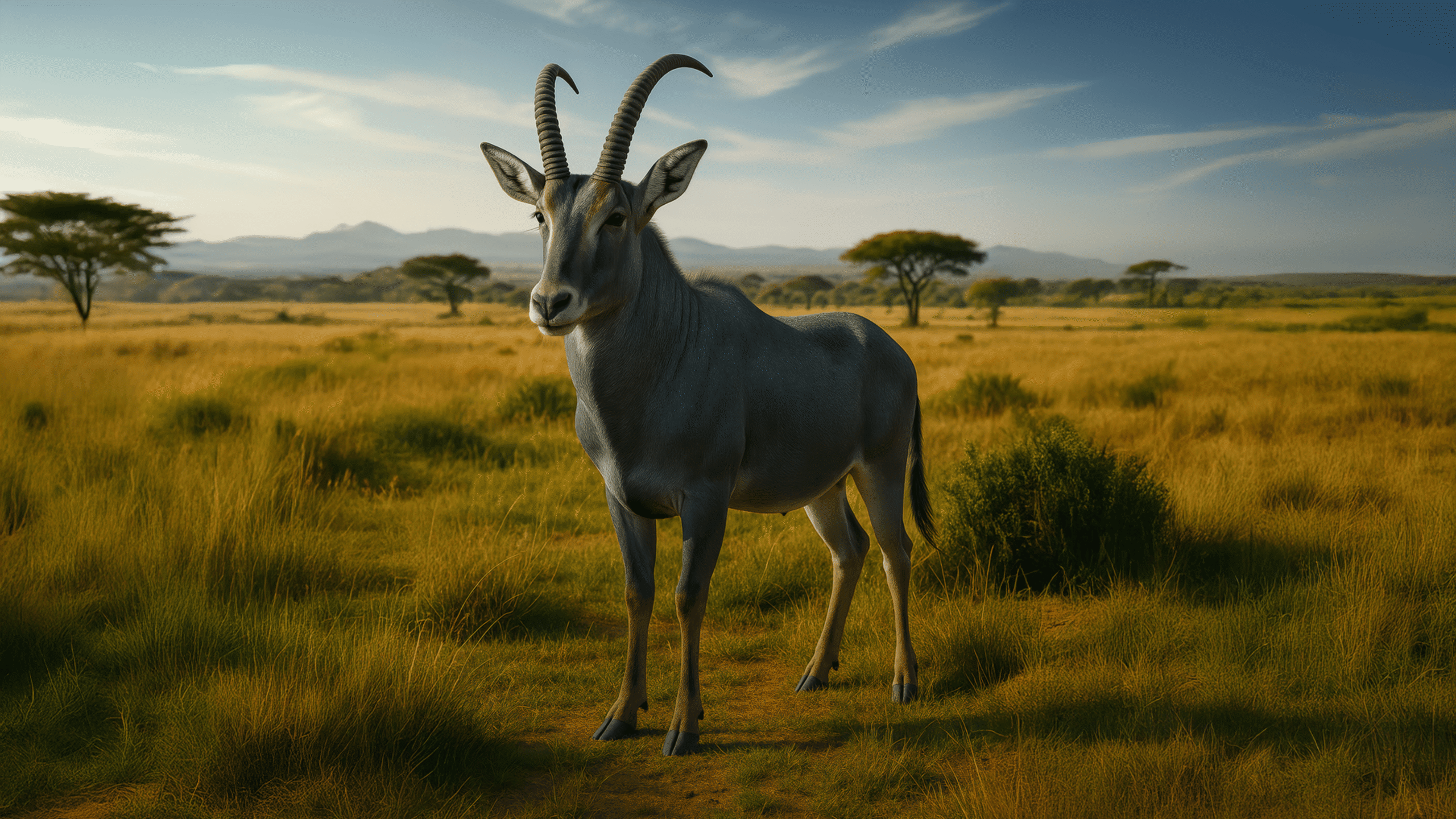
“African antelopes have long been neglected in global conservation,” said Beth Shapiro, chief science officer of Colossal, in a statement. “The bluebuck de-extinction project changes that. We’re bringing back a species that played a vital role in its ecosystem, and building the scientific foundation for antelope conservation before more of its relatives are lost.”
The need is urgent. Of the 90 antelope species in the world, 55 are experiencing declining populations and 29 of those are threatened with extinction. Colossal’s goal is not only to bring the bluebuck back, but to use the genetic techniques it masters in those efforts to fortify existing endangered populations.
Colossal researchers will do their work by first sequencing the genome of both a bluebuck and its close surviving relative, the roan antelope, looking for the differences that distinguish one species from the other. The roan cells are easy enough to collect—plenty of the animals are at large in sub-Saharan Africa in the west, central, and eastern parts of the continent. The bluebuck is another matter. To obtain the species’ DNA, Colossal researchers borrowed a tissue specimen from the Swedish Museum of Natural History and then conducted what is known as 40-fold coverage of the genome—sequencing each base pair 40 times to ensure genetic accuracy. The key spots on the genome that separate the lost bluebuck from the extant roan are unknown but they can be surprisingly few. For the dire wolf, the Colossal team had to make just 20 edits on 14 genes to give a gray wolf the dire wolf’s white coat, larger size, more powerful bite, more robust fat distribution, and other key traits.
Read the full article here
