

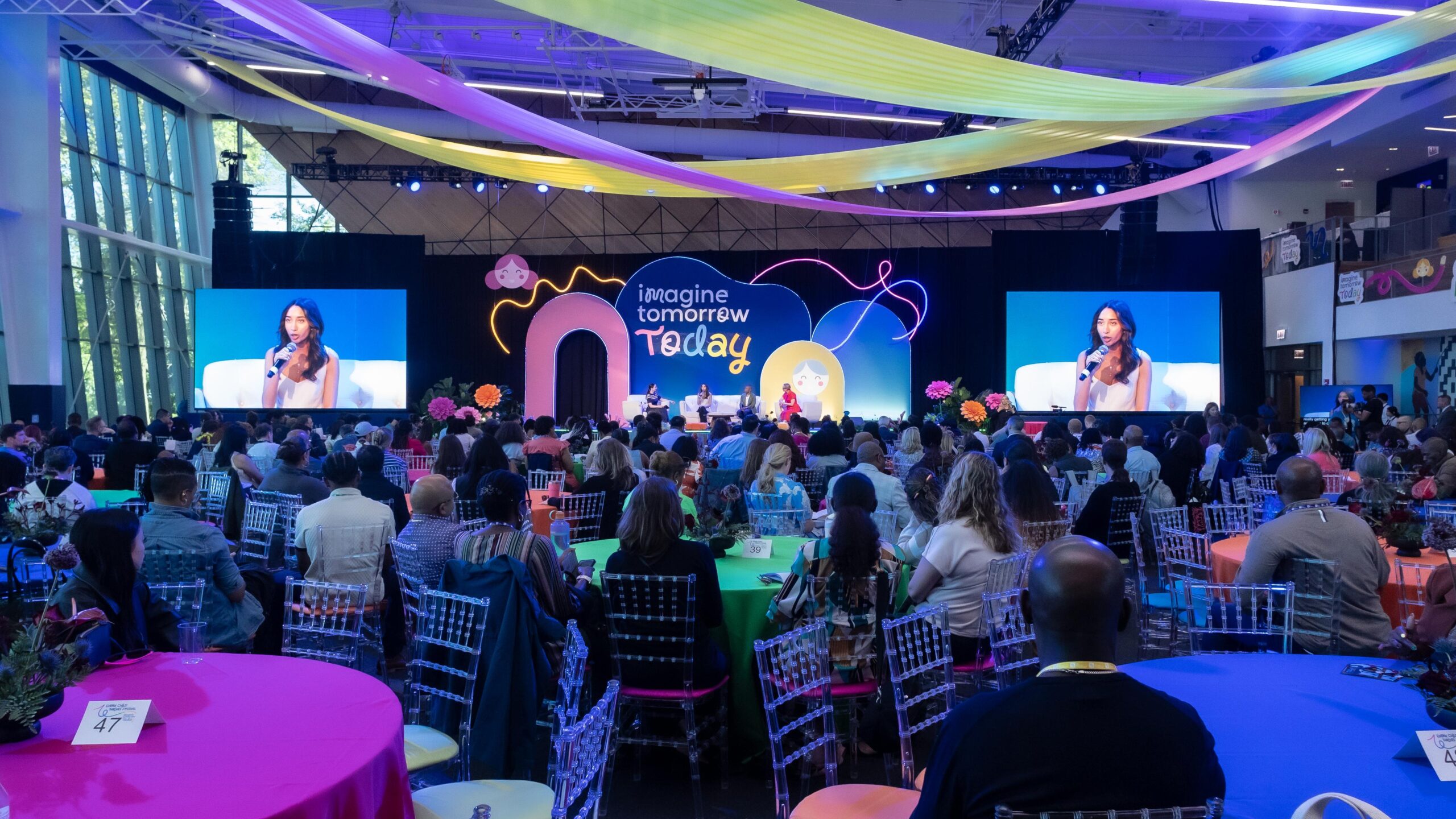
That afternoon, two TIME100 Talks took place before a highly-engaged audience. First, Delbanco moderated a conversation about youth mental health with 17-year-old Sarah Shelke, who leads Mind4Youth, a youth-led mental health nonprofit with 170 chapters and more than 25,000 volunteers across 71 countries; Jaymes Black, CEO of the Trevor Project; and psychologist and author Lisa Damour. Following their conversation, Feldman took the stage with actor and activist Wilson Cruz to discuss how creativity and advocacy can foster healing within our communities. (In June, Shelke, Black, and Cruz were named to TIME’s inaugural Visionaries list, which recognizes leaders helping young people reach their full potential.)
The next day, acclaimed poets Amanda Gorman and Manuel González met for a conversation on the power of the written and spoken word. Attendees then took part in immersive sessions across the city, including “Making Youth Spaces Healing Spaces” at Build Chicago, a violence prevention and youth development agency, and “Partnering with Families and Communities for Students’ Success” at the Chicago Public School Office of Family and Community Engagement. The day concluded with a premiere screening of selections from How We Heal, a filmmaking initiative spotlighting stories of racial healing and shared humanity.
On June 25, the festival concluded with final reflections and performances, including an improvisation workshop led by Second City, the legendary Chicago theater that launched some of comedy’s biggest names, and a tour of the Obama Presidential Center Museum. The central theme running throughout the day and the festival: working together on behalf of each and every child.
As Paul Martinez, a leader on the Kellogg Foundation’s executive council, said in his closing remarks following a breakout session, “When you feed a child, they can better learn. When you educate a child, they can better dream… The future that we are building together is bright, and I have full faith.”
Read the full article here
