

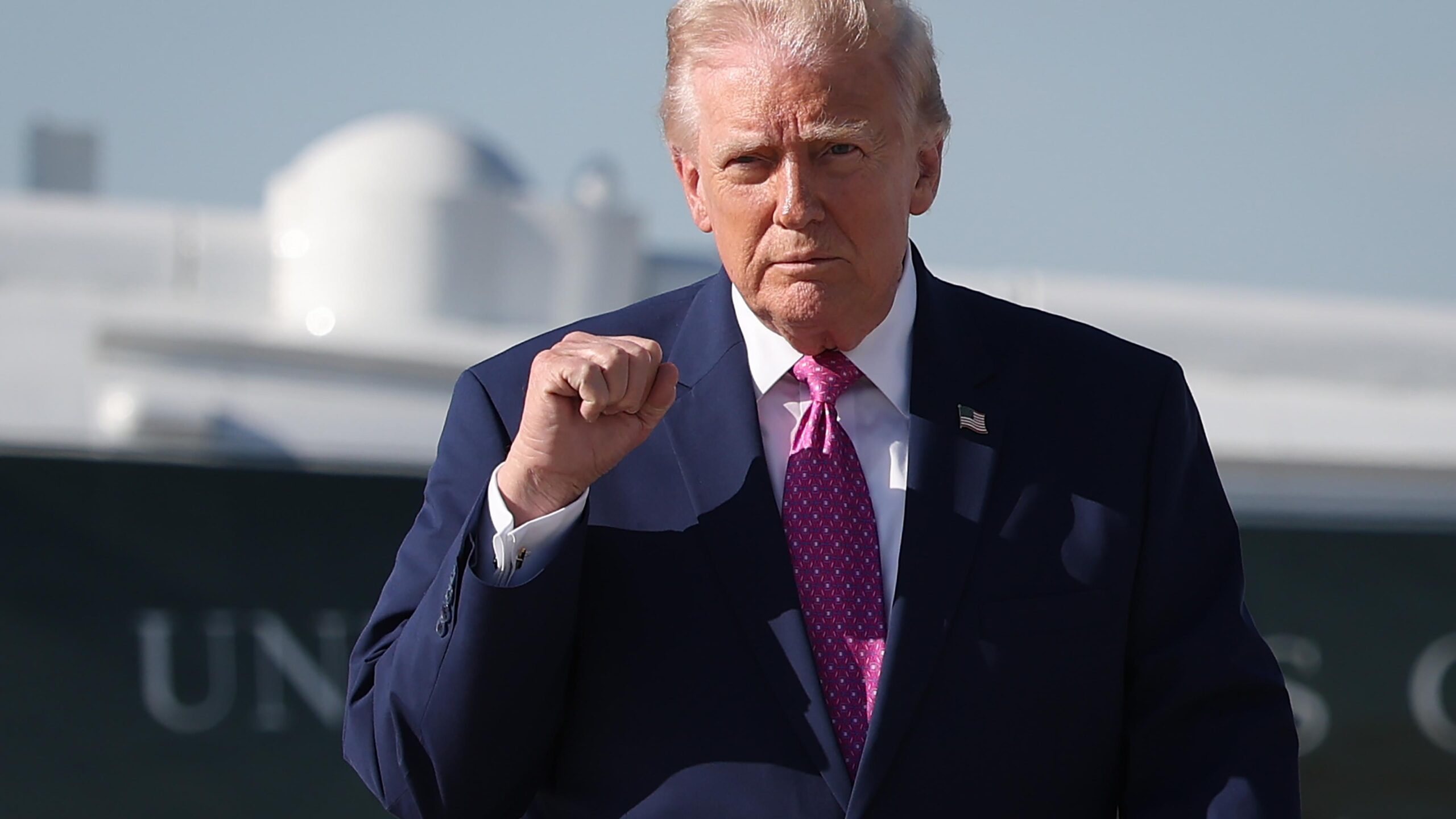
President Donald Trump is eager for the U.S. and Iran to make a deal—and fast. He said Tuesday morning that he does not want to extend the cease-fire, which is hours away from expiring.
“We don’t have that much time,” he told CNBC, insisting that the U.S. is in a strong negotiating position and will likely emerge with a “great” deal.
Trump also warned that the U.S. will resume its assault of Iran if talks do not progress.
“I expect to be bombing because I think that’s a better attitude to go in with. But we’re ready to go. I mean, the military is raring to go,” he said.
Reza Amiri Moghadam, Iran’s ambassador to Pakistan, argued the position is “a truth universally acknowledged that a single country in possession of a large civilisation” and said it is “a substantial, Islamic and theological principle.”
The stalemate between the U.S. and Iran comes amid an escalating struggle over the Strait of Hormuz.
The U.S., in turn, has accused Iran of violating the cease-fire by firing bullets in the Strait, which Tehran has had a chokehold over, crippling global trade, since the start of the war.
“Iran has violated the cease-fire numerous times,” Trump said Tuesday morning.
With the fragile cease-fire set to expire, and the prospect of further active fighting looming, Iranian parliament speaker Mohammad-Bagher Ghalibaf has warned that his country is “prepared to reveal new cards on the battlefield.”
Echoing the sentiments of Moghadam and others, he insisted Iran does not “accept negotiations under the shadow of threats.”
Elsewhere, Ali Abdollahi, commander of Iran’s Khatam al-Anbiya Central Headquarters, said that the “management and control of the Strait of Hormuz” would not be “exploited by the lying and delusional U.S. President.”
Security personnel stand guard at a checkpoint near the Serena Hotel at the Red Zone area in Islamabad on April 21, 2026, amid heightened security measures ahead of anticipated U.S.-Iran peace talks. Aamir Qureshi—Getty Images
U.S.-Iran peace talks remain uncertain as cease-fire expiration looms
While the U.S. delegation—once again led by Vice President J.D. Vance—are expected in Pakistan this week, Iran has yet to confirm whether it will attend.
Iranian state media reported Tuesday that no Iranian delegation had arrived in Pakistan “so far.”
As such, it remains to be seen if Vance, special envoy Steve Witkoff, and Trump’s son-in-law Jared Kushner will have anyone to negotiate with.
A previous marathon 21-hour negotiating session on April 11 notably ended without an agreement, making the stakes this time all the more higher, especially as the cease-fire is set to expire in the early hours of Wednesday, Iran time.
Despite the lack of official confirmation, Pakistan has moved to increase security in Islamabad ahead of the planned discussions.
In the meantime, Pakistan’s Foreign Ministry has urged both Iran and the U.S. to extend the two-week cease-fire in order “to give dialogue and diplomacy a chance.”
Read the full article here
