

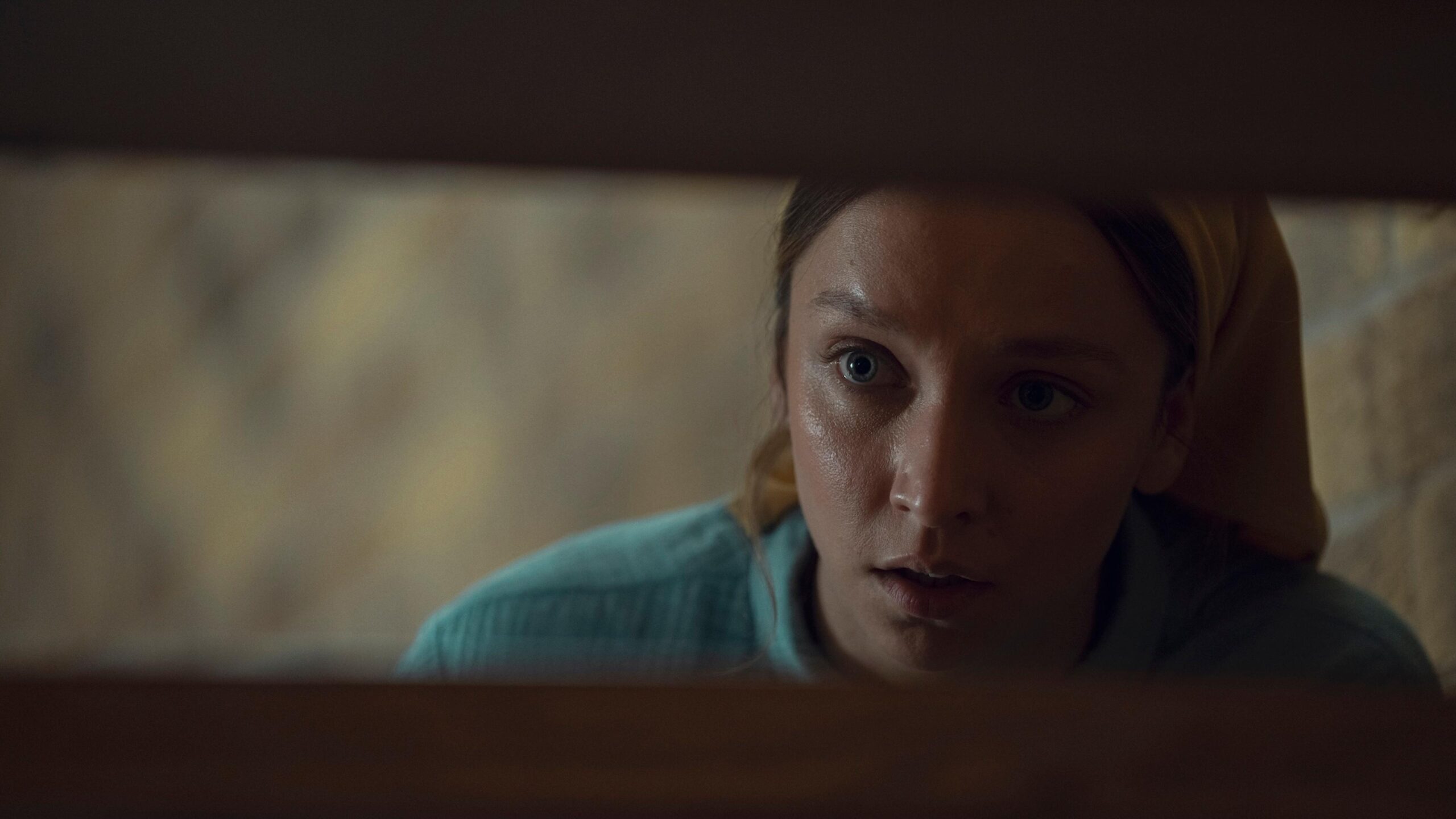
In Unchosen, a new psychological drama on Netflix, Rosie (Molly Windsor) and Adam (Asa Butterfield), are a married couple living inside the Fellowship of the Divine, a secluded religious sect where strict rules govern behavior, intimacy, and punishment. Members who step out of line are subjected to “penance,” including isolation, reinforcing a system where obedience is maintained through fear and control. Adam has recently been promoted to “elder” status, putting him in a position of authority, while tethering him tightly to the structure he enforces.
Their highly-controlled environment begins to unravel when Sam (Fra Fee), an escaped prisoner, enters their lives after saving their daughter Grace from drowning. His arrival is not just incidental—it becomes the catalyst for everything that follows. Sam builds relationships with Rosie and Adam, exploiting emotional gaps and personal vulnerabilities, while also testing the limits of the Fellowship’s internal structure. By the time the series reaches its final episode, every layer—marriage, belief system, and hierarchy—is already under strain.
How Sam manipulates Rosie and Adam
Sam systematically makes himself the center of both Rosie and Adam’s lives, using different strategies with each. With Rosie, he fosters a sexual and emotional connection that contrasts sharply with her marriage. Their encounters are seemingly spontaneous and loving, unlike the almost mechanical intimacy Rosie experiences with Adam under the Fellowship’s rules. This creates a sense of attachment that allows Sam to influence her decisions without resistance.
With Adam, the manipulation is more calculated and tied to leverage. Sam engineers a sexual encounter between himself and Adam that he records, using it as blackmail later. At the same time, Sam removes obstacles when necessary—most notably Isaac, a member of the Fellowship, who becomes suspicious of him and is killed after Sam deliberately crashes a vehicle into his van.
By the time the finale begins, Sam has become the destabilizing force inside the system.
Why Rosie decides to leave the Fellowship
Rosie’s decision to leave in the finale is not impulsive, but the result of multiple developments converging at once. She no longer sees Sam as a safe alternative, especially after his behavior becomes increasingly erratic and violent. At the same time, her marriage to Adam is no longer viable. When she confronts him, she explicitly brings up his abuse of her in the past, reframing their relationship and removing any remaining justification for staying within that structure.
The situation escalates further when their daughter Grace witnesses Sam hurting Mr. Phillips, a senior Fellowship leader, turning what was already a personal crisis into an immediate safety issue. Knowing she needs to get out immediately, Rosie confesses her relationship with Sam to Adam and makes it clear that she intends to leave the Fellowship with Grace. Forced to confront both the collapse of their marriage and the danger Sam represents, Adam sets an escape into motion. He puts Rosie and Grace in the car and tries to drive them away from the Fellowship during a heavy storm that slows them down long enough for Sam to sense that something is wrong. His awareness is not based on formal surveillance but on behavioral shifts—he recognizes that Rosie’s actions are inconsistent with what he expects. Acting independently, he follows them and closes the distance before they can reach safety.
Breaking down the fight and its outcome
When Sam intercepts them, Adam steps in to confront him, attempting to create time for Rosie and Grace to escape. The confrontation is physical but brief. Sam quickly knocks out Adam, reinforcing a pattern that has been present throughout the series—he consistently dominates direct conflicts.
This moment is significant because it removes Adam from the situation entirely. Despite initiating the escape, he is unable to sustain it under pressure. Rosie and Grace are left alone to deal with Sam.
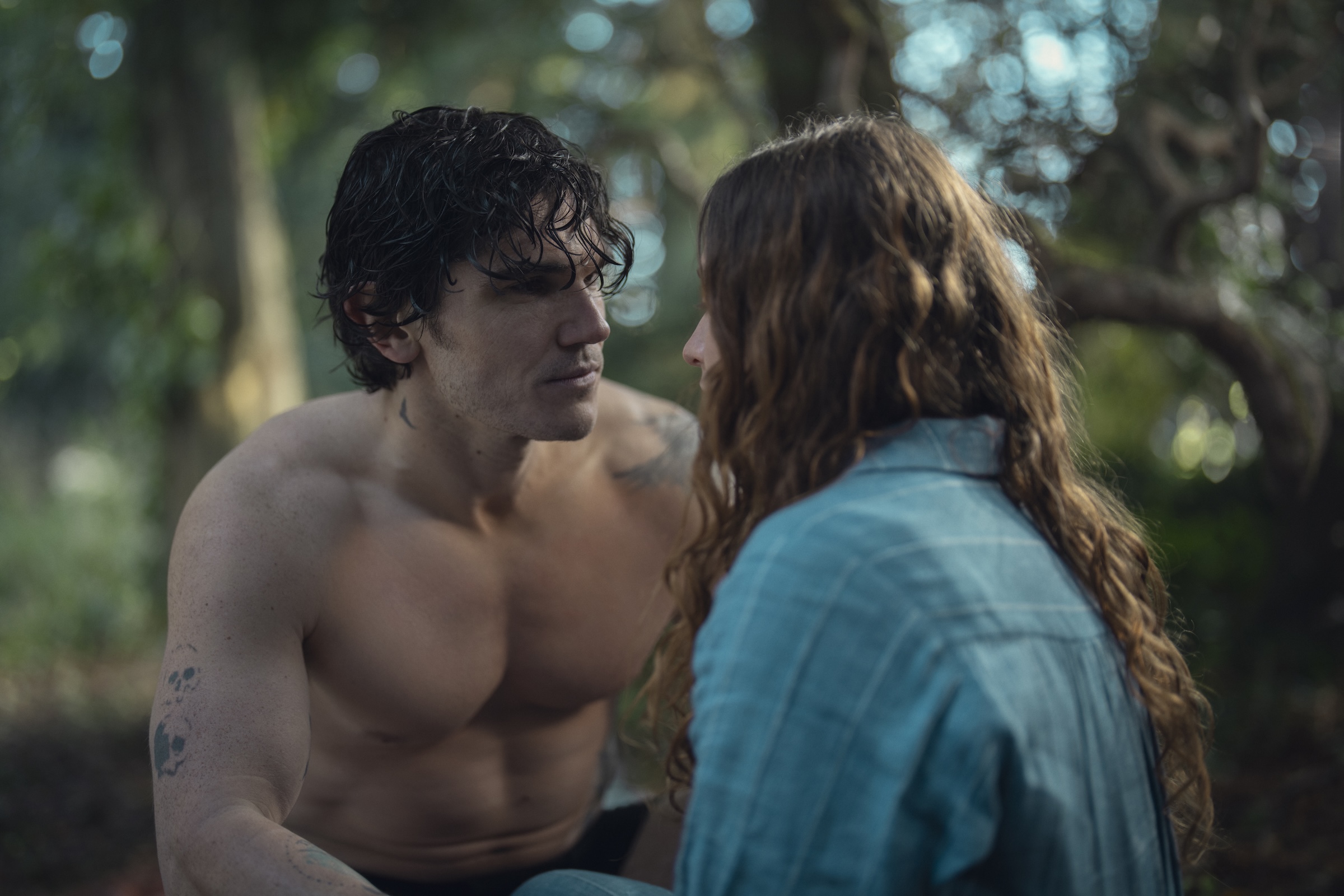
After overpowering Adam, Sam chases Rosie and Grace into the woods, while accusing Rosie of lying and leaving him just like others in his past. He forces Rosie into a container filled with water and attempts to drown her, mirroring the method he used to kill his first girlfriend as a teenager. By connecting his past actions to his present behavior, Unchosen shows how Sam’s response to perceived abandonment has not changed.
The reason he stops is tied to Rosie’s response. Instead of resisting physically, she appeals to his emotions, telling him that if he truly loves her, he has to let her go. He hesitates briefly, giving Rose just enough time to escape with Grace.
Mrs. Phillips helps Rosie and Grace
Rosie is able to escape thanks to an established point of support outside the Fellowship. Earlier in the series, Mr. Phillips’ wife becomes disillusioned with the cult and her husband’s leadership after discovering that their son had been disavowed and that his letters had been hidden from her. That revelation leads to a shift in her position: she reconnects with her son and ultimately leaves the Fellowship, separating herself from the structure before the events of the finale.
After Sam lets Rosie go, she leaves the area with Grace and heads to the place where Mrs. Phillips is now living. When she arrives and knocks on the door, Mrs. Phillips opens it and lets them in. Rosie and Grace are finally safe.
What happens to Adam
After Rosie escapes, Sam returns to Adam, who holds him at gunpoint. But the situation shifts when Sam hands him a phone, telling him to call the police. When Adam looks at it, he sees a video of himself performing oral sex on Sam. This gives Sam leverage over him, preventing Adam from taking action. By the time of the final scene, Adam is no longer present within the Fellowship, suggesting he has either been removed or forced out. His fate is not explicitly shown.
Sam becomes the leader of the Fellowship
The final sequence flashes forward by one year and recontextualizes the entire narrative.
Sam is shown inside the Fellowship, now occupying a leadership position. He delivers a sermon, adopting the same authority and language previously associated with the cult’s hierarchy. Following a season that saw Sam strategically manipulate people, his rise suggests that the Fellowship’s structure allows for leadership change without structural reform.
Is Unchosen based on a true story?
While Unchosen is not based on a specific true event, its narrative draws heavily from real testimonies of former members of controlling religious groups. The Fellowship of the Divine and its characters are fictional, but the emotional and psychological dynamics were informed by interviews and accounts from real people. The show writer Julie Gearey emphasized that these conversations were handled with care, particularly in relation to anonymity and protection of identity.
Speaking to Netflix’s Tudum, Gearey explained that respecting the privacy of survivors was a core part of the process. “It was important to reassure them as much as we could that, firstly, nobody watching the show would ever recognize them, and, secondly, that whatever they had to say about the emotional experience of being involved, we would try to respect and reflect as truthfully as possible within the show,” she said. This approach ensured that contributors could share their experiences without fear of exposure, and that their identities remained fully anonymous throughout development.
Gearey also noted that certain themes appeared repeatedly across these accounts, particularly around identity and repression within closed religious systems. “Several people we met had struggled with their sexuality within these groups,” she said. “That was a story that kept coming up again and again, if you’re not straight, there’s no place for you.”
Although fictional, the series reflects broader real-world patterns observed in cult-like environments, particularly during periods of social and economic instability. Gearey highlighted that these conditions can contribute to the rise of such groups, noting that thousands are estimated to operate in the UK. As she stated: “When society is going through a period of extreme uncertainty—like we are now—that’s when these cults rise up.”
Read the full article here
