

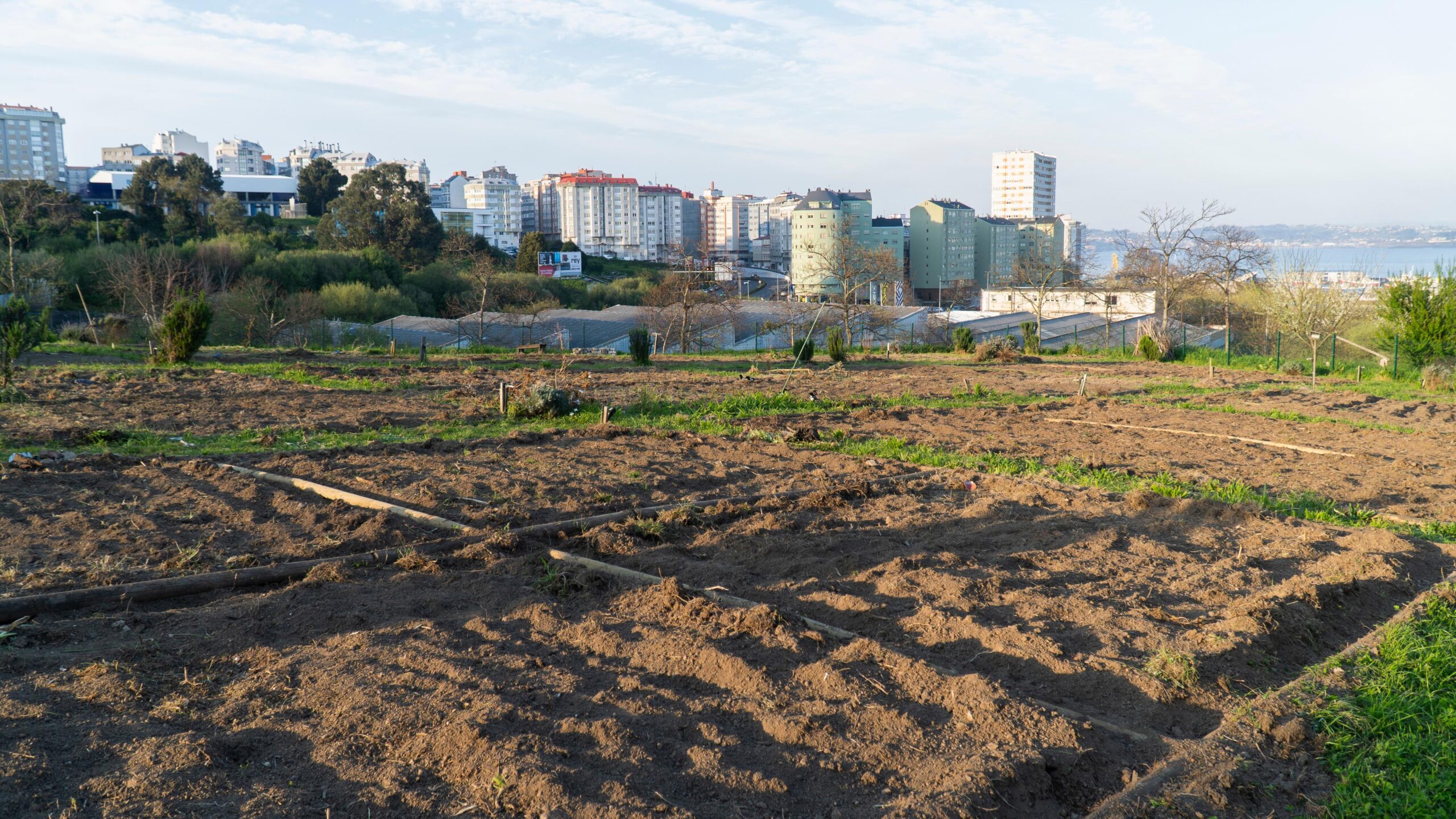
The study, led by Stepan Svintsov, a researcher at the Leibniz Institute of Ecological Urban and Regional Development in Dresden, Germany, employed a surveying and modeling program known as geographical information systems (GIS) to catalogue available space on rooftops and the ground in 840 cities across 30 European countries. The smallest city in terms of population was Melun, France, with 9,000 people; the largest was Paris, with 7 million. The smallest city in terms of geographical reach was Mislata, Spain, at 0.2 sq. km; the largest was Paris again, at 100 sq. km.
Not every potential spot that appeared on an urban map was a good candidate for agriculture. The researchers do not envision using high-tech systems such as vertical-farming or hydroponics to grow crops. Rather their goal was to focus on what’s easiest for most people: old-school, low-tech, soil-based farming. That makes for a low entry bar, but also presents some of the same challenges that have to be controlled on ordinary farms—including erosion and soil and nutrient runoff. For that reason, they limited their roof selection to those that were sloped at no more than 2°.
Read the full article here
